Visa
About Aga Khan University Nairobi
Aga Khan University in Nairobi
Aga Khan University’s Nairobi presence brings together education and research in health, nursing, media and communications. This directory record concerns Nairobi, Kenya, within the university’s wider international organisation. Its University Centre is on Third Parklands Avenue, off Limuru Road, close to Aga Khan University Hospital, Nairobi.
The thirteen-storey University Centre provides a shared setting for research and learning. The university’s Kenya academic profile identifies the Medical College, the School of Nursing and Midwifery, and the Graduate School of Media and Communications as key components of its provision. These units connect Nairobi with wider East African academic communities while maintaining local teaching, professional and research activities.
AKU is an agency of the Aga Khan Development Network. Its Kenya profile brings undergraduate, graduate and postgraduate education together within a broader commitment to professional learning and development. The Nairobi campus should therefore be understood both as a local academic setting and as part of a university working across several countries.
Sources: AKU in Kenya ↗

Medical education and the regional college
The Medical College in East Africa was established in 2004. Its stated purpose combines the education of health-professional leaders with research, support for health services and community engagement through partnerships. Nairobi is one of the locations where this regional medical education takes place.
The college’s educational portfolio spans undergraduate medicine, internship, specialist residency and fellowship training. Its Master of Medicine provision is described across Nairobi and Dar es Salaam, making the distinction between the local campus and the regional college important. The institutional approach brings academic study into contact with professional practice, while research forms another strand of its work. It presents partnerships within the region and internationally as part of developing an education relevant to East African health systems.
Sources: Medical College, East Africa ↗
The undergraduate medical learning approach
The Bachelor of Medicine, Bachelor of Surgery programme integrates humanities, social sciences and medical sciences. Its published educational features include student-centred, case-based learning, early exposure to research and critical thinking, and the use of technology in teaching. Interprofessional education and continuing community involvement are also identified as elements of its design.
The programme description emphasises collaboration and the relationship between individual health and wider health systems. Early clinical exposure is presented alongside classroom and scientific study. This combination provides a curriculum extending beyond the memorisation of medical information into discussion, investigation and work with other professional perspectives.
The same Nairobi student-life material describes a Provost’s Football Tournament and Sports Fiesta involving students, faculty and staff. Recreational activities therefore form another part of the campus experience alongside the demanding academic programme.
Nursing and midwifery connections
AKU’s School of Nursing and Midwifery operates across East Africa, with its Nairobi campus based in the University Centre. Its regional approach connects education with nursing and midwifery practice, policy and research. The school identifies professional development and the changing needs of health systems as important reasons for its work.
The East African school’s portfolio includes undergraduate and advanced-practice education, with programme availability organised across its different national campuses. Its teaching model also includes pathways designed for practising professionals. Research interests described by the school extend from maternal health to HIV and AIDS. These regional connections place Nairobi’s nursing community within a wider network of educators, practitioners, researchers and alumni in Kenya, Uganda and Tanzania.
Media and communications education
The Graduate School of Media and Communications is located in the Nairobi University Centre. It serves journalists, professional communicators, media managers and entrepreneurs, combining degree study with shorter professional learning opportunities. Its current offerings include a Master of Arts in Digital Journalism and a Master of Arts in Strategic Communications.
The school also provides media leadership education and tailored courses covering subjects such as digital storytelling and engagement with the media. Practical learning and attention to regional professional contexts are central to its description of teaching. Its Story Studio malaria fellowship supports East African journalists and storytellers through training, mentorship and reporting grants for evidence-based coverage. This illustrates the connection between media education and substantive public-interest reporting, alongside the school’s work on communication and organisational leadership.
Clinical research infrastructure
The Clinical Research Unit is based on the ninth floor of Doctor’s Park, adjacent to the Nairobi hospital and University Centre. It is a core facility associated with the Cancer Centre’s Experimental Therapeutics programme and supports clinical and translational research. Its stated role includes the preparation and conduct of human-participant studies and the training of clinical investigators.
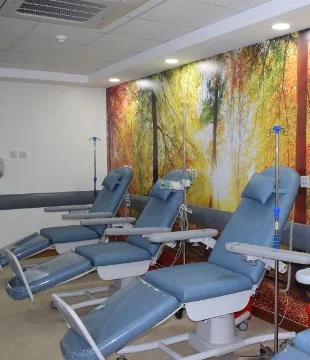
The facility includes consultation rooms, spaces for informed consent and assessment, an investigational-treatment suite, a research pharmacy, a laboratory and research-record facilities. Its services span regulatory coordination, project management, budgeting, contracts, data management and participant-related research processes. The unit also identifies internal and external training among its functions. This infrastructure connects scientific questions with the organisational, ethical and practical work required to conduct clinical studies in the Nairobi setting.
The published service description follows research projects from review and activation through implementation and close-out. It also includes investigational-product management and laboratory services associated with studying how medicines behave in the body. These functions illustrate the specialised support behind clinical research.
Sources: Clinical Research Unit, Kenya ↗ · Clinical Research Unit facilities and services ↗