Visa


About Altınbaş University
From Istanbul Kemerburgaz to Altınbaş
Altınbaş University is an Istanbul university established in 2008 by the Mehmet Altınbaş Education and Culture Foundation. It originally operated under the name Istanbul Kemerburgaz University and welcomed its first students in the 2011–12 academic year. The institution adopted the Altınbaş University name in 2017. Its official history connects its establishment with businessman Mehmet Altınbaş’s wish to invest in education, describing the university as an educational and social-responsibility initiative of the Altınbaş family. The university presents research, international engagement, innovation and social responsibility as central elements of its direction. Its academic activity includes undergraduate, associate, master’s and doctoral education. The change of name is therefore part of the history of the same institution, rather than evidence of a separate university replacing it.
Three locations within Istanbul
The university identifies three campuses in Istanbul, each with a distinct name and location. Mahmutbey Technology Campus is designated the central campus and is situated at 26 Dilmenler Caddesi in the Bağcılar district. Gayrettepe Social Sciences Campus is listed at 147 Büyükdere Caddesi in Esentepe. Bakırköy Health Campus is located at 11 İncirli Caddesi in the Kartaltepe neighbourhood. These campus names distinguish technology, social sciences and health within the university’s published geographical organisation. Together, they place university life in several parts of the city rather than at a single location. The university maintains a common institutional contact system while providing specific address details for each of these campuses.
Sources: The three Istanbul campuses ↗
Engineering, architecture and interdisciplinary study
The Faculty of Engineering and Architecture brings engineering disciplines together with the study of the built environment. Its department list includes computer, electrical and electronics, software, industrial, civil and mechanical engineering, alongside architecture and interior architecture and environmental design. The faculty identifies English-language pathways in its engineering departments and architecture, while interior architecture and environmental design appears in both Turkish and English. Its dean’s statement emphasises original, sustainable responses to problems and the ability to work across disciplinary boundaries. The intended educational approach combines theoretical understanding with practical skills and engagement with industry. Students also have published access points for course-content information, double-major and minor study, Erasmus opportunities and internship or co-op arrangements. These provide several ways to connect a specialist programme with broader academic and professional interests.
Sources: Engineering and Architecture: dean’s message ↗ · Engineering and Architecture faculty and departments ↗
Research across scientific and social fields
Altınbaş’s research organisation includes centres, laboratories and groups spanning several disciplines. The Central Research Laboratory, MERLAB, is intended to support research and development involving university researchers as well as public and industrial organisations. Its listed equipment serves fields including physics, chemistry, biology, environmental work and health-related research. Other groups focus on nanomaterials and chemometrics, artificial-intelligence applications and plasmonic nanosensors. The natural-products research centre works across chemistry, biology, pharmacy and related sectors, while the marketing and neuromarketing centre combines perspectives from behavioural and social sciences. A centre concerned with society, women and family studies addresses educational, economic, political and legal participation. This range gives the university a research structure extending beyond a single faculty or technical specialism, with opportunities for work across subject boundaries.
Library services for study and research
The university library provides an online catalogue, electronic-resource access and a user account system for managing loans, renewals and reservations. Group-study rooms can be reserved online, and users can request training, ask librarians for assistance or suggest books for acquisition. Remote access to subscribed electronic resources is supported through institutional credentials. Interlibrary lending offers a route to request printed material held by another university library. The library also provides access to the university’s publications and its DSpace institutional archive. That archive stores scholarly outputs such as books, articles, theses, conference contributions and reports in digital form, supporting long-term preservation and access in accordance with copyright. These services connect everyday reading and group work with the information and publication needs of academic research.
Student-led activities and clubs
Student clubs form part of the university’s approach to social and cultural life. The published club information identifies music, sport, art, entrepreneurship, law and psychology among the areas in which students organise activities. Clubs are described as student-created groups reflecting their interests and requests, with participation and contributions open across the student community. The university provides a framework for establishing and running them, including founding requests, constitutions, activity plans and adviser acceptance forms. Event applications and reports give these activities an administrative structure, while trip declarations and internal-review documents address particular aspects of club organisation. Students wishing to establish a new club are directed to the October and February application periods. The system combines student initiative with practical procedures for planning collective activities.
Connecting education with professional experience
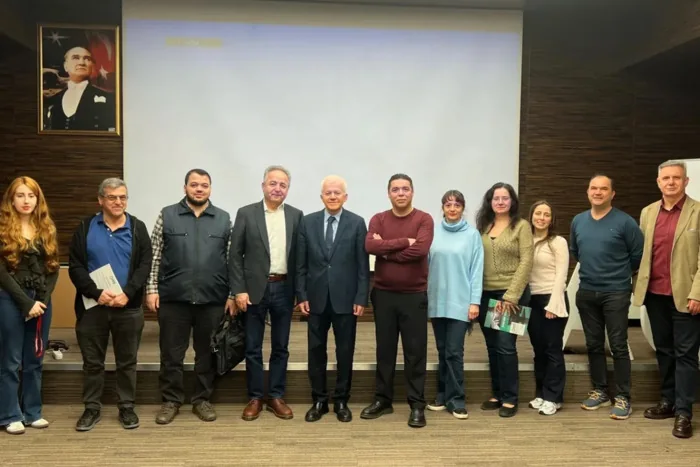
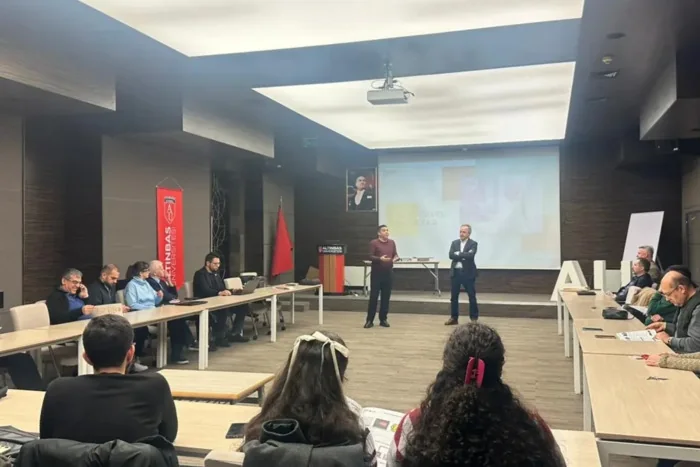
The internship and co-op office works to help students prepare for professional life while still at university. Its stated responsibilities include connecting students with recruitment professionals and supporting the development of professional networks. A specific example of faculty engagement with industry took place on 2 April 2026, when the Engineering and Architecture Faculty hosted Doğan Uğur, managing partner of ICC Digital and former general manager of Omron. Held in the Mehmet Altınbaş Conference Hall, the meeting brought students and academics together to discuss experience in electronics, automation and industrial engineering. The report also describes exchanges about cooperation between academia and industry. This was one documented meeting within the university’s wider emphasis on contact between academic education and professional practice.
Sources: Internship and co-op office ↗ · Engineering–industry meeting, 2 April 2026 ↗
Support for developing research projects
The Research Dean’s office describes administrative support as an important part of creating an environment in which researchers can work. Its activities include coordinating research projects, managing academic incentive processes and organising information meetings. Intellectual-property matters and scientific data analysis also fall within its stated remit. This gives researchers an institutional contact point for processes surrounding scholarly work, alongside the subject expertise located in faculties, centres and laboratories. The dean’s message places these services within the university’s ambition to develop its research activity further. Project coordination and information support are therefore presented as practical functions of the office, while the wider aspiration is to strengthen the university’s contribution to research and development.
Sources: Research dean’s responsibilities ↗