Visa

About Altai State Humanities Pedagogical University
The Biysk institution and its current identity
Altai State Humanities Pedagogical University is the historical Biysk institution whose educational work now continues as the V. M. Shukshin Biysk branch of Altai State Pedagogical University. Its institutional foundation date is 27 June 1939, and its principal address is 53 Vladimira Korolenko Street in Biysk, Altai Krai. The distinction between the former university and the present branch matters: the Biysk institution became part of the university based in Barnaul through the 2024 reorganisation. The Ministry of Education’s February 2024 charter order explicitly refers to the preceding January order joining the Shukshin university to Altai State Pedagogical University. The current branch retains Shukshin’s name and a separate Biysk identity, with educational premises also listed on Sovetskaya Street. Its institutional responsibilities sit within the larger federal university rather than an independent university administration.
Sources: Current Biysk branch institutional information ↗ · Ministry order no. 123, 22 February 2024 (order pages 1–3) ↗
A pedagogical technology park
The branch’s K. D. Ushinsky pedagogical Quantorium opened on 20 November 2021 through the Modern School federal project. It brings teaching methodology together with equipment used in natural-science and technology education. Its purpose includes renewing learning spaces, broadening educational content and supporting teachers’ professional development. One strand prepares university students to teach school subjects using modern educational equipment; another provides development opportunities for teachers already working in schools. The centre’s remit explicitly connects these activities with children’s Quantorium parks, Tochka Rosta science and technology centres and IT-cube digital education centres. It also organises career-orientation work with school pupils, including specialist pedagogical classes. These functions make the technology park a meeting point between initial teacher preparation, continuing education and engagement with prospective future teachers from local schools.
Sources: K. D. Ushinsky pedagogical Quantorium: purpose and history ↗
Research organisation and student participation
The research department coordinates work across academic units, research schools, project teams, staff and students. Its responsibilities span fundamental studies, applied investigations and experimental development, alongside planning, funding administration and material support for projects. It also supports the preparation and professional development of academic researchers. The department traces its beginnings to the 1980s, when the institution needed to organise postgraduate preparation for young lecturers and build its own research capacity. A research sector established in 2007 brought together researchers, teaching staff, postgraduate students and other students around scientific projects. Today the department’s stated functions include advice on scholarly information platforms, coordination of student research and support for innovation. This places research administration alongside student participation, rather than treating investigation solely as an activity reserved for established academic staff.
Sources: Research department: responsibilities and development ↗
Students presenting work across disciplines
A student conference held on 29 and 30 October 2026 offers a concrete example of that research culture. Organised within the international Science 0+ festival, it brought together students from the institutes of pedagogy and psychology and of humanities education, including master’s and secondary vocational students. Presentations took place both in classrooms and through online connections using Yandex Telemost. Four thematic sections covered education and psychology; language, literature and media; historical and cultural studies; and natural sciences, mathematics and vocational education. The programme included fifty presentations. Topics ranged from mentoring and volunteering to language use online, local history and digital educational resources. Section discussions allowed speakers to respond to questions from academic moderators and other participants. The event therefore provided experience of presenting and discussing research across several educational levels.
Chemistry facilities linked to teacher preparation
On 7 October 2026, the Biysk branch opened a chemistry teacher-training cluster through the Teachers and Mentors federal project within the Youth and Children national project. Representatives of the university, regional education authorities, schools and industry attended the opening. Visitors then toured renewed laboratories, where students and staff demonstrated equipment and explained its educational uses. The cluster was presented as a way to connect university preparation more closely with schools and industrial partners. Its announced next steps included deeper chemistry study, teaching practice in the laboratories and mentoring involving experienced schoolteachers and university lecturers. Activities proposed for school pupils included chemistry clubs, specialist summer sessions and Olympiad preparation. These were plans associated with the opening, while the renovated laboratory demonstrations formed part of the event already held.
Sources: Chemistry teacher-training cluster opened, 7 October 2026 ↗
Working with practising schoolteachers
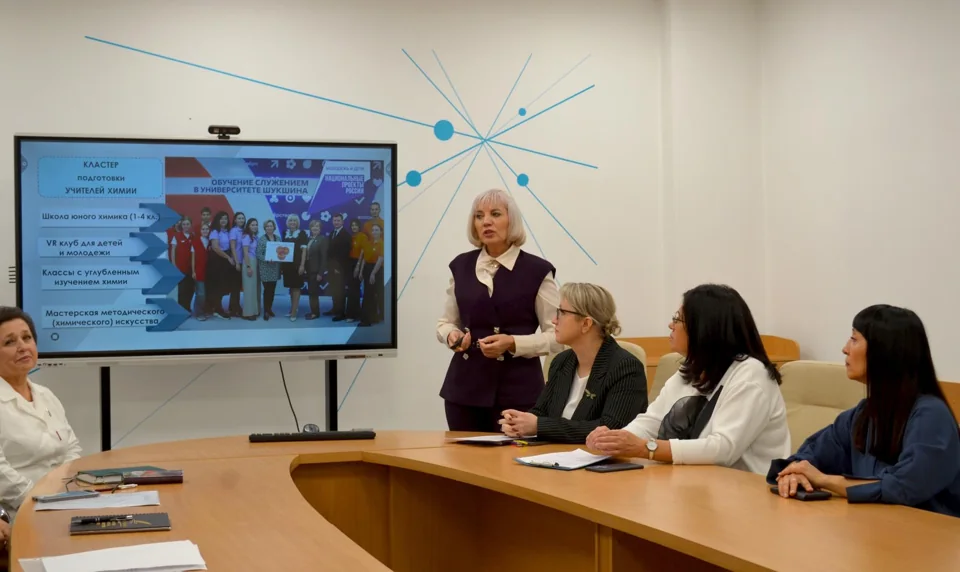
The chemistry cluster also hosted a methodological seminar for teachers from Biysk district on 22 October 2026. Its subject was the use of digital and virtual resources in chemistry education. Branch staff introduced the cluster and discussed cooperation between university and school, including career-orientation activities in natural-science education. A presentation on a chemistry teacher’s professional-development school set out the aims of a university–school network. Participants subsequently toured the cluster, hearing about laboratory equipment and ways digital resources could support pupils’ engagement with chemistry. A student following the Biology and Chemistry teacher-education pathway presented the activities of a virtual-reality club for school pupils. The visit ended with a round-table discussion of further cooperation. This event connected university teaching resources with the professional interests of teachers already responsible for school classrooms.
Sources: Chemistry teaching seminar, 22 October 2026 ↗
An international language-education programme
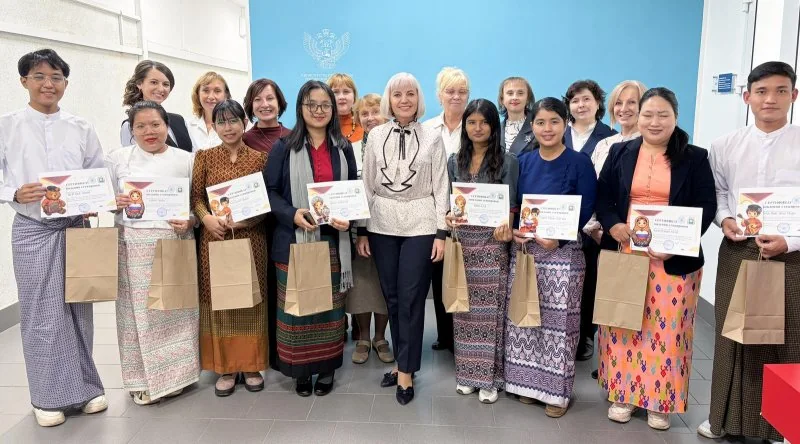
International educational exchange is also represented in the branch’s October 2026 activities. A report published on 16 October describes a certificate ceremony for lecturers and students from the Russian-language departments of Yangon University of Foreign Languages and Mandalay University of Foreign Languages in Myanmar. The visiting group had completed a programme taught over three weeks by staff of the Biysk branch. The ceremony acknowledged that completed period of study, while speeches emphasised interest in Russian language and cultural heritage and the value of continued educational cooperation. Branch teachers reflected on their work with the visitors, and the participants discussed hopes for future collaboration. The programme illustrates a specific form of international engagement centred on language learning and contact between educators, alongside the branch’s regional work in teacher preparation and school partnerships.
Sources: Myanmar language educators and students complete programme, October 2026 ↗