Visa

About Alrefak University
Origins in private higher education
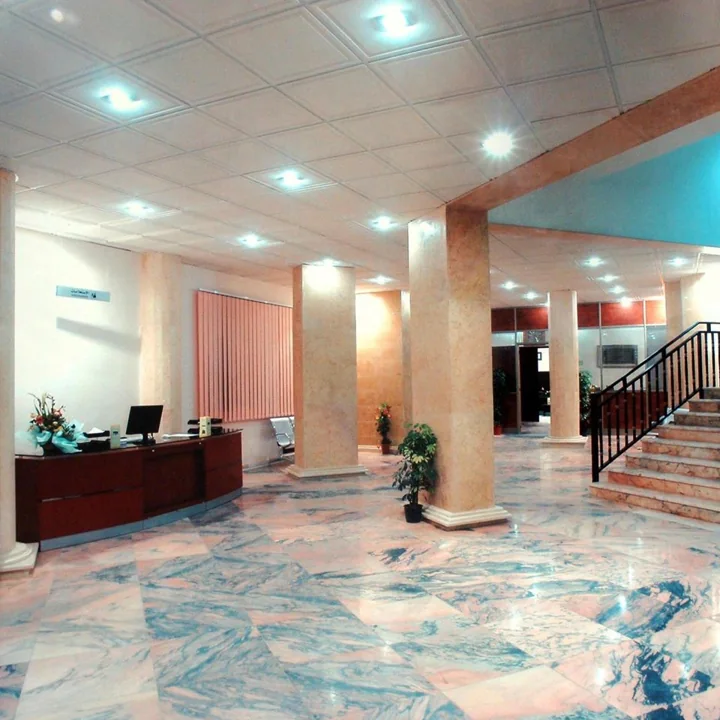
Alrefak University is a private higher education institution in Tripoli, Libya. Its official Arabic name identifies it as a university for applied sciences and humanities, and its contact address is on 17 February Street in the Dahra area. The institution traces its origins to the Alrefak Higher Institute, founded in 1999 by educator Moheiba Mahmoud Frinka. Its dedicated university history records an opening in 2003, initially with business administration, accounting and computing departments. Teaching began in a small building with limited resources before expansion into larger premises. Subsequent growth extended its academic interests into languages, law and engineering. These successive stages place the university within the development of private higher education in Libya.
Sources: University history ↗ · About Alrefak University ↗
Applied sciences and humanities
The university brings together business-related subjects, humanities, computing and engineering. Its institutional introduction lists business administration, hospital administration, accounting, law, English and computer science, together with architecture and urban planning, civil engineering, petroleum engineering and interior design. The university distinguishes bachelor’s qualifications in applied sciences from licence qualifications in the humanities. Its study system operates through semesters and allows students to register for courses while following prerequisite sequences. This arrangement links individual course choices to the order in which knowledge is developed within a programme. The range of departments also gives the institution a mixed academic character, combining subjects concerned with organisations, language and public affairs with technical and design disciplines.
Sources: Institutional introduction ↗
Library and research support
The general and electronic library supports both students and teaching staff. It provides conventional printed materials alongside electronic resources, and describes reference and research assistance as part of its work. Books, reference works, journals and other sources are selected in relation to academic programmes and teaching needs. Materials are organised using the Dewey Decimal Classification, with cataloguing and other technical processes managed by library staff. Lending and resource-use policies govern access to the collections. The librarian’s administrative area includes computers and printing equipment, while staff guidance helps readers locate information. The library identifies research and analytical skills, access to learning materials and continuing reading as important purposes of its service.
Sources: General and electronic library ↗
Computer science
The computer science department presents teaching, scientific research and community engagement as linked responsibilities. Its published aims include encouraging technical development and research, building relationships with community organisations and improving teaching through contemporary technology. The department also makes academic announcements and a record of staff scholarly work available to students. The listed research topics show interests extending beyond a single computing specialism: wireless networks, indoor positioning, electronic government, online appointment systems and the use of Google Classroom in university teaching all appear in the record. These entries provide examples of the questions explored by individual academics over different years. They sit alongside the department’s broader objective of developing knowledge and innovation in computing.
Sources: Computer science department ↗
Legal education
The law department dates its establishment to 2004. It describes legal education as an interaction between theoretical study, practical training, scholarship and engagement with legal questions in society. Its academic objectives include developing legal research and contributing informed views on legislation. Moot courts within the department are identified as a practical teaching method. The department also sets out an intention to organise seminars and workshops on subjects such as intellectual property, legal writing, cybercrime, traffic incidents and international criminal justice. Its published programme information gives a graduation requirement of 135 credit hours. A record of scholarly work includes studies of electronic payment protections, commercial arbitration and other legal issues, showing the relationship between departmental teaching and specialised inquiry.
Sources: Law department ↗
Staff training and development
The training and qualification department treats professional development as an ongoing process for university personnel. Its work involves preparing plans, designing training programmes and workshops, and organising their implementation. The stated focus covers technical and intellectual skills, knowledge and workplace performance. Training is intended to address gaps between staff members’ existing capabilities and the requirements of their responsibilities. The department frames this work through the needs of the individual, the job, the university and society. Rather than describing a single short course, its policy establishes a continuing institutional function: identifying development needs and arranging structured learning activities in response to them.
Architecture and reconstruction
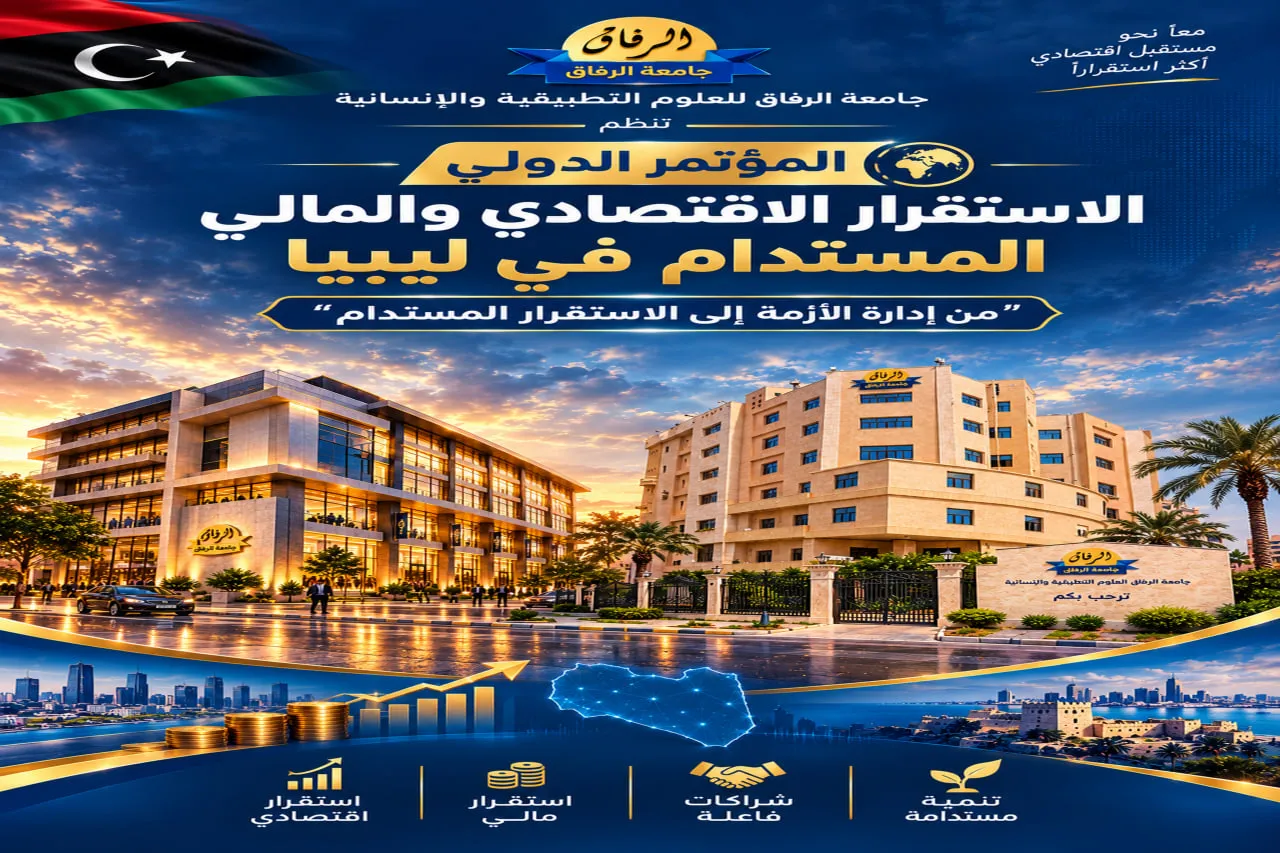
The university’s published call for a scientific conference on architecture and reconstruction in Libya illustrates an area of academic outreach. The proposed discussion brings together architecture, urban development and the rebuilding of affected cities. Its themes include planning legislation, sustainable building technologies, architectural identity and heritage, and the role of universities and research centres in reconstruction. Informal settlements and opportunities for urban restructuring are also included. The call accepts original research in Arabic or English, sets out requirements for abstracts, methods, findings and references, and provides for scientific review. It therefore presents reconstruction as a subject for documented research, professional exchange and collaboration across academic and public institutions.
Learning through a moot court
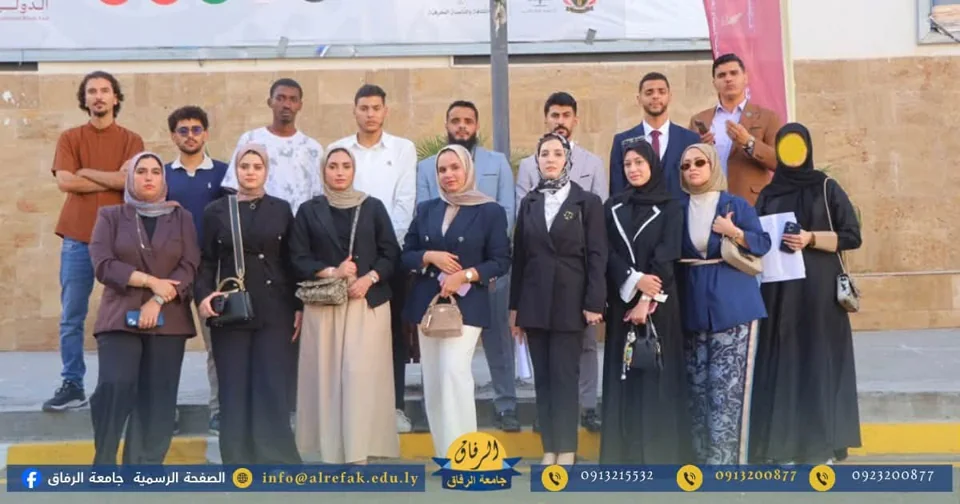
A university report dated 28 October 2026 describes a student delegation taking part in a moot-court competition at the Tripoli International Fair. The account connects participation with the law department’s practical teaching: students worked on advocacy, legal analysis and reasoned argument under team supervision. It also acknowledges the Criminal Research and Training Centre associated with the Attorney General’s Office and the event organisers. This dated example gives a concrete setting for the department’s stated interest in simulated court work. It shows how a supervised activity outside ordinary classroom teaching can bring legal study into contact with a structured practical exercise.
Sources: Moot-court participation,28October2026 ↗