Visa
About Al-Arab Medical University
A historical medical university in Benghazi
Al-Arab Medical University, known in Arabic as جامعة العرب الطبية, was a separate medical university in Benghazi, Libya. Its institutional legacy now forms part of the University of Benghazi. The name therefore refers to a historical university rather than a separate current institution admitting students under that title. Medicine, dentistry, pharmacy and public health were associated with its medical university structure.
The medical faculty’s history records its move to a new building on Hawari Road in September 1984, when it separated from Garyounis University under the Al-Arab Medical University name. Subsequent reunifications and separations changed the medical faculties’ administrative position. By the early 2010s they were again within the institution now named the University of Benghazi. Today’s faculty pages describe the educational work that continues within that successor university. The medical faculty’s own roots predate the separate university: preparatory medical teaching began in the 1970–1971 academic year, before the later organizational changes.
Sources: Historical medical faculty chronology ↗ · University of Benghazi institutional history ↗
Medical teaching across disciplines
The University of Benghazi’s Faculty of Medicine brings basic medical sciences and clinical disciplines together within its departmental structure. Its academic departments include anatomy, physiology, histology, biochemistry, microbiology, parasitology, pathology and pharmacology. These areas sit alongside internal medicine, surgery, paediatrics, obstetrics and gynaecology, ophthalmology, dermatology, radiology, forensic medicine, and family and community medicine.
The faculty also identifies medical education as an academic department. Its website provides access to the educational programme, study and examination administration, scientific departments and an educational platform. This organization shows the range of teaching and administrative responsibilities within the present medical faculty, which carries forward an important part of Al-Arab’s institutional history.
Developing medical education
The Medical Education Department was established by a University Council decision in 2018, with its head taking up duties in February 2019. Its responsibilities include designing, evaluating and developing curricula, as well as strengthening faculty members’ abilities in medical education. Its office is located within the medical faculty’s lecture-hall complex.
The department describes lectures and workshops for academic staff as part of its development work. It has also contributed to proposals for improving the educational process and to faculty self-studies conducted in 2019 and 2022. Curriculum development is another strand of its activity, undertaken through the faculty’s curriculum committee. These functions concern how medical knowledge is taught and assessed, alongside the subject expertise held within individual departments.
Sources: Medical Education Department ↗
Simulation and clinical skills
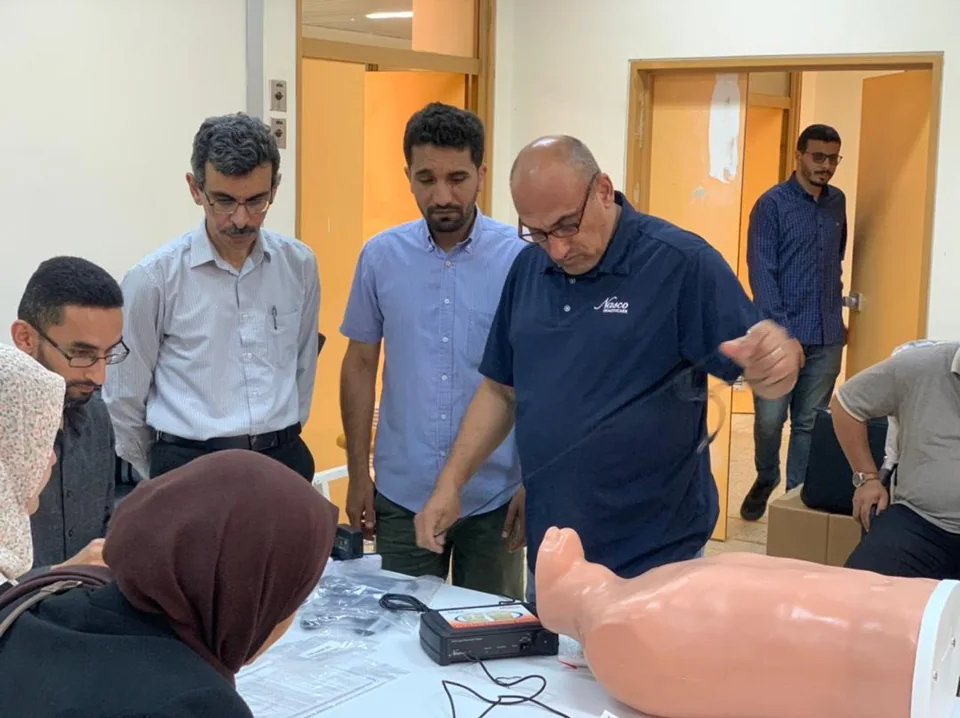
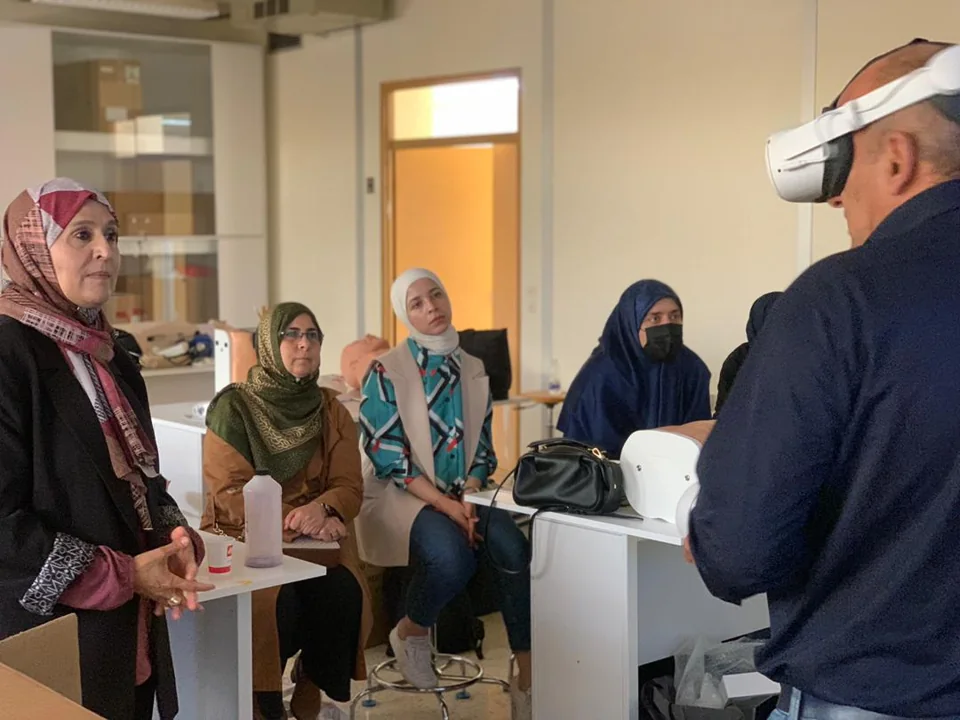
The successor medical faculty’s clinical skills laboratory was established in 2016 as part of its medical education development plans. Its published description explains that students can practise clinical skills using simulation before undertaking procedures with patients. Training areas include communication, taking a medical history, clinical examination, and diagnostic and therapeutic skills.
The laboratory supports conventional clinical education by allowing repeated practice with training equipment. Simulation also provides access to situations that may be difficult to arrange consistently in ordinary clinical teaching. Its official photographic gallery documents demonstrations with training mannequins and other educational equipment, illustrating this practical component of the faculty’s teaching environment.
Sources: Simulation and Clinical Skills Laboratory ↗
Research and academic consultation
The Research and Consultation Department describes a role extending beyond publication alone. Its mission emphasizes an environment that supports researchers, encourages collaboration and connects basic sciences with the clinical programme. Multidisciplinary research is presented as a means of strengthening understanding across these areas of medical study.
The department’s stated priorities include supporting both basic and applied research, building connections with health organizations and research centres, and making academic expertise available through consultation. It also encourages medical students to become involved in research projects. The department is located in the northwestern wing of the medical faculty building, in the third-stage teaching building. Its published resources include research priorities, information about research ethics, faculty research listings and guides relating to research groups and laboratory work.
Sources: Research and Consultation Department ↗
Pharmacy and public health heritage
Pharmacy is another part of the former medical university’s academic heritage. The current University of Benghazi Faculty of Pharmacy dates its establishment to 1989. Its historical introduction describes a bachelor’s qualification in pharmaceutical sciences and a five-year curriculum that includes a preparatory pharmacy year. It identifies developing curricula and expanding pharmaceutical knowledge as continuing educational concerns.
The Faculty of Public Health has a different chronology: it was included in the 1984 decision establishing Al-Arab Medical University, began its activities in September 1994 and admitted its first student cohort in 1995. Its historical overview identifies bachelor’s specializations in health services administration, nutrition, environmental health, occupational health, health informatics, medical technology, epidemiology, health education, and infectious diseases. This breadth reflects a medical university heritage that extended beyond training physicians into the organization, prevention and information dimensions of health.
Sources: Faculty of Pharmacy history ↗ · Faculty of Public Health history ↗
Mission of the successor medical faculty
The present medical faculty’s mission links professional and scientific education with medical research, professional ethics, community service and sustainable development. Its general goals address governance, educational programmes, academic staffing, research, teaching facilities and student affairs. It also identifies the use of technology in education and services as a development priority. These published aims describe the successor faculty’s educational direction within the University of Benghazi, while the Al-Arab name remains part of its institutional history.