Visa
About Al-Asmarya University for Islamic Studies
From Islamic studies to a broader university
Al-Asmarya University for Islamic Studies is the historical English designation associated with today's Al-Asmarya Islamic University in Zliten, Libya. The institution's official history records a 2013 decision changing its Arabic name from a university for Islamic sciences to Al-Asmarya Islamic University. That reorganization brought additional scientific and other faculties within its structure, broadening the institution beyond its original religious and linguistic disciplines. The history identifies fields including economics, dentistry, marine resources, education, arts and science in this development, followed by further academic expansion. Its educational identity consequently combines the Islamic studies tradition with humanities and applied subjects. The university's development also involved departments becoming faculties and the creation or incorporation of units in other Libyan towns.
Sources: Official institutional history and 2013 name change ↗
An educational heritage associated with the zawiya
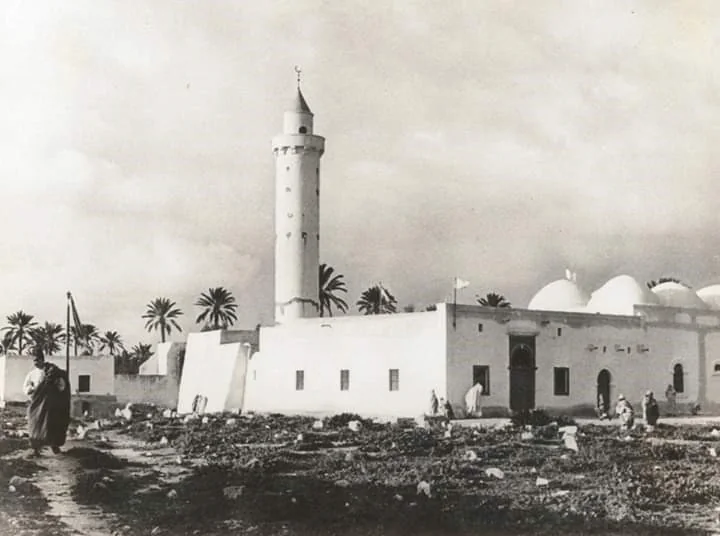
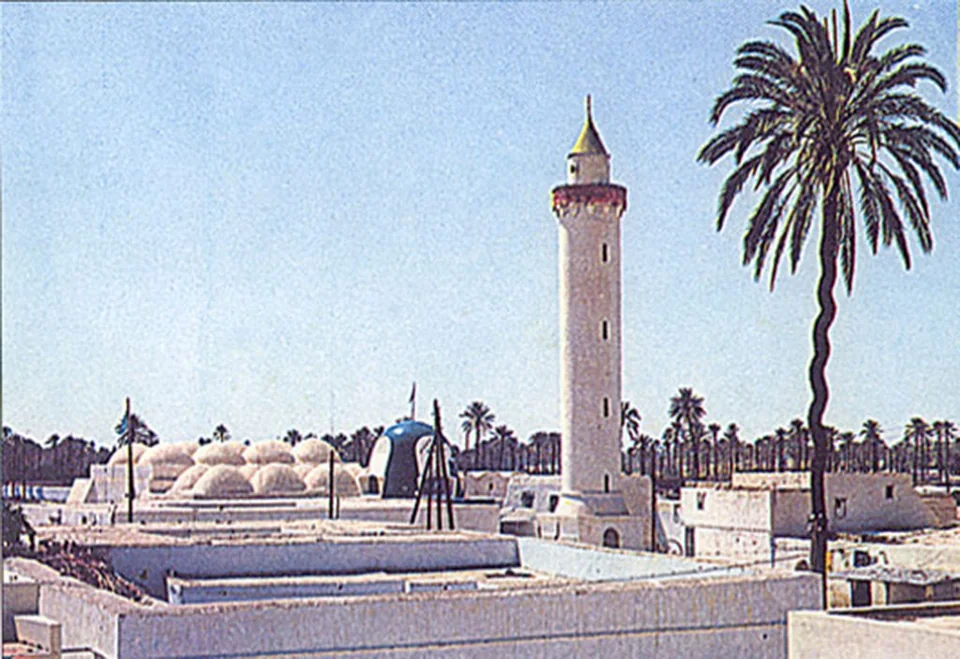
The university explains its historical identity through the Al-Asmariya zawiya, established by Sheikh Abd al-Salam al-Asmar in 1506. The zawiya provided teaching in the Quran, religious disciplines and Arabic language and later developed into a religious institute. A university statement about its emblem distinguishes this educational lineage from establishment as a modern university in the mid-1990s. It explains that the council chose to display 1506 to represent the older institution from which the university developed. This distinction is central to understanding the university's presentation of its past: the earlier date concerns the zawiya and its teaching tradition, while the modern university represents a later stage in that institutional history.
Sources: Explanation of the historical date on the university emblem ↗
Arabic language, Islamic studies and historical inquiry
The Faculty of Arabic Language and Islamic Studies identifies four academic departments: Arabic language, Islamic studies, Islamic history and civilization, and Quranic studies. The Quranic studies department was established through a university decision in 2019. Undergraduate programmes lead to the licentiate degree following completion of the required academic units. Postgraduate provision described by the faculty includes Islamic studies and specializations in language, literature and criticism. Language study encompasses grammar, morphology and linguistics, while literary study includes literature, criticism and rhetoric. This range places close attention to texts and language alongside historical and religious inquiry. The faculty developed from one of the university's earlier academic departments, preserving an important part of the institution's original disciplinary foundation within its later faculty structure.
Dawah and the foundations of religion
The Faculty of Dawah and Fundamentals of Religion describes a structure formed through the consolidation of earlier religious-study units. Its listed departments cover Islamic creed and thought, Quranic interpretation and hadith, Quranic readings, dawah and preaching, foundations of religion, and Islamic media. Most of its undergraduate religious programmes lead to a licentiate degree, while the Islamic media programme leads to a bachelor's degree. The faculty also identifies master's programmes in Quranic interpretation and sciences, hadith and its sciences, dawah and Islamic culture, and Islamic creed and thought. These programmes combine the study of source texts and religious thought with communication and public religious discourse. The faculty's published address places it near the Abd al-Salam al-Asmar mosque and minaret in Zliten.
Sources: Dawah and Fundamentals of Religion faculty ↗
Teacher education across humanities and sciences
The Faculty of Education traces its origins to a higher institute for teacher preparation established in 1998. After successive institutional changes, it became part of Al-Asmarya in 2013. The faculty describes a four-year course organized into eight semesters, with Arabic as the teaching language and English used for the relevant specialization. Its published active programmes include Arabic, English, classroom teaching, early childhood education, mathematics, computing, physics, chemistry, biology, physical education and social work. The faculty separately identifies other departments that are not activated, giving a useful distinction between its organizational plans and taught provision. Its account of facilities includes computing and language laboratories, laboratories for biological and physical sciences, a lecture auditorium and a sports hall. Teacher preparation thus encompasses both disciplinary study and educational practice.
The role of international cooperation
The International Cooperation Office is based within the university's general administration in Zliten, a Mediterranean coastal city east of Tripoli. Its responsibilities include preparing and following up international agreements, coordinating links with universities and organizations, and maintaining information about agreements and academic or research activities. The office also helps organize conferences, seminars, workshops, exhibitions and exchange visits. Its remit extends to coordination among researchers and the implementation of joint projects. Training activity involves cooperation with the university's postgraduate and training administration for staff, teachers and students. These functions provide an institutional framework for international engagement, linking individual academic units with the administration responsible for partnerships, project arrangements and communication with external institutions.
Maritime education and the TWINMED project
A university report records the Faculty of Marine Resources joining TWINMED, a project concerned with digital and green transitions in maritime education and training. The report describes a three-year Erasmus+ capacity-building project involving institutions in European and southern Mediterranean countries. The university's preparation began in 2024, followed by a proposal submitted in 2025 and the subsequent start of project activities. Its stated work includes identifying educational and professional needs, updating maritime programmes and developing teaching capacity. Virtual and augmented reality training laboratories appear among the planned resources. The opening session brought together faculty and university representatives to discuss objectives, implementation, coordination, quality assurance and financial organization. This project provides a documented example of the university's broader applied-science provision and its international cooperation extending into maritime and environmental education.
Sources: TWINMED maritime education project ↗