Visa
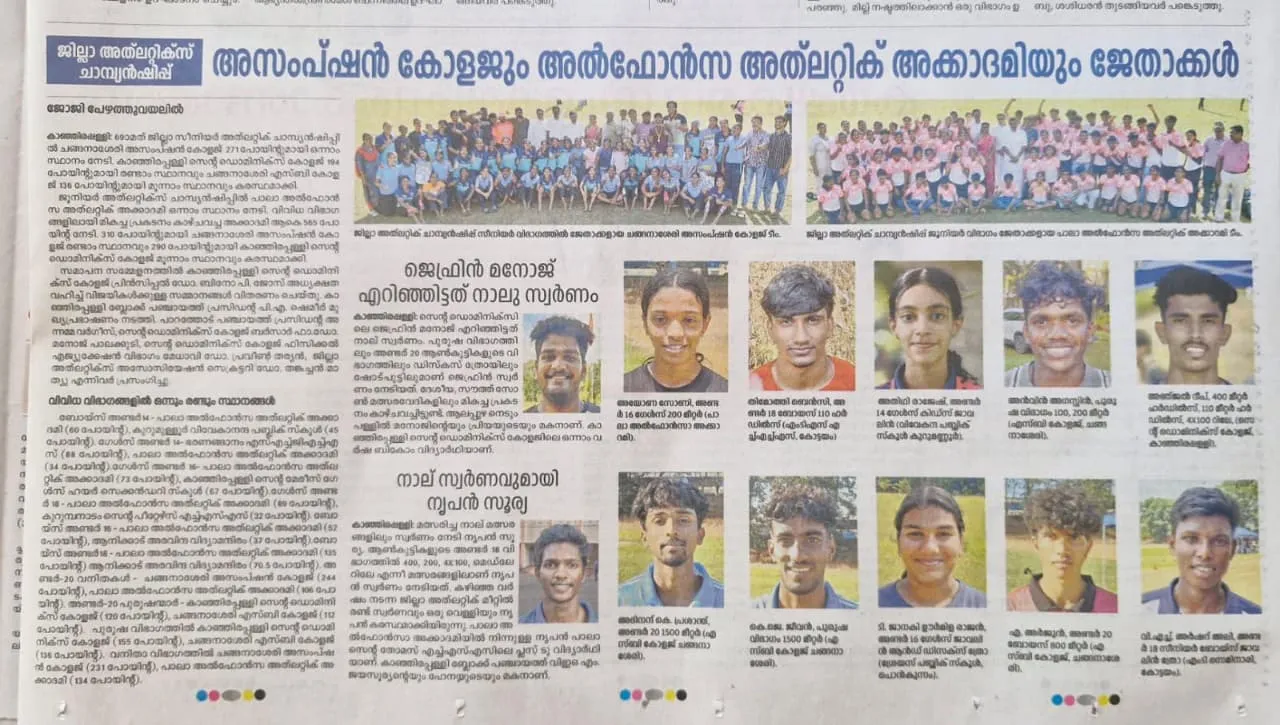
About Alphonsa College
A women’s college in Pala
Alphonsa College is a women’s higher education institution in Pala, in Kerala’s Kottayam district. Its address is at Arunapuram, and its management belongs to the Catholic Diocese of Pala. The college was established in 1964 through the initiative of Mar Sebastian Vayalil, the first Bishop of Pala, supported by local leaders. Its beginnings responded to a shortage of opportunities for women to pursue further education in the surrounding area. The institution opened as a junior college with 400 students and thirteen teachers. It takes its name from Saint Alphonsa of Bharananganam. Within this Catholic foundation, the college describes education as a combination of academic work, spiritual formation, values and social responsibility, with particular attention to the development of young women.
Sources: A women’s college in Pala ↗
Growth across six decades
The institution’s development can be traced through successive additions to its courses and buildings. In 1967 it introduced bachelor’s courses in mathematics, physics, chemistry, botany, zoology, English and economics. History at undergraduate level and postgraduate zoology followed in 1981. Later milestones included a computer course in 1993 and the establishment of the Alphonsa Institute of Computer Studies in 1996. Clinical Nutrition and Dietetics and a fashion-related diploma were added in 1998, while postgraduate clinical nutrition began in 2005. The college’s timeline also records an early library and auditorium block, the Bishop Vayalil Block, a Silver Jubilee Memorial Block and a Golden Jubilee Memorial Block. These developments show how the original junior college acquired a wider academic and physical base over successive generations.
Sources: Growth across six decades ↗
Educational purpose
The college’s vision places women’s self-reliance and participation in society at the centre of its educational purpose. Its mission combines subject knowledge and practical skills with respect for others, discipline and sustained effort. Cultural values and moral integrity are presented as part of this formation. The institution connects women’s education with their ability to contribute to their families and wider communities, and identifies empowerment through learning as an explicit objective.
Sources: Educational purpose ↗
Library and independent study
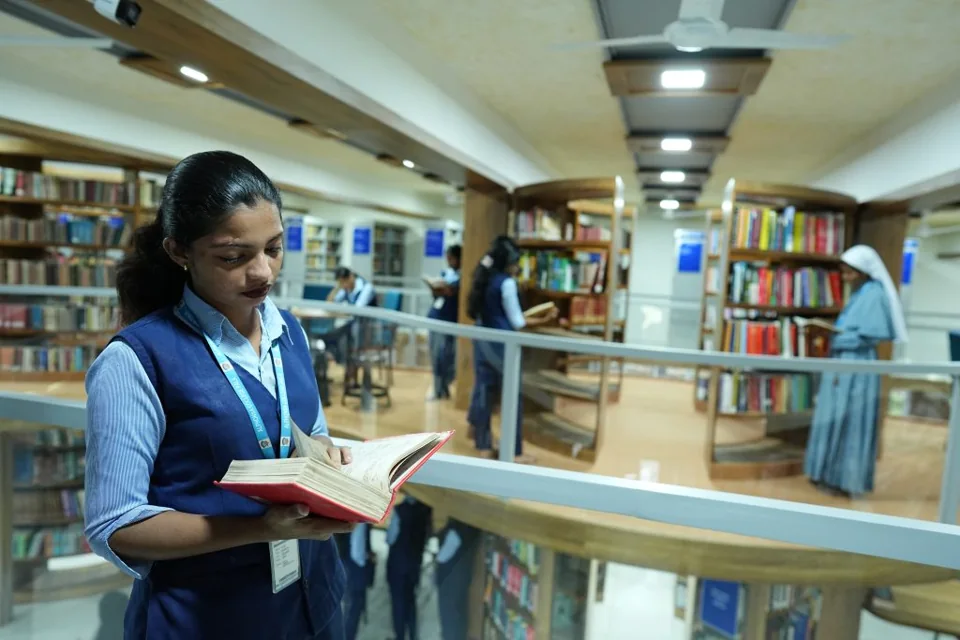
The library dates from the college’s foundation in 1964 and was upgraded in 2023. Its collections include textbooks, reference works, journals, dictionaries, encyclopedias and electronic resources. KOHA supports the organisation of library operations, while NLIST provides access to selected scholarly electronic material. Students can also use links to resources such as Shodhganga and the Directory of Open Access Books. The library describes several kinds of reading space, including silent reading, a research corner and garden and step libraries. Facilities include computers, photocopying, RFID entry and exit arrangements, and a corner with Daisy books for visually impaired readers. Its borrowing system provides separate arrangements for undergraduate and postgraduate students. External students and researchers may request access with identification, an institutional introduction and the principal’s permission.
Sources: Library and independent study ↗
Classrooms and laboratories
Teaching spaces include classrooms, laboratories, computer laboratories, multimedia rooms, seminar halls and auditoriums. The college presents these facilities as supporting different forms of learning: classroom instruction, experiments, digital work, research and academic discussion. Internet access and computing facilities form part of the same infrastructure. The teaching and learning gallery documents subject-specific spaces, including electronics and botany laboratories, a zoology seminar hall and classrooms equipped with projectors. Alongside these specialist rooms, the library provides resources for work undertaken beyond scheduled teaching sessions.
Sources: Classrooms and laboratories ↗
Sport and campus participation
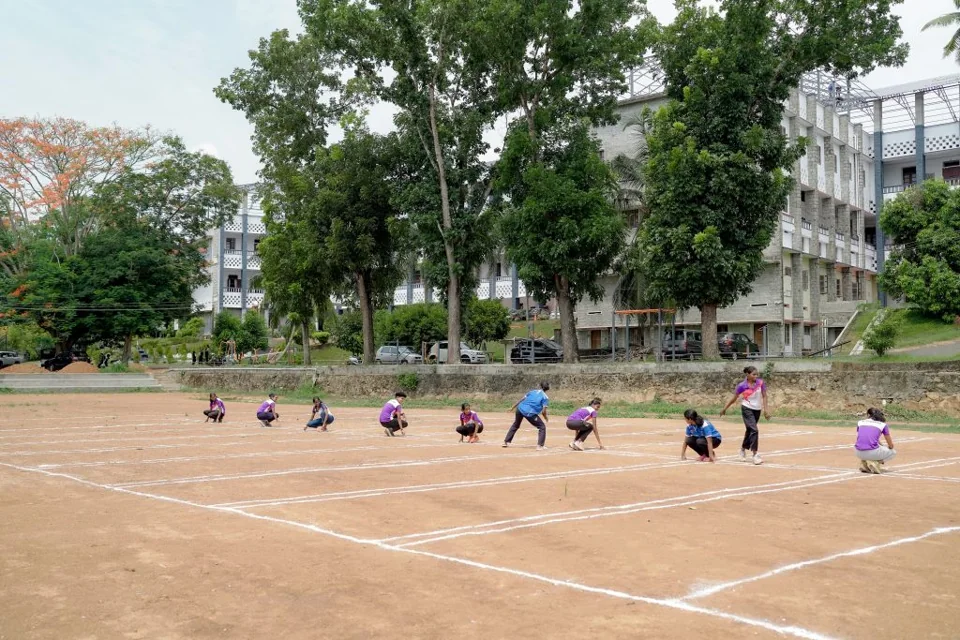
Sport is supported by indoor basketball and volleyball courts, a playground and a gymnasium. These facilities serve both organised athletic training and broader student participation in physical activity. The college links its sports provision with teamwork, discipline and leadership as educational aims. Its official sports gallery shows activity on the outdoor playing area as well as indoor and other training facilities. The presence of different types of space allows sports activities to form a visible part of campus life alongside laboratories, classrooms and reading areas.
Sources: Sport and campus participation ↗
Service through the NSS
The National Service Scheme has operated at Alphonsa College since 1971. Its two units, numbered 001 and 002, provide a continuing structure for student volunteering and community engagement. The college describes social responsibility and service as central to their purpose. Its published record includes university-level recognition for programme officers and volunteers, including awards for the 2022–23 academic year. It also records a volunteer’s national recognition in 2014–15 and participation by a staff coordinator as a Kerala contingent leader at the 2024 Republic Day Parade activities in Delhi. Annual reports document the units’ work across academic years.
Sources: Service through the NSS ↗
Research and applied expertise
Research is organised through a research committee and a research ethics committee. The latter’s stated responsibilities include reviewing ethical considerations across institutional research, researcher training and coordination with other departments. The college’s consultancy policy provides a framework for applying academic expertise beyond regular teaching. Examples within its scope include data analysis, field surveys, environmental studies, translation, training and academic support for schools. Proposed work passes through departmental and institutional review, with approval by the principal and records maintained by the department and the internal quality assurance cell. The policy also requires confidentiality and specifies that consultancy should not interfere with regular academic responsibilities. Other listed research-related initiatives include an innovation and entrepreneurship development centre, a women’s entrepreneurship motivation club, seminars and the science and arts editions of ALFOMINE.
Sources: Research and applied expertise ↗