Visa

About Alpha College of Engineering
An engineering college in Tamil Nadu
Alpha College of Engineering is located at Thirumazhisai–Poonamallee in Tamil Nadu, India. Established in 2006, it forms part of the Alpha Group of Institutions and provides education in engineering and management. Its own institutional account combines academic teaching with student development, creative activity and practical experience. The college's identity is therefore distinct from the schools and arts and science college that also belong to the wider group.
Its mission emphasises programmes that respond to regional and national needs, innovative teaching and the development of independent thinking. Entrepreneurship and social responsibility appear alongside the acquisition of technical knowledge. The college describes its educational purpose in terms of helping students connect learning with work and with their responsibilities as members of society. These statements set out its intended educational approach.
Academic support and learning resources
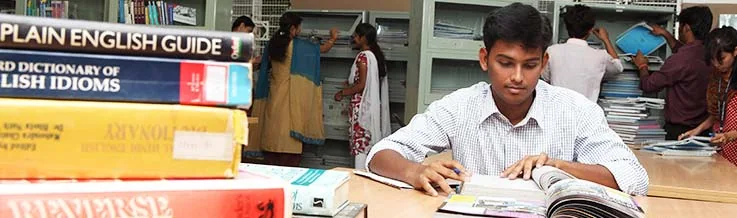
The Central Library supports students and faculty through books, reference material, journals and electronic resources. Its subject coverage extends across engineering, science, technology, management and general studies. The library describes an open-access arrangement, internet-connected computers and resources such as electronic books, databases and journals. These facilities provide material for reading and research beyond classroom teaching.
Academic support also includes faculty advising, a Student Learning Centre and the Teacher for Student programme. Students can arrange time with teaching staff to discuss subject questions, presentations, seminars and project work. The college's online learning resources include topic summaries, question banks and laboratory manuals. Its account of teaching also stresses interaction, student seminars and discussion, connecting independent preparation with opportunities to ask questions and share ideas with classmates and faculty.
Sources: Academic support and learning resources ↗
Computer science and engineering
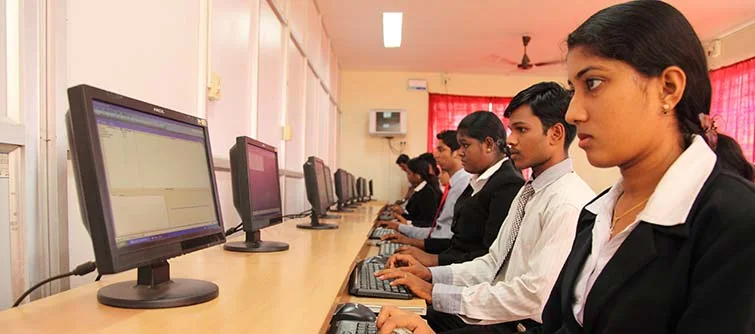
The Computer Science and Engineering department describes laboratory work in programming, computing systems and networks. Its general computer laboratory supports the development of programmes using languages such as C, C++ and Java, while the published software list includes database and visual development tools. Networked facilities provide access to subject journals and conference information, supporting the connection between practical exercises and wider technical reading.
A separate networking laboratory is described as supporting internet programming, mobile application development, security, and cloud and grid computing experiments. The departmental account also identifies professional associations and activities intended to support continuing learning. Together, the laboratories give its computing provision a practical setting in which students can develop software, explore networked systems and relate theoretical subjects to technical exercises.
Sources: Computer science and engineering ↗
Artificial intelligence and data science
The college lists a BTech programme in Artificial Intelligence and Data Science. Its description brings together statistics and computer science with machine learning, neural networks, data mining and large-scale data analysis. The programme's interdisciplinary scope includes the use of information to analyse problems and develop computational approaches to decision making. Applications discussed by the college include intelligent automation and the recognition of images and speech.
The subject list includes Python, robotics, natural language processing, computer vision, expert systems and evolutionary systems. Its facilities description identifies artificial intelligence, networking and general computing laboratories. These are presented as places for practising programming and working with computing tools. The programme therefore connects the study of data and algorithms with practical computing activity across several related areas of artificial intelligence.
Mechanical engineering and laboratory practice
The Mechanical Engineering department began in 2012. Its academic description covers thermal engineering, manufacturing and design, supported by workshops and laboratories. Engineering practice introduces foundry work, welding, plumbing, electrical wiring and carpentry. Manufacturing facilities allow students to work with lathes and other machine tools, connecting production methods with practical operations and the use of equipment.
Other laboratories concern fluid mechanics, material strength, heat transfer, dynamics and measurement. Students study properties such as hardness and tensile strength, examine the behaviour of engines and heat exchangers, and learn to use measuring instruments. The department also describes mechatronics and computer-aided design and manufacturing facilities. This range connects mechanical principles with the testing, measurement and design activities through which those principles are applied to materials and machines.
Management studies
The Department of Management Studies provides the college's MBA teaching. Its published account emphasises assignments based on industry and online research, with attention to analysing problems. Teaching involves university faculty and people with industry experience. The department describes classrooms, a library, laboratory space, seminar facilities and a student learning centre as part of its academic environment.
Guest lectures and company visits are identified as ways for students to encounter organisational practice beyond the classroom. The department's account links this interaction with the development of analytical and problem-solving skills. Management education thus adds a business and organisational strand to a college whose other programmes concentrate on engineering and technology.
Sources: Management studies ↗
Career preparation and entrepreneurial activity
The college's career development activities extend beyond the subjects taught within individual degree programmes. Its published training description includes quantitative aptitude, mathematics, computing, programming, data management, interview preparation and presentation skills. Communication activities provide opportunities to practise speaking, listening and expressing ideas. These are described as additional forms of preparation accompanying academic study.
The Entrepreneurship Development Cell focuses on helping students explore ideas for new ventures. Its activities include talks, seminars and conferences, together with opportunities to develop ideas into business plans. The college also describes practical training associated with engineering areas such as fabrication, automation and software. These activities connect technical learning with communication and enterprise, offering students several ways to investigate how their academic interests might be applied in professional settings.