Visa
About Allameh Mohaddes Nouri University
Origins and university identity
Allameh Mohaddes Nouri University is a non-governmental, non-profit higher-education institution in Nur, Mazandaran, Iran. Its official history records approval for the institution in the Iranian year 1375 and the start of teaching in autumn 1996. Its first undergraduate subjects were accounting and economic sciences with a commercial-economics orientation. The institution subsequently expanded beyond these original subjects.
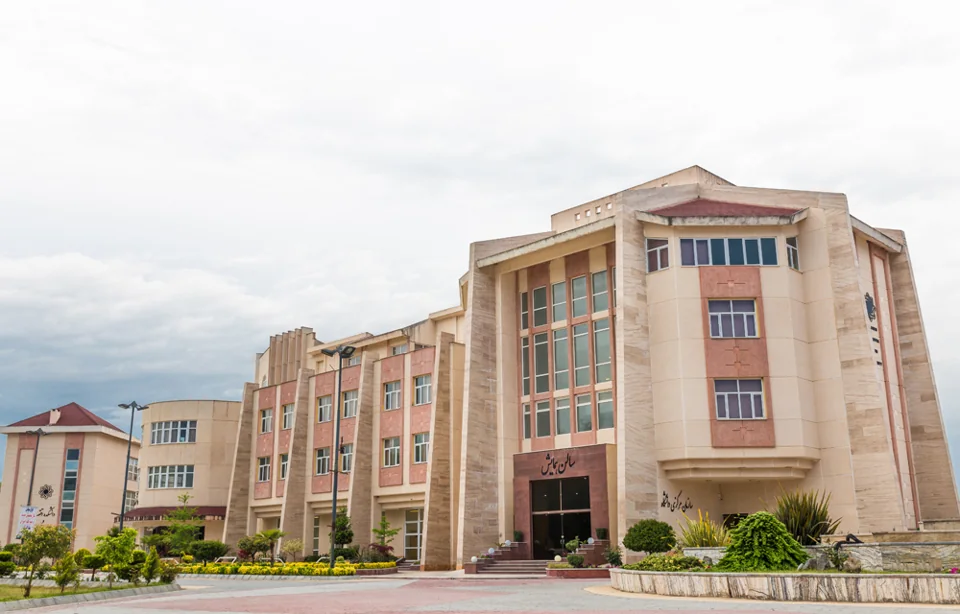
The history records its upgrade from an institute of higher education to university status in the Iranian year 1393, corresponding to 2014–15. Its institutional account describes the development of a purpose-built campus with teaching rooms, laboratories and dining facilities. Several detailed university and faculty descriptions on the website were published in 2019–20; they document the development and organisation of the institution rather than a current admissions prospectus.
Sources: University history and introduction ↗
Engineering and practical learning
The Faculty of Engineering traces its establishment to the Iranian year 1385, or 2006–07. Its account identifies study in architecture, computing, electrical and electronic engineering, civil engineering and related fields. It describes provision across several levels of higher education, including associate, bachelor’s and master’s study.
Practical learning is a significant part of the faculty’s description. Its laboratory building supports science and engineering experiments, while workshops cover electrical work, construction materials and other technical subjects. The faculty also describes educational visits associated with practical courses: architecture students visit historic places and museums, electrical students visit power plants and industrial companies, and civil engineering students visit major construction projects. These activities connect theoretical study with observation of professional settings.
Sources: Faculty of Engineering ↗
Laboratories across engineering subjects
The university’s laboratory description explains how different spaces serve particular courses. Physics laboratories cover mechanics, heat, electricity, measurement and circuits. A chemistry laboratory supports natural-resource subjects including environmental engineering, forestry and fisheries. Digital laboratories introduce students to logic circuits and integrated circuits, with advanced work involving microprocessors and microcontrollers.
The industrial-automation laboratory includes equipment for studying industrial control and sensors. Electrical workshop activities address building installations, control circuits and electrical panels. Electronics laboratories support introductory components as well as more advanced electronic subjects. Civil engineering facilities include soil-mechanics and concrete laboratories. Their described teaching activities range from examining soil properties to preparing concrete samples and studying cement-setting behaviour. The laboratory account illustrates the variety of practical work associated with the university’s engineering provision.
Sources: Laboratory facilities ↗
Economics, administration and a broader subject range
The Faculty of Economics and Administrative Sciences was established in 2007. Its official account places accounting, management, economics, law and English-related subjects within its academic and administrative structure. It describes programmes at associate, undergraduate and postgraduate levels, reflecting an educational scope beyond the university’s engineering fields.
The published university-wide programme directory provides a more detailed view of that breadth. Alongside electrical, mechanical, civil, industrial and computer engineering, it lists architecture, psychology, business and industrial management, accounting, translation and English literature. Natural-resource fields include environmental studies, forestry and fisheries. Energy engineering and sports science also appear in the directory. These listings show the combination of technical, business, language and social-science subjects represented in the university’s educational organisation.
Sources: Faculty of Economics and Administrative Sciences ↗ · Academic programme directory ↗
Library and scholarly resources
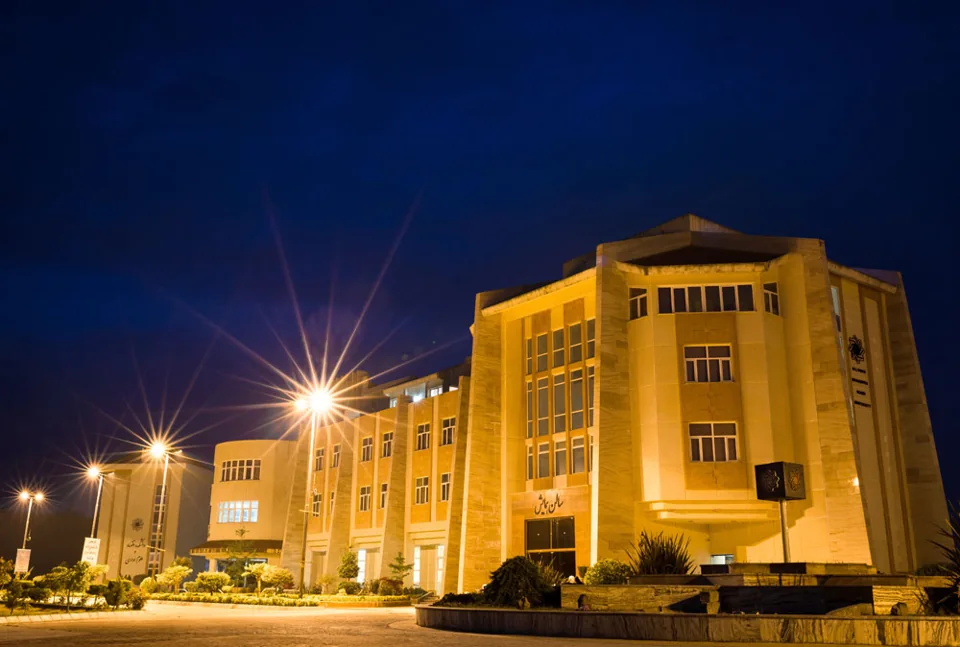
The Library and Scientific Documentation Centre began with the institution in 1996 and later moved to a new campus building. It is described as a central university library, gathering resources for students and faculty across subjects rather than maintaining separate faculty collections. Its collection includes Persian, Arabic and other-language material, together with reference works and postgraduate dissertations.
The library account describes lending, reference assistance, user guidance and computer-based searching. Users can search bibliographic records by fields such as title, author, subject, publisher and keyword. Materials are organised using Library of Congress classification. Reference resources include dictionaries, encyclopaedias, bibliographies, atlases, directories and legal collections. The centre also maintains a dissertation section and describes helping researchers identify sources and conduct subject searches. These services support both course-related reading and independent investigation.
Industry liaison and applied research
The Industry Liaison Office records its establishment in the Iranian year 1389, corresponding to 2010–11. Its purpose is to make university expertise more accessible to industrial organisations and businesses. It describes circulating research calls, gathering information about industrial needs and helping align applied research with those needs.
The office’s stated activities include facilitating the administration of faculty research projects, coordinating work undertaken outside the university and developing agreements with organisations and industrial partners. It also identifies connections between students and industrial centres for internship periods as part of its remit. This provides an institutional framework for interaction between academic departments, external research needs and practical experience, alongside the educational visits described by the engineering faculty.
Sources: Industry Liaison Office ↗
Student support
The university’s counselling-centre description records the start of its work in the Iranian year 1390. The centre was established within student and cultural affairs to offer students support with personal, social and academic concerns. Its account also describes educational publications, workshops and seminars as parts of its wider student-support role.
Digital learning systems
Digital systems form another part of the university’s institutional account. Its history describes online facilities for course selection, grades, examination cards, payments, teaching evaluation and meal reservations. Computer access and campus wireless internet are also identified. These services connect academic administration with everyday student needs and complement the laboratories, library and teaching spaces described across the university’s official pages.