Visa
About Allahabad Agricultural Institute, Deemed University
The historical name and its successor
Allahabad Agricultural Institute–Deemed University is a historical name in the institutional development of today’s Sam Higginbottom University of Agriculture, Technology and Sciences, or SHUATS. The institution is located at Naini in Prayagraj, the city formerly known as Allahabad, in Uttar Pradesh. Its official university account provides an explicit sequence of changes. The agricultural institute was founded in 1910; a government notification declared it a deemed university on 15 March 2000. In September 2009, the name Sam Higginbottom Institute of Agriculture, Technology and Sciences was approved in honour of its founder. The Uttar Pradesh legislation of 2016 subsequently reconstituted the institution as SHUATS, with the Act taking effect on 29 December that year. The university’s Christian educational foundation continues through the Sam Higginbottom Educational and Charitable Society. This history connects the directory’s older name with the institution’s present academic identity. Its stated institutional priorities include environmental stewardship, sustainable development and connecting learning with community needs, with particular concern for women, minorities and the rural poor.
Sources: SHUATS institutional history and statutory transitions ↗
Agriculture and rural development at its roots
The institution’s history presents agricultural education as a response to rural poverty and the need for practical learning. Sam Higginbottom arrived in Allahabad in 1903 and taught at Allahabad Christian College before developing an agricultural school. His approach included visits to villages and a farm at Naini, connecting classroom teaching with the circumstances of rural communities. The Agricultural Institute was established across the Jamuna in 1910. Its historical account describes the reclamation of difficult land and the demonstration of improved farming methods to local cultivators. During its early decades, the institution introduced training in farm machinery and dairying and developed degree-level agricultural study. Later expansion added buildings, accommodation and extension activity. These origins explain the continuing prominence of agriculture, engineering and community engagement within the university’s educational work.
Sources: History and mission ↗
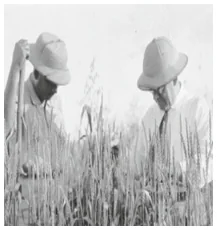
Agricultural science and practical study
The Naini Agricultural Institute carries the agricultural component of the modern university’s provision. Its departmental range includes agronomy, genetics and plant breeding, horticulture, agricultural extension and communication, agricultural economics, plant pathology, entomology, soil science and agricultural chemistry, and animal husbandry and dairying. Food, nutrition and public health also appears in its departmental listing. The academic page links these fields with teaching, research and extension, including soil health, organic farming, crop protection and climate-resilient farming. Its published programmes include undergraduate agriculture and horticulture alongside postgraduate specialisations in crop, soil, animal and economic subjects. Shorter study and training options address areas such as protected cultivation, food processing, organic vegetable production and precision farming. This range connects laboratory and field-based subjects with the social and commercial questions surrounding agriculture, rather than treating farming as a single undifferentiated discipline.
Sources: Naini Agricultural Institute ↗
Engineering connected with agriculture
The Vaugh Institute of Agricultural Engineering and Technology extends that approach into the design and use of technology. Its account identifies soil and water engineering, farm machinery and power, food processing and renewable energy as important fields. Departmental listings also include irrigation and drainage engineering, computer science and information technology, and a centre for geospatial technologies. The published programmes connect agricultural engineering and food technology with computing and a range of postgraduate engineering specialisations. The institute describes an approach in which advanced students may select courses across fields with academic advice, according to their research interests. Its stated combination of teaching, research and extension links technical study with natural-resource management and practical problems. The result is an engineering component rooted in agricultural needs while also engaging with computing, spatial information, energy and the processing of agricultural products.
Sources: Vaugh Institute of Agricultural Engineering and Technology ↗
Dairy science and food technology
The Warner College of Dairy Technology represents another substantial part of the institution’s specialist provision. Its published academic range includes dairy technology, dairy chemistry, dairy microbiology, dairy engineering, food science and technology, and dairy-business management. These subjects bring scientific investigation, processing technology and management into the same educational setting. The college describes practical experience through laboratories, dairy-processing facilities, projects and industry interaction. Its academic page also lists diploma-level study and postgraduate provision concerned with dairy and food analysis, safety and quality. Together these fields show how the institution’s agricultural foundation extends beyond primary production into the handling, processing and evaluation of food. The emphasis on dairy science combines knowledge of products and microorganisms with engineering systems, business decisions and questions of quality control, giving students several distinct routes into the academic study of the dairy sector.
Sources: Warner College of Dairy Technology ↗
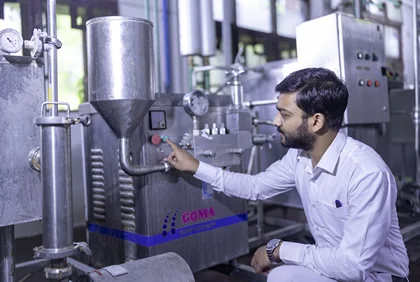
Library support across disciplines
The central library’s description reflects the breadth of the present university. Its collections cover agricultural sciences and engineering alongside subjects such as biochemistry, mathematics, animal science, environmental science, microbiology, biotechnology, management and information technology. The page describes textbooks, reference works and research material, together with technical journals and magazines. Newspapers in different languages and a periodicals section provide additional reading resources. A book-bank service is identified for students from economically weaker backgrounds, while departmental and school libraries support more specialised study. The published electronic-resource links include agricultural research resources, electronic journals and the university’s virtual-library service. Theses and dissertations are also represented in its collection description. These resources bring support for undergraduate teaching, postgraduate study and research together within a library system serving the university’s varied schools and departments.
Sources: Central Library ↗