Visa
About Alanya University
From Alanya HEP to Alanya University
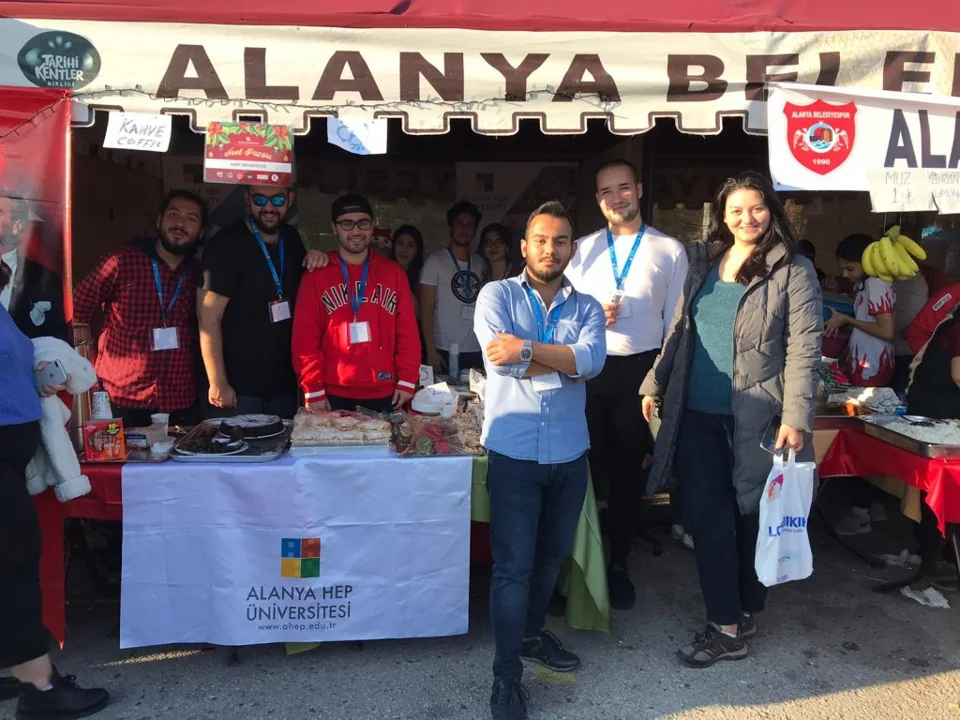
Alanya University is a foundation university in Alanya, in Türkiye’s Antalya province. It previously used the name Alanya Hamdullah Emin Paşa University, with the change to Alanya University recorded in the Official Gazette of February 9, 2023. Its founding organisation, the Hamdullah Emin Paşa and Haremi Hatice Tahire Hanım Foundation, dates to 1932 and established a private school in 1978. The foundation began pursuing a university project in 2007, followed by stakeholder discussions and feasibility work. The university’s governing regulations were published in July 2011. These stages place the institution within a longer local educational initiative. Its current contact information identifies a central campus in Cikcilli and a Hamdullah Emin Paşa campus in Alanya’s Çarşı neighbourhood. The present university therefore carries forward the history associated with the Alanya HEP name while operating under its newer title.
Library support for study and research
The Kemal and Tayyar Hacıkura Library opened to users in 2014. Its description connects physical study space and computer access with library automation and other information-retrieval tools. The library’s purpose includes helping users obtain information efficiently, developing research opportunities through information technology and preserving knowledge resources produced within the university. Its mission is to support teaching and research by responding to scholarly-information needs. The library website brings together a catalogue of subscribed and open-access resources, thesis-related materials, research tools and guidance on off-campus access. It also provides links to instructional videos and an enquiry service. These resources connect the library’s physical role with the use of electronic information. The emphasis is on enabling users to find and use academic material while maintaining the university’s own information resources for continued scholarly work.
Computer engineering and systems
The English-medium Computer Engineering undergraduate programme admitted its first students in the autumn of the 2019–20 academic year. Its description brings computer science and electronics together around hardware, software and the interfaces between them. Students study the design, development and operation of computer systems, with laboratories providing settings in which theoretical ideas can be applied. The department identifies curriculum areas including database-management systems, programming languages, web and mobile programming, data communication, computer networks, software engineering and project management. It also describes project opportunities in computer graphics, image processing, data mining, artificial intelligence, neural networks, machine learning and data science. This range allows computing to be approached through both systems and applications. Elective choices and project work give students ways to explore particular interests while building on the programme’s foundations in the operation and construction of computer-based systems.
Sources: Computer engineering and systems ↗
Architecture, creativity and ethics
Architecture began admitting students to its English-language programme in the 2014–15 academic year. Originally situated within the Faculty of Architecture, the department has continued within the Faculty of Engineering and Natural Sciences since 2023. Its educational description emphasises a learning environment connected with the city and the development of creativity, inquiry and innovative thinking. It also gives attention to ethical identity, presenting aesthetic judgement and ethical responsibility as related aspects of architectural education. The programme listing includes four-year undergraduate routes in Turkish and English and postgraduate architecture options, with thesis and non-thesis formats identified separately. The department’s published academic resources connect programme information with courses, internships, workshops, conferences and research activity. This combination places design education within a wider intellectual setting, linking the development of an architectural approach with the study of place, research and professional responsibility.
Gastronomy and culinary arts
The English-language Gastronomy and Culinary Arts programme combines technical culinary skills with management and academic study. Its curriculum is organised around four broad elements: cooking skills, science, business and culture. Topics listed by the department include Turkish and international cuisine, food hygiene and safety, food science, nutrition, menu planning, sensory analysis, accounting, service marketing, restaurant design and food-and-beverage management. Elective areas include bakery production, molecular gastronomy, cake making and decoration, and chocolate-production techniques. The programme also describes additional foreign-language learning and internships that connect taught work with practical experience. Recipe preparation and development are part of its account of culinary competence, alongside the understanding of food preparation. These elements give the discipline a scope beyond cooking alone, connecting creative production with the scientific, cultural and organisational questions involved in preparing and presenting food.
Sources: Gastronomy and culinary arts ↗
Management information systems
The English-medium Management Information Systems programme combines business knowledge with the technical foundations of information technology. Its description centres on data-informed thinking, decision making, strategic planning and the integration of technology into organisations. Curriculum areas include database management, software development, business intelligence, big data, artificial intelligence and enterprise resource planning. The department presents theory and applied learning as complementary parts of the programme. Its subject matter therefore sits between organisational processes and the digital systems used to support them. Students encounter questions about how information systems and management can be brought together, rather than studying either field in isolation. The academic page also links course plans and descriptions with internships, double-major and minor information, and Erasmus mobility resources, providing a framework through which the programme’s technical and managerial elements can be followed throughout university study.
Sources: Management information systems ↗