Visa
About Alagappa University
A state university in Karaikudi
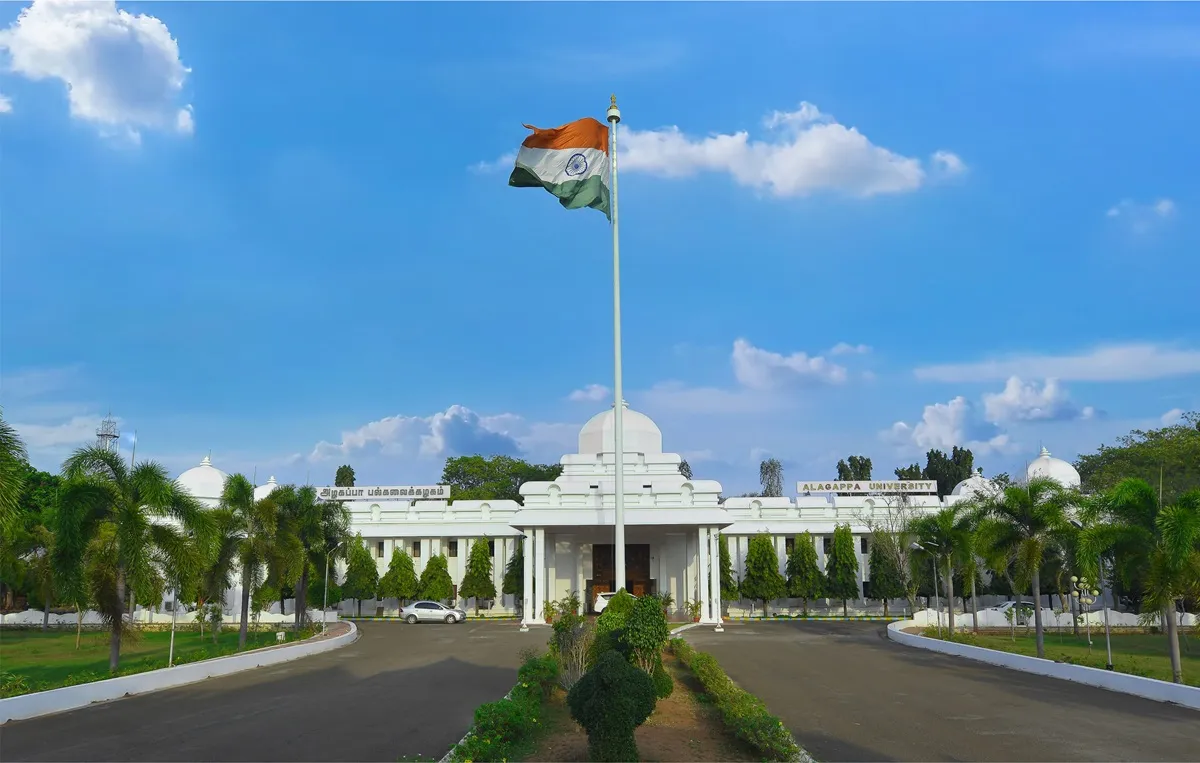
Alagappa University is a Tamil Nadu state government university in Karaikudi, Sivaganga district. Established through state legislation in May 1985, it developed from the educational environment created by philanthropist RM Alagappa Chettiar. The university initially had a unitary structure and became an affiliating university in 2002. Its academic work spans arts, science, education and management, while its wider responsibilities include relationships with affiliated colleges in Sivaganga and Ramanathapuram districts. Campus teaching sits alongside distance, online and collaborative modes of education. These different settings form part of its stated purpose of developing and disseminating knowledge across varied fields. The university’s institutional identity therefore combines teaching and research in Karaikudi with a broader regional educational role.
The founder’s educational legacy
The university’s founder account places Alagappa Chettiar’s philanthropy within a wider commitment to education. Born in Kottaiyur in 1909, he studied English literature at Presidency College in Madras and later pursued legal training in England. His business activities extended across several sectors before education became a major focus of his giving. The university records that he responded to a 1947 appeal for industrialists to establish colleges by starting an arts college in Karaikudi. His donations helped create educational institutions and supported the establishment of the Central Electrochemical Research Institute in the town. These earlier initiatives preceded the university itself by decades, providing a historical foundation for the educational setting in which the state university was established in 1985.
Sources: RM Alagappa Chettiar and educational philanthropy ↗
Computing, research and practical learning
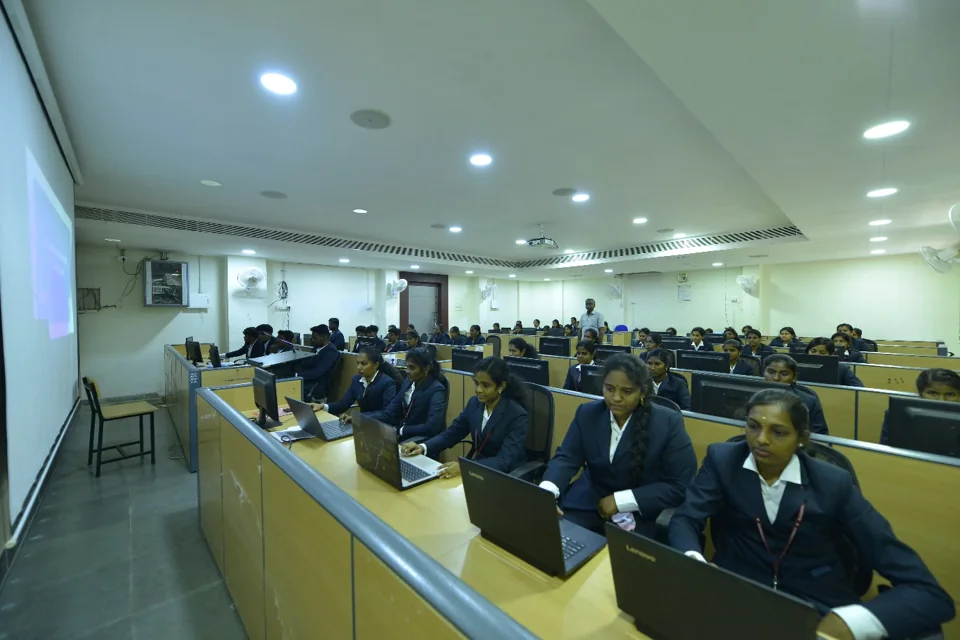
The Department of Computer Science was established in 2016 within the university’s computational-sciences environment. Its academic provision includes master’s study in computer science and cyber forensics, together with doctoral research in computing and interdisciplinary areas. Published research interests include data analytics, machine learning, networks, image processing, information security, databases, smart agriculture and healthcare informatics. The department describes a multipurpose computer laboratory, modular workstations and lecture rooms using digital presentation equipment. Its research themes extend into cloud computing, algorithms and computational biology. Student organisations support workshops, seminars and technical activities, including a cyber-forensics hackathon club established in 2023. These elements connect specialist postgraduate learning with practical computing facilities, research questions and opportunities for student-led activity.
Sources: Department of Computer Science ↗
Library resources and digital access
The Central Library was founded in 1987. The university’s 2024 library description records a combination of printed collections, electronic resources and services supporting scholarly work. It describes automated operations through Koha, with RFID-based borrowing, self-checkout kiosks, catalogue terminals and a book-return kiosk. Readers have access to study halls, stack areas, discussion space and an internet centre. Digitisation of university theses forms another part of its work, alongside facilities for electronic theses and dissertations. The documentation also identifies links with INFLIBNET and DELNET and access to open educational resources. The account also describes faculty libraries for science, arts, education and management, together with a public library. These arrangements support discovery and use of academic materials, bringing physical collections and digital tools together for students, researchers and teaching staff.
Community radio and public engagement
Alagappa University Community Radio was commissioned on 26 January 2021 and broadcasts at 90.8 MHz. Its programmes are usually in Tamil, with occasional English or bilingual content. The station’s themes include educational guidance, agriculture, environmental awareness, health information, gender equality and preparation for competitive examinations. Student participation appears through cultural programmes, talks, skits and local event coverage. Its programme descriptions also include book discussions, interviews with specialists, storytelling and science communication. The station works with university staff, local experts and student volunteers, and distributes content through podcasts as well as broadcasting. Projects described by the station include election-awareness programming and science communication in cooperation with research and public organisations, extending university activity into the surrounding community.
Sources: University Community Radio ↗
Accessible learning and special education
The university’s special-education provision includes a resource school and a Centre for Multimodal Material Production for learners with disabilities. The university dates the centre and associated para-sports initiative to 2013. Its account describes schools supporting children with intellectual disabilities and autism through individual educational planning. Accessible educational materials are another focus: a Braille and audio-book unit produces Braille and DAISY resources and introduces learners to assistive devices. Listed facilities include a Braille library, smart classroom, sensory room and assistive-technology room. An enabling unit promotes equal opportunity and inclusion, while a vocational store presents craft work developed through the special-school setting. These activities link specialist educational support, accessible materials and opportunities for participation beyond conventional classroom teaching.
Remembering the institution’s educational origins
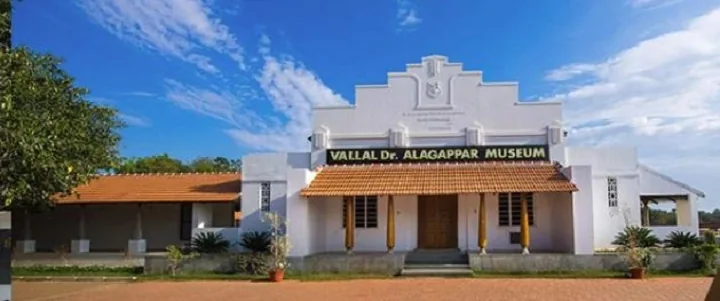
The Vallal Dr Alagappar Museum opened on 4 April 2017. It preserves historical photographs, memoirs and objects associated with RM Alagappa Chettiar, presenting his life and educational work within the university setting. Personal belongings and documentary material help connect the founder’s history with the institutions that developed around his philanthropy. The museum also provides a public-facing cultural facility alongside the university’s teaching and research spaces. Its exterior carries the founder’s name prominently, making the connection visible on campus. Together with the university’s published historical account, this collection offers students and visitors a place to explore the origins of Karaikudi’s educational environment and the background to Alagappa University’s later establishment.
Sources: Alagappar Museum ↗