Visa
About Alagappa Chettiar Government College of Engineering and Technology
An engineering college in Karaikudi
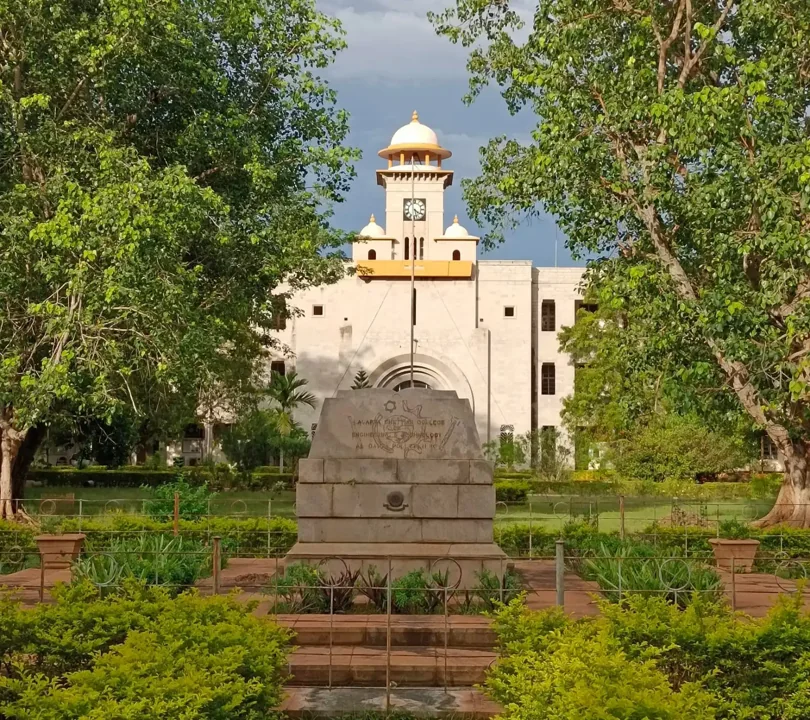
Alagappa Chettiar Government College of Engineering and Technology is located in Karaikudi, in Tamil Nadu’s Sivaganga district. Founded by R.M. Alagappa Chettiar, it began functioning on July 21, 1952, with civil, mechanical, and electrical and electronics engineering. The foundation tablet for its main building was laid by India’s president Rajendra Prasad in February 1953. In 1966 the institution was handed over to the Tamil Nadu government and came under the Directorate of Technical Education. Its subsequent expansion included computer science and engineering and a range of postgraduate specialisations. The institutional history records autonomous status from the 2009–10 academic year. Beyond academic instruction, the college describes associations, clubs, competitions and sports as parts of campus life, while alumni involvement connects students with the institution’s longer educational community. This history distinguishes the Karaikudi college from similarly named institutions elsewhere in Tamil Nadu.
Sources: An engineering college in Karaikudi ↗
Mechanical engineering and manufacturing
Mechanical Engineering is one of the college’s original departments, established in 1952. Its provision includes full-time and part-time undergraduate study, together with master’s programmes in Manufacturing Engineering and Computer Aided Design. The department describes research in composite materials, heat transfer, manufacturing, robotics, automation and additive manufacturing. A Centre of Excellence in Additive Manufacturing was established in 2019 with Tamil Nadu government support. Technical workshops and faculty-development programmes address emerging subjects, while guest lectures and industrial visits supplement the academic curriculum. Students also participate in professional-society activities and engineering design contests, including BAJA, go-kart, solar-car, bicycle and Effi-Cycle events. These activities bring mechanical design and practical problem solving into a setting beyond ordinary lectures. The department’s stated educational approach combines engineering knowledge with ethical conduct, practical implementation and research, connecting technical study with the processes through which machines and manufactured products are developed.
Civil engineering, structures and environment
The Civil Engineering department also dates to 1952. It offers undergraduate civil engineering in full-time and part-time formats and postgraduate study in Structural Engineering and Environmental Engineering. Departmental resources include laboratories, a research centre, virtual classroom, library and computer facilities. Its account of consultancy work identifies infrastructure design, construction-material testing, stability checks and third-party inspection among faculty activities. Student projects include investigations of energy-efficient construction materials and the reduction of pollution associated with building activity. The Civil Engineering Association, Standards Club and Institution of Engineers activities provide further opportunities for participation. Conferences, workshops, seminars and symposia bring specialised topics into departmental life. The department’s mission emphasises open-ended design, problem solving, teamwork, communication and leadership, placing those abilities alongside technical knowledge. These elements connect the study of structures and environmental systems with the practical and social questions encountered in infrastructure development.
Electrical systems and emerging technologies
Electrical and Electronics Engineering was established in 1952 and remains another longstanding part of the college. Its programme listing includes the B.E. in Electrical and Electronics Engineering, a part-time undergraduate route and the M.E. in Power Electronics and Drives. The department describes laboratory resources concerned with the Internet of Things, smart grids and special electrical machines, alongside solar installations. Its Next Gen Internet of Things Laboratory gives a specific example of how newer digital technologies sit beside established electrical-engineering subjects. Classrooms and the departmental library support electronic learning, while guest lectures and industrial visits supplement course-based instruction. The department also describes curriculum development as a continuing activity involving stakeholders. Its educational goals include research, innovation, leadership and lifelong learning, with an emphasis on applying electrical and electronics knowledge to technological and societal problems. This combination links foundational electrical study with changes in connected systems and energy-related technology.
Electronics and communication engineering
The Electronics and Communication Engineering department offers a bachelor’s programme in its discipline and an M.E. in Microwave and Optical Communication, as well as part-time undergraduate study. Its published teaching and research areas include telecommunications, signal processing, radio-frequency circuit design, optical communication, VLSI design and cyber-physical systems. The department describes laboratory training, activity-based learning and projects as ways to connect underlying concepts with practical applications. Internships, technical events, industrial interactions and professional activities extend that learning environment. Its stated interests also encompass embedded systems, wireless communication and semiconductor technology. Faculty research and publications accompany teaching, and the department encourages interdisciplinary projects and student innovation. Professional ethics and entrepreneurship appear in its objectives alongside technical competence. Together, these features present communication engineering as a field that links electronic components and circuits with the transmission, processing and use of information in increasingly connected technological systems.
Library and shared campus facilities
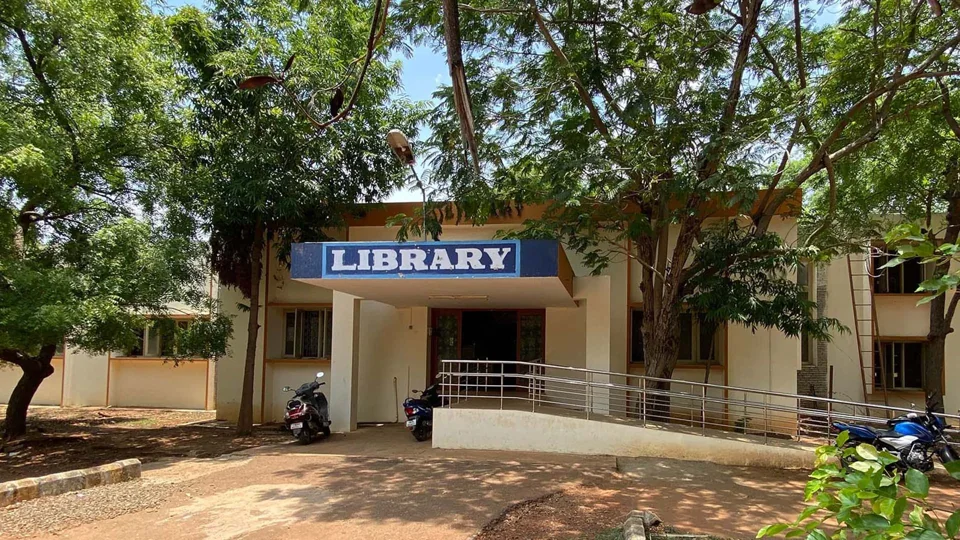
The central library provides general books, a reference section and an SC/ST book bank, together with electronic books and journal subscriptions. Its digital hall supplies internet-connected computers for consulting electronic resources. A separate Central Computer Centre, inaugurated in 2011, adds shared computing space for the campus community. Facilities extend beyond academic work: the college lists residential hostels, a canteen, a cooperative store, a post office and transport for day scholars. Dewan Bahadur Murugappa Hall hosts college functions, graduation events, cultural performances and academic programmes. Sports facilities include courts and grounds for activities such as badminton, basketball, volleyball, cricket, football, hockey and tennis, along with a gym and table tennis. These shared spaces support different aspects of student life, from reading and computer work to residential routines, recreation and institutional gatherings, complementing the specialised resources maintained within individual engineering departments.
Sources: Library and shared campus facilities ↗