Visa

About Al Wataniya Private University
A private university in Hama governorate
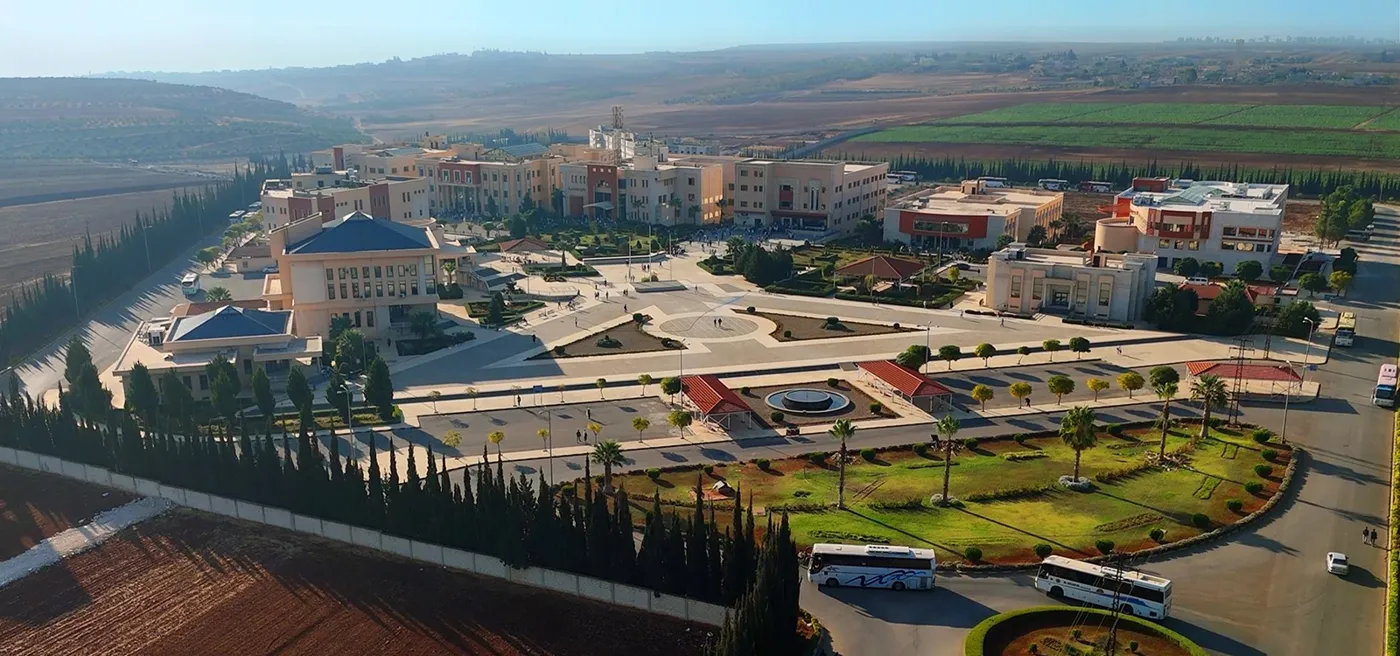
Al Wataniya Private University is a Syrian higher education institution established in 2007. Its official address places the university in Hama governorate on the Homs–Hama international highway. Its academic provision brings together health-related subjects, engineering, architecture, business and administrative studies.
The university describes a connection between academic knowledge and practical experience as a central educational theme. Its research infrastructure includes the Academic Oasis for scholarly work and academic events, a Student Oasis for student research and projects under academic supervision, and an electronic scholarly journal. These platforms provide distinct channels for presenting research and educational activity alongside the university’s faculty programmes and learning resources.
Sources: University overview ↗
Planning a course of study
The university’s new-student guide explains a credit-hour system for organising academic study. Students arrange their course load in relation to the academic plan and university guidance. The guide identifies first and second semesters and an optional summer semester, providing a framework for understanding how courses fit into the academic year.
The guide also outlines the application sequence: reviewing admission conditions, choosing and ordering academic preferences, submitting an electronic application through the official channels, following the admission result and completing registration requirements. It identifies Arabic as the principal teaching language in the introductory material. Academic guidance appears throughout this account as a way to understand programme choices, study plans and semester organisation. The guide brings this practical information together with links to faculties and university contact channels.
Sources: New student guide ↗
Engineering in computing and communications
The Faculty of Engineering focuses on informatics and communications. Its published introduction combines theoretical knowledge with practical work in programming, systems design and networks. The faculty describes analytical and creative thinking, continuing learning and the application of technology to community needs among its educational priorities.
The laboratory descriptions give more detail about this practical component. Computing facilities are associated with programming, simulation and network design. Optical communications work concerns fibre optics, light sources and measurements of transmission and reception systems. Microprocessor training connects software with processors, controllers and electronic components. The faculty’s broader subject framework includes algorithms, data transmission, digital and embedded systems, and research projects. These descriptions establish a technical scope that spans software, networks and the interaction between computer programmes and physical systems.
Sources: Faculty of Engineering ↗
Architecture, design and urban planning
The Faculty of Architecture and Urban Planning presents architectural education as a meeting of engineering knowledge and artistic creativity. Its academic aims concern design thinking, technical skills, research and responses to contemporary architectural and urban challenges. Sustainability, cultural identity and the needs of local communities are recurring themes in its published account.
The faculty identifies architectural design, urban planning, engineering drawing and digital modelling as areas of education and training. Computer-based drawing and design include the use of AutoCAD. Its description of urban planning concerns the organisation of urban spaces and the sustainability of the built environment. Research and analytical work accompany the design component, with attention to resource efficiency and environmental considerations. This framework connects the appearance and function of buildings with the wider contexts in which they are designed and used.
Civil engineering and applied research
The Faculty of Civil Engineering presents analysis, design and engineering creativity as central skills in its educational work. Its published page provides routes to faculty aims, study plans and academic research.
The research titles listed on the faculty page illustrate several areas of investigation: water treatment, recycled-concrete structural behaviour, modelling of drinking-water processes and early-warning systems at water-purification plants. An article on railway rehabilitation is also included. These titles indicate the range of topics represented in the faculty’s scholarly output, linking structural materials, environmental engineering, infrastructure and quantitative analysis within its civil-engineering context.
Sources: Faculty of Civil Engineering ↗
Administrative and financial studies
The Faculty of Administrative and Financial Sciences describes education that connects academic theories with practical applications in a changing economy. Its academic page identifies teaching leadership, study-plan information and research as elements of the faculty’s organisation.
The listed research and article subjects include financial brokerage in the Damascus securities market, organisational change, the Syrian economy, housing and railway rehabilitation. These provide examples of the financial, organisational and economic questions represented on the faculty’s page. Business administration, accounting and marketing are also identified within the university’s wider description of its business and administrative disciplines.
Sources: Faculty of Administrative and Financial Sciences ↗ · University overview ↗
Library services and information organisation
The university library supports teaching and research through books, university references, journals, bulletins and other information sources. Its responsibilities include internal and external lending, cataloguing, classification, documentation and preservation of university theses. Electronic services are described alongside these collection-based functions.
The library’s published tasks include planning collection development, preserving materials and preparing bibliographic lists. It also coordinates exchanges and gifts of university publications with other universities, libraries and cultural centres. Communication with publishers is intended to support the development of current information resources. Electronic management, including MARC-based records, forms part of the organisational framework. These services connect the acquisition of resources with their arrangement, preservation and availability to students and researchers.
Sources: University library ↗
Studying architectural heritage in the field
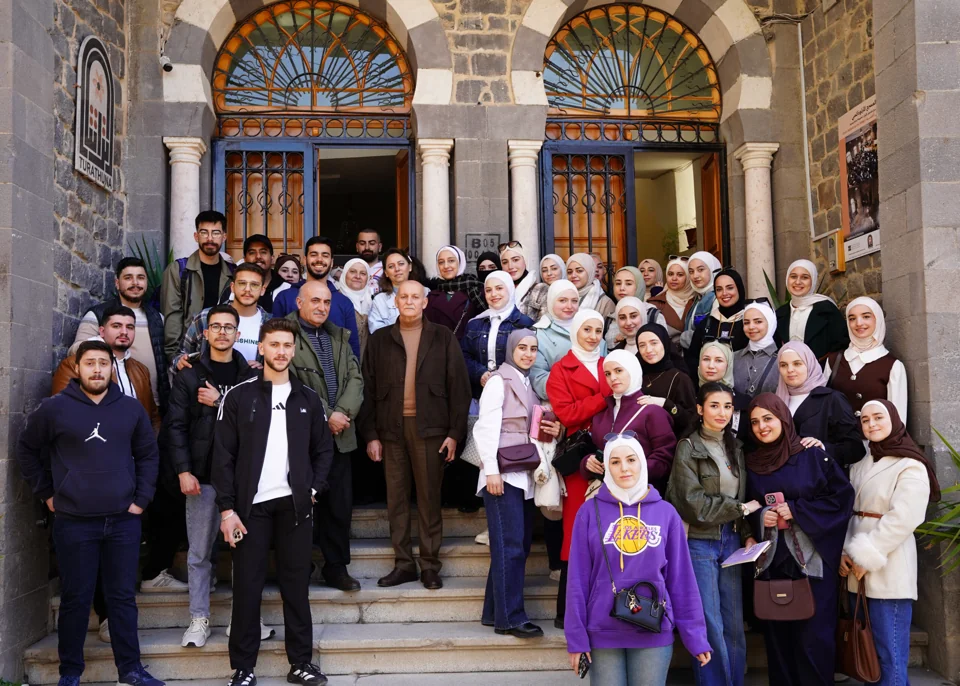
An April 2026 university report describes an architecture-student visit to Old Homs. The visit included the Orthodox Theatre and an account of its restoration, followed by historic religious buildings, a bathhouse and other landmarks. Students examined architectural features and the relationship between individual buildings and the surrounding urban fabric.
The report connects the activity with Architectural Design VII and with understanding heritage preservation and rehabilitation. Discussions at the theatre introduced the building’s condition before the war, the damage it sustained and phases of restoration. The visit therefore provided a practical setting for considering how architectural history, existing urban spaces and restoration work relate to design education.
Sources: Architecture students visit Old Homs, April 2026 ↗
Presenting graduation projects
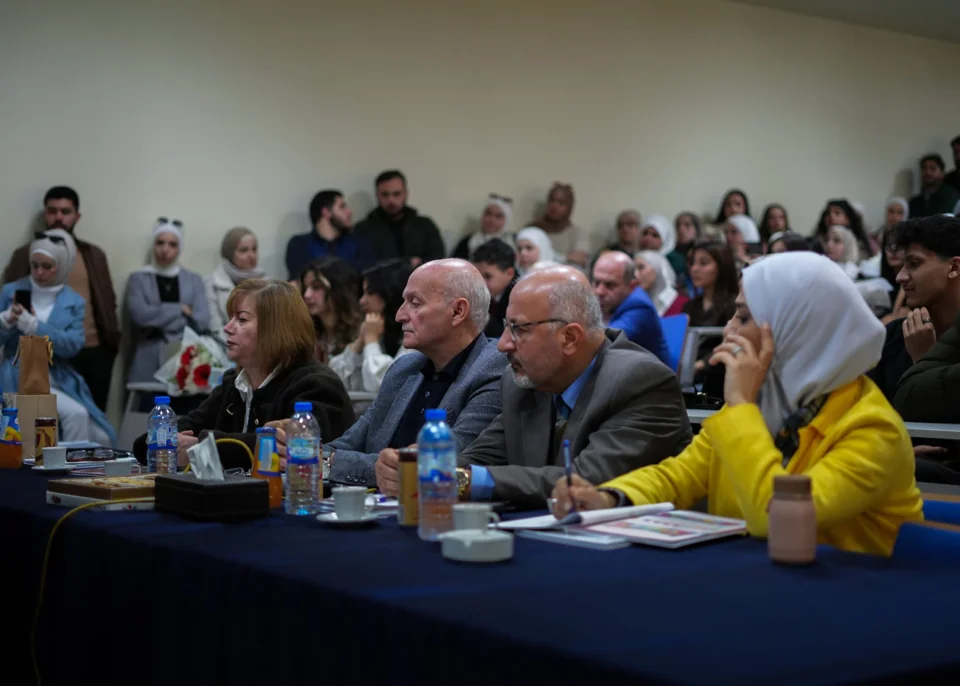
The Faculty of Architecture and Urban Planning also documented graduation-project defences held from 28 March to 1 April 2026 for the first semester of 2025–2026. Students presented their projects to specialist academic evaluation committees, with faculty members and students’ families in attendance.
The university’s report describes these projects as bringing together academic knowledge and practical design skills. The defence sessions offered a formal setting for explaining and discussing work developed through the programme. Alongside the field visit, this provides a dated example of how architectural learning was presented and evaluated within the faculty.
Sources: Architecture graduation-project defences, March–April 2026 ↗