Visa
About Al-Hawash Private University
Foundation and setting
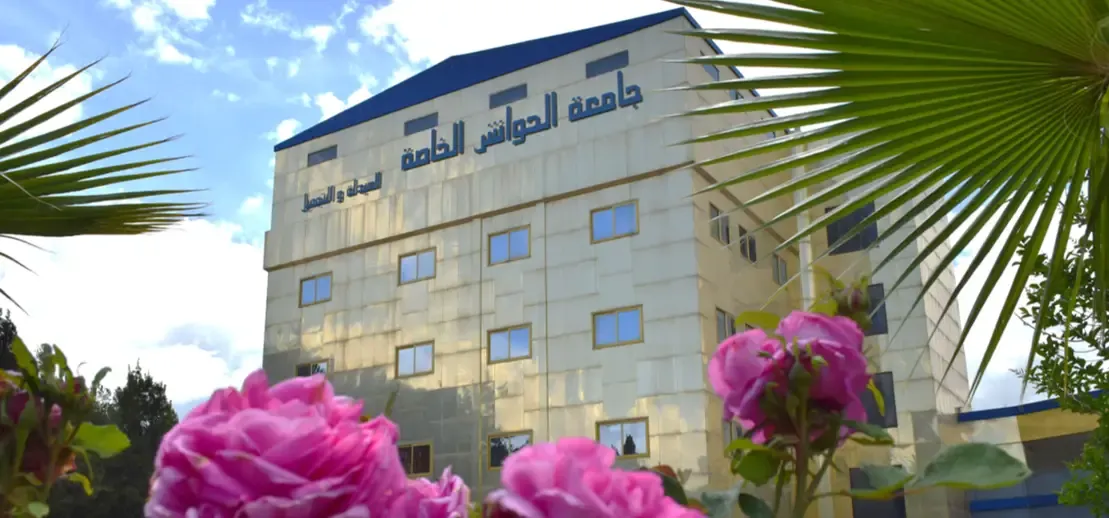
Al-Hawash Private University is a Syrian higher-education institution in Al-Hawash, within Homs governorate. Its location is in Wadi al-Nasara in western Syria, near the Lebanese border. The university was established in 2007 under presidential decree 258 as Al-Hawash Private University for Pharmacy and Cosmetology. Its official history records a change to the name Al-Hawash Private University in 2012.
The institution subsequently developed a broader academic structure. Its establishment page identifies faculties covering medicine, dentistry, pharmacy, cosmetology and health care, engineering, entrepreneurship, nursing and law. Within engineering it names architecture, civil engineering and information technology. This progression explains the university's development from an institution with a name focused on pharmacy and cosmetology into one spanning scientific, professional and legal education.
Sources: Foundation and setting ↗
An educational mission joining teaching and research
The university's published mission connects education, learning and research with service to society. It describes an ambition to prepare professionals who combine competence with social and ethical responsibility. Teaching innovation, academic enquiry and public service are recurring themes in its institutional direction.
Its core values include integrity, professionalism, accountability, engagement and responsiveness to health-care needs at local, national and international levels. The university also identifies teamwork, critical enquiry and global awareness as important elements of education. These are presented alongside a commitment to a supportive learning environment and the integration of teaching with research. Partnerships and strategic cooperation with other educational institutions in Syria and abroad form another part of this account of how the university seeks to develop its work.
Sources: An educational mission joining teaching and research ↗
Engineering disciplines and problem solving
The Faculty of Engineering describes three principal departments: Architecture Engineering, Civil Engineering and IT Engineering. Its academic aims connect technical knowledge with teamwork, innovation and continuing learning. The faculty's mission places engineering education within a research community intended to contribute to scientific and technical development in Syria.
Its published learning objectives are concrete about the process of engineering work. Students are expected to apply problem-solving methods to introductory design and analysis questions, select suitable tools, and identify both known information and the information still needed to reach a solution. Small-group organisation and effective collaboration also appear among its objectives. The faculty therefore links disciplinary study with the analytical, practical and cooperative processes through which engineering problems are investigated.
Law, scholarship and public understanding
The Faculty of Law presents itself as a student-focused academic setting concerned with legal knowledge, research and public service. Its mission combines understanding law and legal institutions with ethical responsibility, justice and the rule of law. Intellectual openness and communication are also part of its educational direction.
Faculty objectives include developing research and innovation, encouraging lifelong learning and increasing academic cooperation. Its account also identifies a public-awareness role: knowledge about laws is intended to reach beyond students into the wider community. In this framework, law is treated as a subject of scholarship and enquiry as well as professional preparation. The faculty's emphasis on research aptitude and cognitive skills complements the legal subject knowledge it seeks to develop through teaching.
Pharmacy as an academic field
The Faculty of Pharmacy describes education that brings research, teaching and experiential learning together. Its academic vision emphasises student-centred approaches, interprofessional educational experience and the development of pharmaceutical knowledge. The faculty's mission also highlights a supportive environment for leadership, academic achievement and continuing professional development.
Critical thinking and problem solving are among its published values, alongside professionalism, accountability, quality improvement, human dignity and ethics. The faculty presents these commitments as shaping its staff, students and alumni. This educational account connects scientific study with the habits of enquiry and responsibility associated with the discipline. It also places lifelong learning within the faculty's purpose, making professional development an ongoing academic concern alongside its university teaching and research activities.
Sources: Pharmacy as an academic field ↗
Examinations in the 2025–2026 academic year
A university report published on 8 January 2026 records the start of first-semester final examinations for the 2025–2026 academic year across its faculties and departments. The university president and vice presidents visited examination settings with faculty deans to follow the organisation of the assessment period.
The report describes attention to room readiness, examination questions and student enquiries. It also records an emphasis on following examination rules. The accompanying photographs show students engaged in assessment, including work at a drawing table. This provides a dated view of an academic activity taking place at the university. Its scope is that examination period and the settings documented in the report, providing specific evidence alongside the institution's broader descriptions of education.
Sources: Examinations in the 2025–2026 academic year ↗

University governance in March 2026
The Board of Trustees held its fifty-fifth meeting on 24 March 2026, according to the university's report published the following day. The meeting was chaired by George Dib and attended by members of the board. Its discussion covered academic and administrative questions affecting the university.
The published account identifies the educational process, development of academic supervision and support for scientific research among the subjects considered. It also refers to institutional-development priorities. This dated meeting illustrates how teaching and research questions enter the university's governance agenda. Together with its faculty missions and examination reporting, it offers a view of the institution at several levels: academic purpose, disciplinary education, assessment and administrative oversight.
Sources: University governance in March 2026 ↗