Visa
About Al-Sham Private University
Al-Tall and the wider university
Al-Sham Private University is a Syrian institution established under Legislative Decree 97 of 28 July 2011. Its contact address is Al-Tall in Rif Dimashq, and its academic provision extends across several locations. The official university introduction identifies medicine, pharmacy, informatics engineering, international relations and diplomacy, law and administrative sciences at Al-Tall. Dentistry is identified separately in the Al-Mazraa district of Damascus. The same introduction lists dentistry, pharmacy, law and administrative sciences in Latakia. These locations form parts of the wider university, with their respective faculties distinguished in the institution's own organisation. Its educational objectives include specialist preparation, research, innovation and cooperation with other universities and the community.
Sources: About Al-Sham Private University ↗
Study through a credit-hour system
The university describes its study system in terms of credit hours, courses, prerequisites and academic guidance. Students select courses within the requirements of their programme and the permitted study load, with support from an academic adviser. A prerequisite must be completed before a related later course can be taken. The study-system page describes regular semesters of sixteen weeks and an optional summer semester of eight weeks, including examinations. Academic advisers help students understand university regulations, interpret their study plans and choose suitable courses. They also review students' records and follow their progress. This framework makes individual course selection part of a structured programme, with advising intended to support decisions throughout university study.
Developing English-language skills
The Al-Sham English Remedial Program, known as SERP, supports students' reading, writing, speaking and listening. Its overview describes a placement-based approach and a preparatory route for students who do not pass the language proficiency test required before English 1. Teaching includes grammar, vocabulary, expressions and conversation, with interactive classroom activities and regular feedback. The programme identifies the fifth edition of Interchange as its teaching series and uses accompanying audiovisual resources. Its stated objectives include greater confidence in everyday English and preparation for further academic use of the language. The programme page gives a Damascus Baramkeh venue, distinguishing this particular support activity from the university's Al-Tall faculties.
Informatics engineering
The Faculty of Informatics Engineering records its establishment through a Ministry of Higher Education decision in 2015. Its educational account emphasises developing the curriculum alongside technological change and using practical teaching methods, computers and information technology in learning. Research laboratories and cooperation with researchers are included in its stated development ambitions. The faculty presents the connection between theoretical study and technical application as central to its work. Its public activity pages also document student projects and robotics participation, providing examples of the kinds of applied enquiry associated with this academic area. Proposed future postgraduate development appears as an ambition in the faculty account.
Sources: Faculty of Informatics Engineering ↗
Administrative sciences
The Faculty of Administrative Sciences dates its establishment to a ministry decision in 2013. Its mission centres on knowledge, practical expertise and human capabilities relevant to administrative and economic development. The faculty describes decision-making and organisational performance as important areas of application. It seeks to prepare students to use resources effectively, interact constructively with their working environments and contribute to development. Its account also places the faculty in a relationship with business organisations and bodies concerned with finance and commerce. This gives administrative education a community-facing purpose, connecting the study of management with the institutions and organisations that shape economic and social activity.
Sources: Faculty of Administrative Sciences ↗
Coordinating research and innovation
The university's Scientific Research Council sets out responsibilities that include encouraging research, considering research plans and projects, and recommending research budgets. It works with colleges on conferences, seminars and other scientific activities and considers cooperation agreements with academic institutions. Its published objectives also cover the review and development of study plans, scientific books written by faculty members, and recommendations concerning university journals. Workshops for students and support for innovation and patents form part of the same remit. These functions describe a coordinating role across the university, linking individual research proposals and publications with institutional planning, academic exchange and opportunities for students to develop research-related skills.
Sources: Scientific Research Council: objectives and vision ↗
Graduation projects addressing local needs
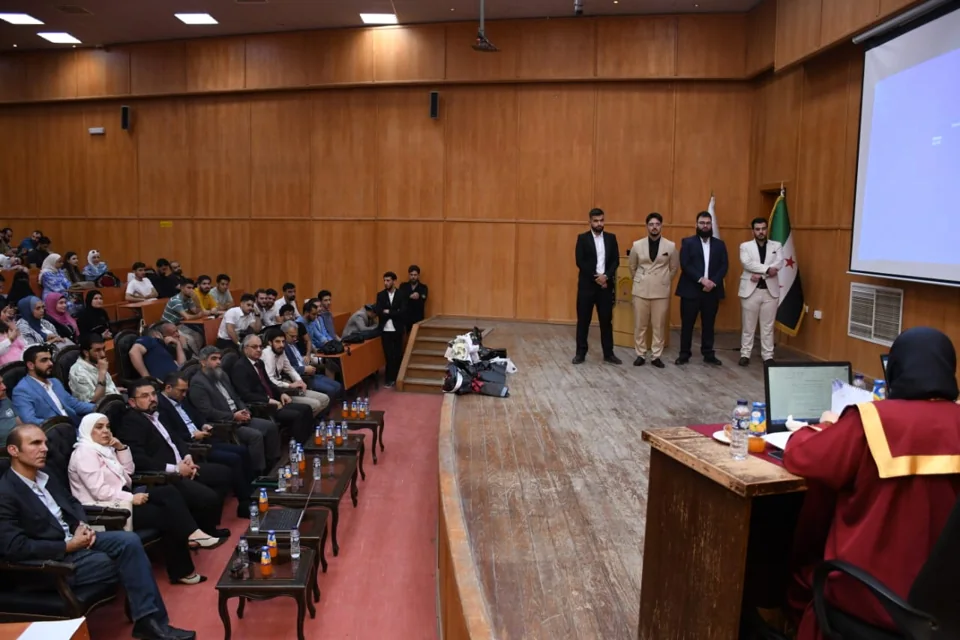
On 13 June 2026, the university reported discussions of graduation projects in informatics engineering attended by university representatives and Al-Tall officials. The projects covered bioinformatics, industrial administration, education and public services. Examples included a platform for managing the Al-Salima industrial area in Al-Tall, Arabic-language learning for children through gamification, software intended to support people with disabilities, and digital administration for a football referees' committee. Another proposal concerned communication between residents and public-service institutions about local problems and complaints. The report presented these as student projects and ideas with potential for practical development. It connected academic assessment with discussion of needs in the surrounding community and local industry.
Sources: Informatics graduation projects, 13 June 2026 ↗
Robotics in a competitive setting
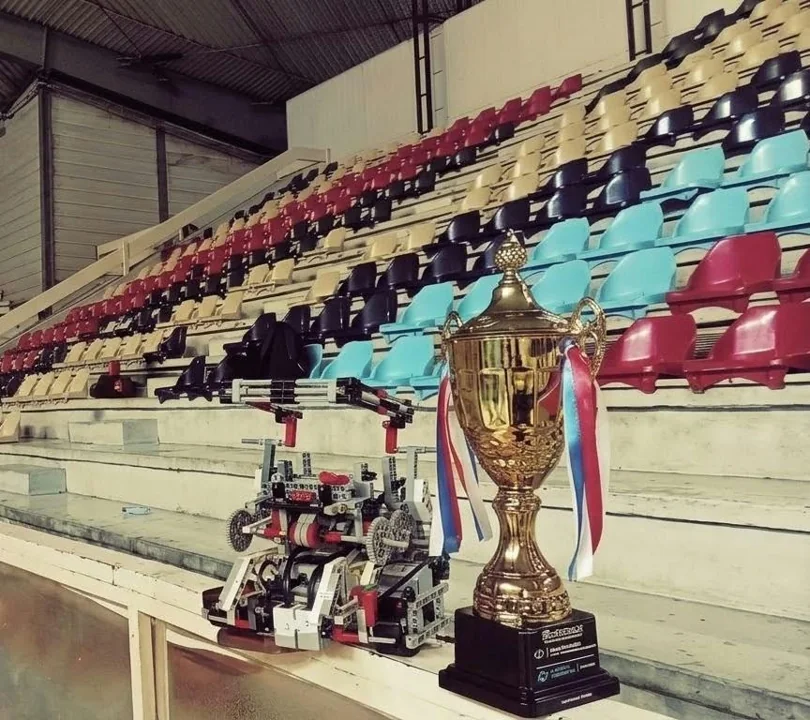
A report dated 2 November 2026 describes informatics students participating in SYROBIX 2026 with two robots, Zaqzoq_AHM and Sobhi. The university reported receiving the best robot-programming cup. The event took place at the Jasmine City venue in Damascus and was organised by the Robotics Club of Damascus University's Faculty of Informatics Engineering with partner organisations. Its stated educational aims included programming, mechanical design and applying technology to problem-solving. The account recognised student teams and their coaches, connecting training and teamwork with the final competition. This is a dated example of students presenting technical work beyond their own university and engaging with a wider robotics community.
Sources: SYROBIX robotics participation, 2 November 2026 ↗