Visa
About Al Wasl University
From a college to Al Wasl University
Al Wasl University is a non-profit higher-education institution in Dubai, United Arab Emirates. Juma Al Majid established its predecessor, the College of Islamic and Arabic Studies, in 1986 with support from the Dubai government. The college began receiving undergraduate students in the 1986–1987 academic year. Its legal status changed to Al Wasl University in April 2019, a transition documented in the Commission for Academic Accreditation’s institutional review. Postgraduate education developed well before that change: Islamic law master’s study began in 1995–1996, followed by Arabic language and literature in 2002–2003. Doctoral study subsequently expanded into Islamic jurisprudence and Arabic language and literature. Arabic is the principal teaching language, with English serving a supporting role in Arabic-taught programmes. This history places the university’s present work within a longstanding commitment to language, Islamic scholarship and service to Emirati society.
Sources: University history ↗ · Commission for Academic Accreditation: 2022 institutional review ↗
Arabic language, literature and information studies
The College of Arts brings language scholarship and information studies into the same academic setting. Its undergraduate programmes include Arabic Language and Literature and Library and Information Sciences. Postgraduate work encompasses Arabic linguistic studies, literary and critical studies, and doctoral research in these fields. The college’s objectives connect Arabic teaching and research with openness to other languages, cultures and literatures. They also emphasise cultural diversity, ethical conduct and cooperation. Its academic activity includes conferences and specialist discussions: the college records an international Arabic-language conference in November 2020 and an international linguistics symposium in June 2021. These events extended academic exchange beyond regular teaching, drawing participants from other universities and countries into discussions of language and literary scholarship.
Sources: College of Arts ↗
Islamic studies and contemporary questions
The College of Islamic Studies identifies research preparation and engagement with contemporary jurisprudential questions among its educational objectives. Its mission connects academic knowledge with professional understanding and contributions to local and regional institutions. The college also describes moderation, tolerance and service to society as guiding principles. These aims place the study of Islamic thought within both an intellectual and a social context, with research skills forming an important part of the preparation it seeks to provide.
Sources: College of Islamic Studies ↗
A library organised around scholarly work
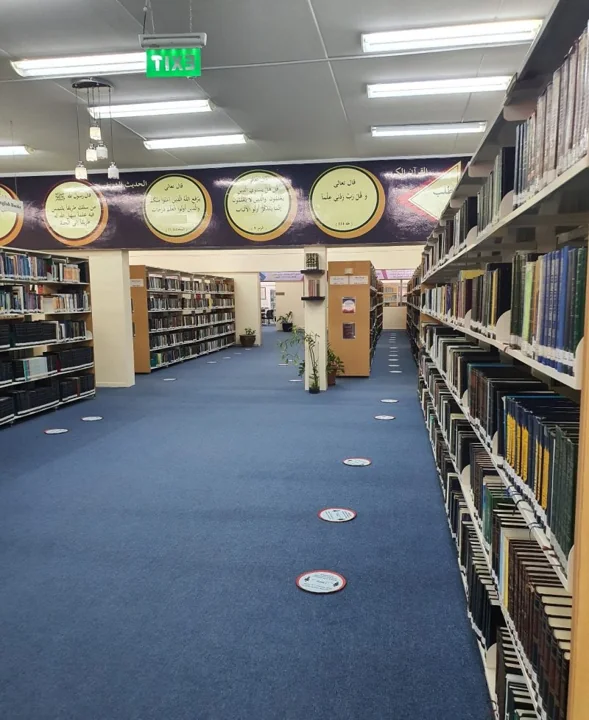
The university library supports teaching and research through print and electronic information resources related to the curriculum. Its published description identifies a main hall, reference hall, Hadith investigation hall, postgraduate studies hall and periodicals hall. The reference area is intended for consultation within the library, while the Hadith hall supports subject-specific learning. Postgraduate facilities include research materials, university theses, internet access and scanning equipment. The library also describes separate study rooms for focused work. Beyond maintaining collections, its objectives include organising materials through cataloguing and classification, helping users locate specialised resources, and introducing students and academic staff to library technologies. Cultural activities are intended to connect this information environment with wider social interests and encourage students to engage with questions outside their immediate courses.
Sources: University library ↗
Research assistance and shared information resources
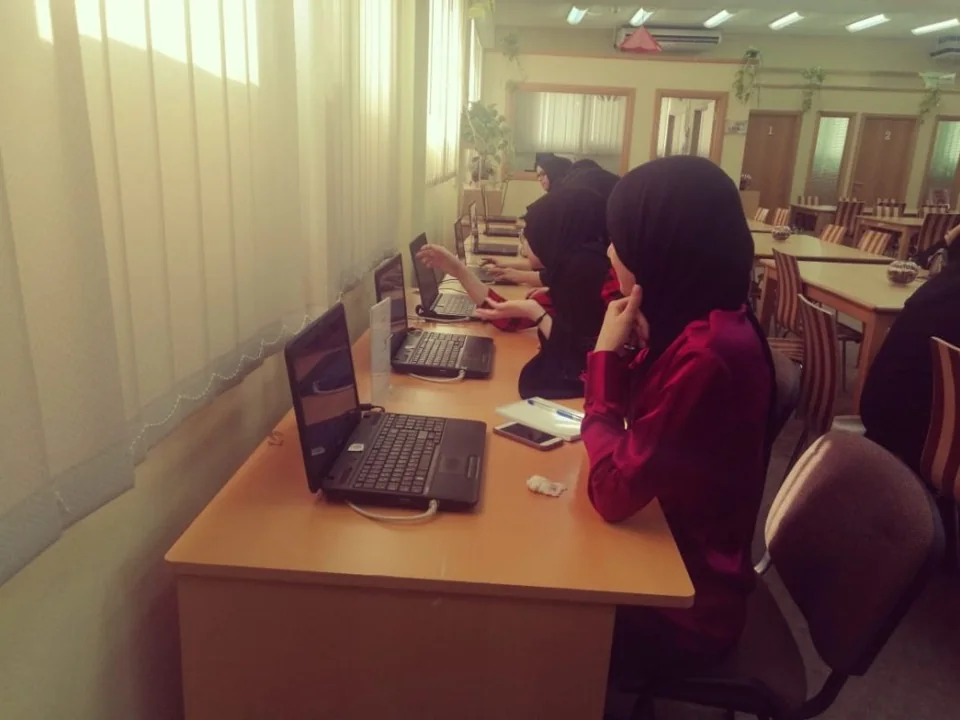
Library services include borrowing, reference assistance, electronic searching and orientation for new students. Readers can search for materials by author, title or subject, with training available in the use of the automated catalogue. Reference support helps researchers identify relevant sources, while scanning services allow material to be saved electronically or sent by email. Individual and group study spaces can be reserved under library rules. The university library also shares an automated catalogue with the Juma Al Majid Centre for Culture and Heritage. This connection brings books, periodicals and university dissertations into a common information system. The centre can help supply material unavailable in the university’s own collections and provides maintenance and binding services. Announcements of new books are another means of keeping teaching staff informed about resources.
Sources: Library services ↗
Artificial intelligence in the humanities
The Centre for Artificial Intelligence Research approaches technology through the university’s humanities interests. Its stated purpose is to explore connections between advanced technical methods and humanistic inquiry, including the study of culture and heritage. The centre’s discussion of its work includes programming languages, software engineering, robotics, digital innovation and metaverse technologies. It presents these as areas through which researchers can investigate new ways of supporting the humanities. Conferences, scientific projects, cultural events and research are identified as vehicles for this activity. Its broader strategy connects technological change with education and Emirati community development. Within a university historically associated with Arabic and Islamic studies, the centre therefore represents an effort to bring digital approaches into dialogue with established fields of scholarship.
Continuing education and community training
The Continuing Education Centre extends the university’s educational role beyond degree programmes. It draws on academic and staff expertise to offer professional and knowledge-based training for university employees and the wider community. Its objectives include supporting workers in government and private organisations, updating professional knowledge, and developing skills in science, management and technology. Information technology is a particular theme, including its application to learning, teaching, research and professional work. The centre describes both in-person and remote training, supported by teaching rooms, laboratories and computer facilities. Its approach links continuing study with changes in educational practice and professional responsibilities. Through this provision, the university seeks to make its expertise useful to people already working as well as those undertaking formal academic qualifications.
Sources: Continuing Education Centre ↗