Visa

About Ajman University
A university established in 1988
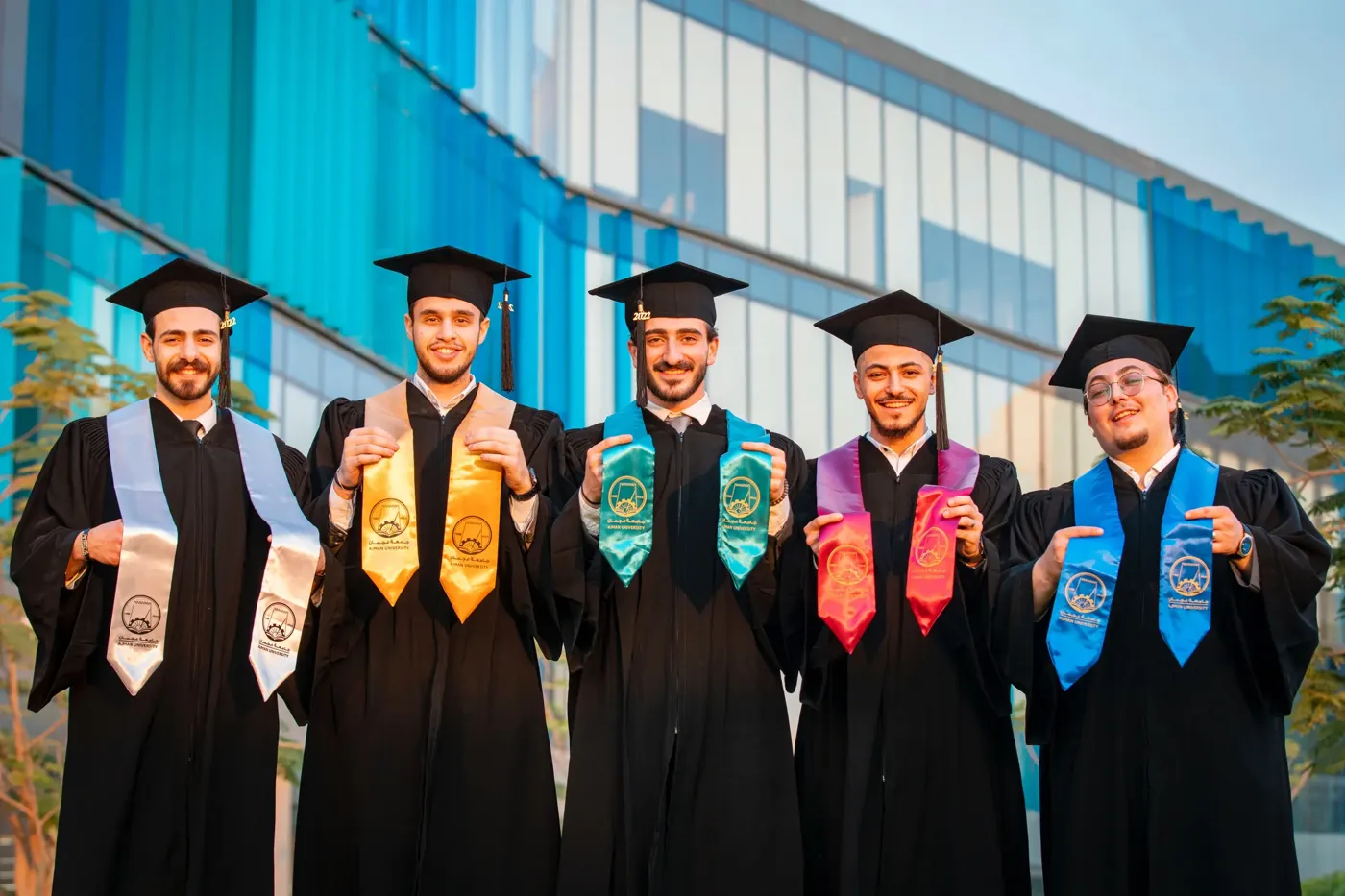
Ajman University is a higher education institution in Ajman, United Arab Emirates. Established in 1988, it offers undergraduate, graduate and doctoral education. Its official account places inclusion, innovation and social impact within its institutional identity. The university's academic organisation brings together professional, scientific, creative and humanities subjects.
Its college directory identifies dentistry; pharmacy and health sciences; engineering and information technology; architecture, art and design; business administration; law; mass communication; humanities and sciences; and medicine. This range places several kinds of teaching and research within the same institution, from design and communication to technical and health-related disciplines. Alongside degree education, the university maintains student services, research support and continuing education activities serving learners at different stages of their development.
Sources: University story ↗ · Current colleges ↗
Academic advising within the credit system
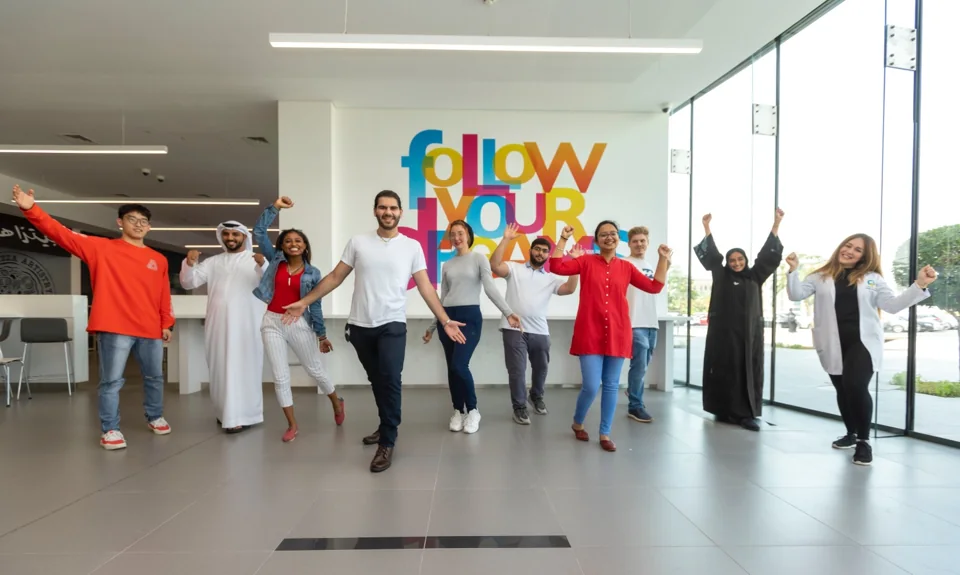
Each student is assigned an academic adviser from the college in which they are enrolled. Ajman University's description of advising links this arrangement to its credit-hour system: advisers follow academic progress and help students select appropriate courses before the beginning of each semester. They also introduce students to the syllabus and assist with problems arising during their studies.
Contact continues throughout the semester, with regular meetings encouraged and sometimes required. The university presents advising as a relationship between an individual student and their college, alongside its practical role in course planning. This gives students an identified academic contact who can consider their progress across a course of study.
Sources: Academic advising ↗
Peer tutoring and individual learning support
Ajman University announced the formation of its Student Success Center in November 2019. The centre offers free tutoring, individual academic coaching, seminars and workshops. Its peer tutoring programme trains students with strong academic performance to provide individual tutorial sessions in courses where other students need additional help. Students can identify relevant tutors through the centre's online resources and college faculty liaisons.
The centre also describes an Academic Twinning Programme for students identified as being at academic risk. Support may involve the course teacher, a peer tutor or a volunteering student peer when a tutor is unavailable. Its workshops address study habits and broader approaches to learning, including time management, examination preparation and visual thinking. Student–faculty discussions are another part of its approach to building communication around learning.
Sources: Student Success Center ↗
Research support and collaboration
Research forms part of Ajman University's 2022–2027 strategic plan. The Deanship of Research and Graduate Studies coordinates a strategy covering research infrastructure, collaboration, graduate research and support for scholarly activity. The published framework describes internal research grants and multidisciplinary grants through which faculty can develop projects.
Other mechanisms include research travel grants, research release time and support for open-access publication. Travel grants are intended to enable access to facilities and expertise at partner institutions, while release time provides space for research alongside other responsibilities. The strategy also describes graduate assistantships and visiting research scholars. Sustainability is a further focus: the Healthy and Sustainable Building Research Centre addresses subjects including energy efficiency, water conservation, waste reduction and indoor air quality. The university evaluates research initiatives through annual indicators and improvement processes.
Sources: Research strategy ↗
Sport and the campus complex
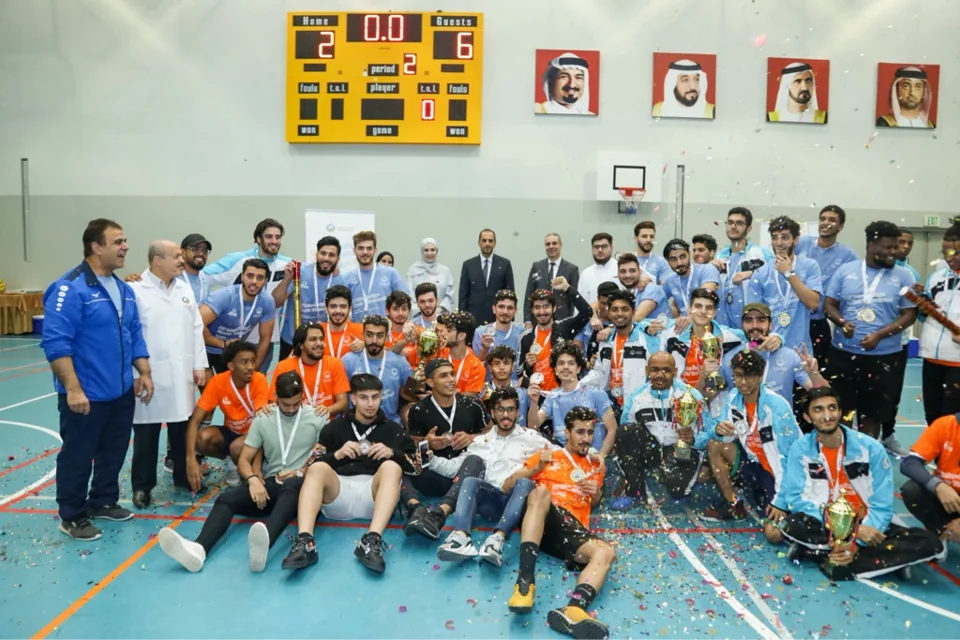
The Unit of Athletics sits within the Office of Student Life and organises sports programmes, activities and events through the year. Individual and group games are supported by specialised trainers. The university's facilities include outdoor playing areas and a sports complex containing multipurpose indoor spaces, a swimming pool and a fitness gym.
The complex also has arrangements for access beyond the student community. The university describes designated opportunities for staff families and bookings by partner institutions or organisations, subject to approval and the availability of staff and resources. These arrangements sit alongside the unit's student activities and its emphasis on physical fitness and awareness. The official athletics page illustrates this sporting community with a team photograph taken inside an indoor court.
Sources: Athletics ↗
Art beyond the classroom
The Office of Student Life also established a Fine Arts Center to support students' artistic interests. Its activities encompass painting, calligraphy, photography, sculpture and other forms of creative work. Workshops introduce practical skills, tools and knowledge used in making art. The university reports that students' pieces are displayed at exhibitions and events both within the institution and elsewhere. This centre provides an organised setting for creative participation alongside academic study, bringing the making and presentation of visual work into student life.
Sources: Fine Arts Center ↗
Continuing education and professional training
The Center for Continuing Education and Enterprises provides testing, training and professional development for individuals and corporate groups in the UAE and the wider Gulf region. Its present name reflects the addition of an Enterprises Unit in January 2022 to the earlier Continuing Education Center. The testing unit describes examinations in languages, sciences, mathematics and other areas relevant to school pupils, university students and graduates.
Training subjects include business and management, project management, accounting, information technology, information security, leadership and languages. Its published methodology begins with a training needs assessment when requested by a client, followed by an assessment of existing knowledge and skills. Instructor-led sessions can use presentations, discussions, cases and laboratories. A subsequent assessment examines learning, and the stated follow-up arrangement allows trainees to direct questions to their trainer for a month after a course.