Visa
About Al-Mustafa Open University
An online university headquartered in Qom
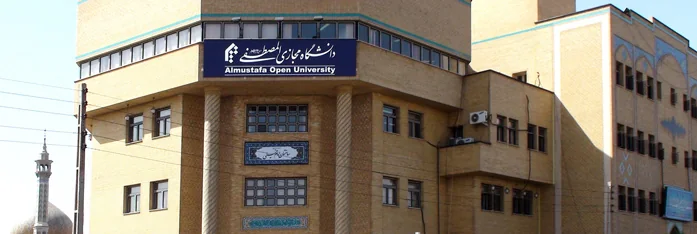
Al-Mustafa Open University is an international cultural and academic institution headquartered in Qom, Iran. It is affiliated with Al-Mustafa International University and specialises in distance education in Islamic studies, the humanities and social sciences. Its official address is on South Mosalla Street in Qom.
The university describes a religious educational mission centred on Islam, the Quran and the teachings of the Prophet’s household. It seeks to reach learners across nationalities and backgrounds through multilingual digital materials. Degree programmes sit alongside shorter and modular courses, giving the institution several formats for delivering its educational content.
Sources: About Al-Mustafa Open University ↗
Academic organisation and languages
The Education Department presents online learning as the basis for the university’s academic organisation. Admission, course selection, teaching, assessment and educational services are organised through internet-based systems. Professors and administrators use interactive tools to follow academic progress and adapt teaching to individual students or groups. The department also identifies online access to educational resources as part of this model.
The university’s published educational framework includes bachelor’s and master’s programmes as well as shorter training courses. Its subject lists span Quran and Hadith, jurisprudence, philosophy, theology, Shia studies, women’s studies, Persian literature, ethics, law and religion and media. The language framework names Persian, Arabic, English, French, Azerbaijani, Turkish and Urdu. Individual faculties specify different language combinations for particular programmes. This multilingual organisation supports the university’s stated aim of making its subjects accessible to learners in different parts of the world.
Sources: Education Department ↗
Weekly lessons and interaction with teachers
The official study guide describes lessons released weekly over thirteen to sixteen sessions during a semester. Multimedia teaching forms part of the presentation, and each session concludes with a self-assessment. Depending on the course, teachers may also set assignments and other educational activities. Students can send subject-related questions to their professor through the course dashboard.
The sequence of learning is structured rather than simply a collection of unrestricted recordings. The guide connects access to later material with studying the preceding session and completing its self-assessment. Students can repeat the self-assessment, while participation in the midterm examination is another stage in moving forward. Midterms are scheduled in the eighth week. Before the final examination, an online question-and-answer session allows students to raise course difficulties with the teacher. Final examinations follow completion of the teaching sessions.
Quran, Hadith and interpretation
The Faculty of Quran and Hadith offers online undergraduate and master’s study. Its programme descriptions combine recorded audio and video lessons with opportunities to ask professors questions in online classes. The bachelor’s programme focuses on Quran and Hadith studies, while the master’s programme concerns exegesis and Quranic sciences, including approaches to interpreting the Quran.
The faculty’s stated objectives include developing research, strengthening the relationship between seminary and university education, and making academic resources available to students in distant locations. Its language arrangements differ by qualification: the published bachelor’s description lists Arabic, Urdu and Persian, while the master’s description also includes English. Teaching, research and communication of Islamic knowledge are presented as connected purposes of the faculty. The programme accounts therefore identify both the subject matter and the online teaching methods used to support it.
Sources: Quran and Hadith faculty ↗
Humanities through an Islamic framework
The Faculty of Islamic Humanities describes its work as examining and reconsidering the scholarly heritage of the Islamic world, with human actions as a central concern. Its academic approach includes describing, interpreting and critically discussing ideas about humanity through Islamic sources.
The faculty’s programme account identifies undergraduate study in Islamic studies and women’s studies. Its listed master’s subjects include religion and media, private law, and Islamic ethics with separate emphases on philosophical ethics and practical ethics. These are the programmes identified as offered in the faculty’s introduction, while its broader educational framework discusses additional possible academic groups. The objectives include expanding relevant specialisms, teaching humanities from Islamic sources and identifying suitable teaching expertise. This faculty brings ethical, legal, social and communications questions into the university’s religiously grounded academic structure.
Sources: Islamic Humanities faculty ↗
Philosophy, theology and religious studies
The Faculty of Wisdom and Religion Studies covers Islamic philosophy, theology, mysticism and the study of religions. Its bachelor’s descriptions include philosophy and Islamic mysticism, Shia studies and Islamic theology. At master’s level, the faculty identifies Islamic theology and Islamic studies. It also describes an educational interest in Islamic sects and in Abrahamic and Eastern religions.
The faculty’s published language arrangements vary with these subjects. Philosophy and mysticism are listed in Persian, English and Arabic, while the theology bachelor’s description includes English, French, Turkish, Arabic and Azerbaijani. The master’s descriptions identify further combinations, including Urdu for Islamic studies. The faculty presents the education of teachers and specialists in philosophy and religions as one of its aims. Its programme account consequently combines a defined disciplinary focus with several routes for multilingual study.
Persian language and literature
The Faculty of Language, Literature and Cultural Studies connects Persian teaching with access to literature and Islamic cultural materials. Its introduction describes language learning and the study of religious subjects as related parts of its educational purpose. The faculty lists programmes in Persian language and Islamic studies, as well as Persian language and literature at bachelor’s and master’s levels.
The Persian Language and Literature bachelor’s programme is described as eight semesters and 132 credits. Its presentation emphasises adapting literary and cultural study to the language proficiency of international students. The master’s programme provides a more specialised approach over four academic terms and includes a thesis after completion of the required units. Across these descriptions, the faculty links language development with literary study and further investigation of Persian cultural and religious texts.
Sources: Language, Literature and Cultural Studies faculty ↗