Visa
About Al-Farabi Kazakh National University
A national university in Almaty
Al-Farabi Kazakh National University, commonly known as KazNU, is based in Almaty, Kazakhstan. Its official historical booklet traces the institution’s establishment to 1934, when its initial students entered biology and physics and mathematics departments. The university later developed the KazSUgrad educational, scientific and residential campus, with construction beginning in 1971.
The same timeline records the university’s naming after Abu Nasr al-Farabi in 1991 and its special national-university status in 1993. These milestones connect its origins as the Kazakh State University with its current identity. The institution’s long history is also represented through its museum and research devoted to the intellectual heritage of its namesake.
Education and research development
A government decree dated 25 July 2022 granted KazNU research-university status and approved its development programme for 2022–2026. The programme links the educational process with scientific activity across higher and postgraduate education. Its objectives include developing the educational model and increasing university science’s contribution to Kazakhstan’s socioeconomic development.
The university’s mission similarly connects innovative teaching with education, science and business. Corporate governance and sustainable institutional development are also addressed in the development programme. These published priorities describe the university’s direction, bringing academic education, research activity and the application of knowledge into the same institutional framework.
Sources: University research status and development programme ↗
Biology and biotechnology
The Faculty of Biology and Biotechnology brings together departments covering biotechnology; zoology, histology and cytology; biophysics, biomedicine and neuroscience; molecular biology and genetics; and botany and agroecology. Its educational provision spans bachelor’s, master’s and doctoral study across different biological fields.
The faculty’s undergraduate programme descriptions include biology, biotechnology, genetics, biological engineering and applied biophysics. These combine fundamental scientific knowledge with field, laboratory and computational approaches. Postgraduate options extend into areas such as microbiology, virology, environmental bioengineering, agrobiotechnology and aquatic biological resources. The published programme objectives emphasize scientific investigation, the analysis of biological systems and the use of modern methods, illustrating the faculty’s range from basic biological science to applied research.
Master’s options also include landscape design, zoology, reproductive genetics and biomedical engineering. Doctoral programmes address genetics, geobotany, neuroscience and fisheries, among other fields. Their outlines refer to independent research, scientific interpretation and methodological training, adding advanced research pathways to the faculty’s undergraduate provision.
Sources: Biology and Biotechnology faculty ↗
Computing and artificial intelligence
The information technology faculty opened on 15 January 2018. In 2025, it became the Faculty of Information Technology and Artificial Intelligence, reflecting an expanded educational and research remit. Its departments cover information systems, computer science, artificial intelligence and big data, and cybersecurity and cryptology.
Its bachelor’s programme descriptions include information systems, computer engineering, computer science, data science, artificial intelligence, software engineering and information security systems. The academic themes range from software development and computer networks to machine learning, parallel computing and data analysis. The faculty also describes computational engineering as an interdisciplinary area connecting computing methods with fields such as biology, business, physics and chemistry. Professional responsibility and ethical standards appear in several programme objectives alongside technical knowledge.
Sources: Information Technology and Artificial Intelligence faculty ↗
Student support through Keremet
The Keremet Student Service Center organizes support through a one-stop-service approach. Its published categories include educational services, social and household support, cultural and leisure activities, a youth centre, psychological support and inclusion. The centre’s address is 71/21 Al-Farabi Avenue in Almaty’s Bostandyk district.
Keremet is presented within the university’s smart-city concept, drawing on Al-Farabi’s idea of a virtuous city. Its educational purpose connects services with mutual assistance, ethical standards and social responsibility. The centre provides a named point of access for different aspects of student life, bringing academic and everyday support into one organizational setting.
Sources: Keremet Student Service Center ↗
Library and learning spaces
KazNU’s Scientific Library was founded alongside the university in 1934. A university report records its move to a new five-storey building in 2012, combining library facilities and communication technologies with elements of Eastern architectural style. Its collections include materials in Kazakh, Russian, English and other languages.
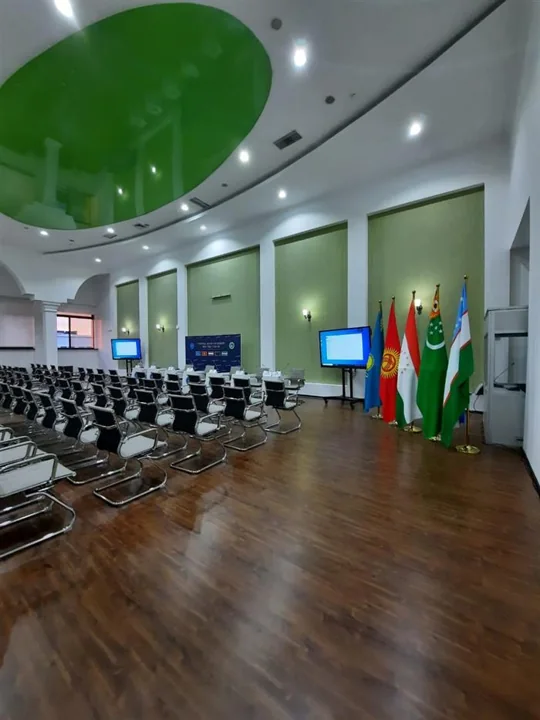
The May 2022 report documents refurbishment of furniture and additional lighting. It identifies the Classical Reading Room and Abay Room among the spaces receiving renewed seating, as well as work in conference rooms. This dated account illustrates the library’s role as both a study resource and a venue for university activities, with reading spaces and meeting facilities within the same building.
Sources: Scientific Library renovation report,May2022 ↗
Preserving university and intellectual heritage
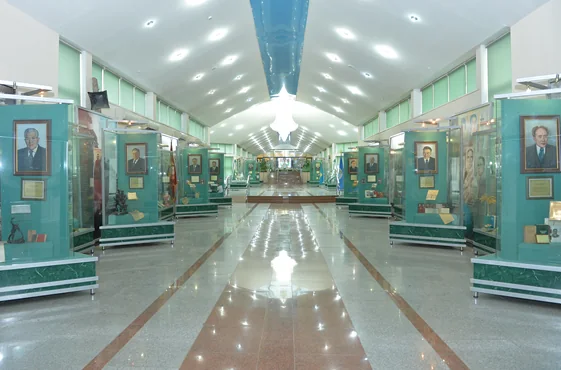
The university museum dates to 1989, with a reconstructed museum opening on 13 October 2009. Its sections include a history gallery, a Hall of Fame and a hall addressing the university’s development. Displays bring together historical documents, information about scientific schools and material concerning university achievements, connecting institutional history with the development of education and science in Kazakhstan.
The Al-Farabi Center provides a complementary research focus. Established in 1993, it studies and promotes Al-Farabi’s scientific and philosophical heritage. Its activities include research in Farabi studies and Kazakh and Turkic philosophy, translation and publication, and international scholarly cooperation. The centre also works with the Al-Farabi Museum housed in the Scientific Library. Its educational platform and annual scholarly discussions provide ways for researchers and students to engage with this intellectual tradition.
Sources: University Museum ↗ · Al-Farabi Center ↗