Visa
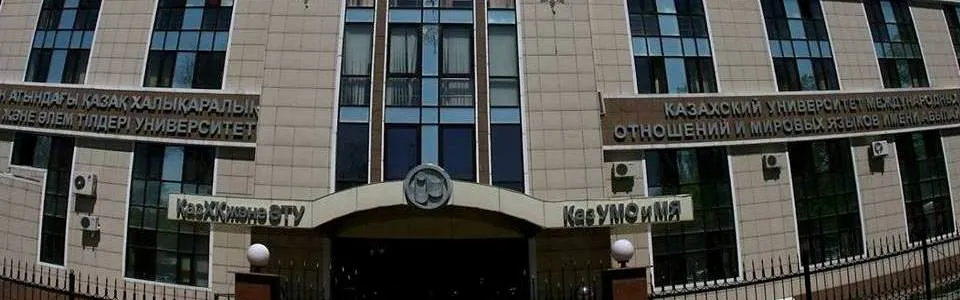
About Abylai Khan University
A language and international education university
Abylai Khan University is the directory name for Kazakh Ablai Khan University of International Relations and World Languages in Almaty, Kazakhstan. Its official account traces its foundation to 1941 as a specialised institute of foreign languages. That linguistic foundation remains central to its current identity, alongside international relations, translation, regional studies and international communications. The university describes an educational cycle extending from bachelor's programmes to doctoral study.
Its current institutional introduction identifies faculties concerned with foreign-language teacher education, translation and philology, management and international communications, international relations, law and business, and Oriental studies. These areas connect language knowledge with education, public affairs, culture and professional communication. Academic buildings and dormitories are located in central Almaty, with the main university contact address on Muratbayev Street. The institution therefore combines a particular disciplinary tradition with the wider setting of a major Kazakh city. Its subject profile provides a clearer introduction than unverified claims about graduate careers or comparisons with other universities.
Teaching, independent study and learning spaces
The university's account of its study process emphasises independent work alongside classroom teaching. It describes curricula supported by textbooks, teaching guides and other educational materials intended to help students undertake productive individual study. Language education is presented within a broader approach to professional, cultural and personal development, rather than as vocabulary learning alone.
The page also identifies language laboratories, computer laboratories, classrooms and assembly and conference halls as part of the learning environment. Digital provision includes an information network and electronic-library resources. Active learning, modular organisation and different forms of assessment appear in its description of teaching methods. A sports complex provides a further setting for student activity beyond formal lessons. These published facilities and approaches give context to the academic programmes without establishing that every course uses identical equipment or teaching arrangements. The relevant programme documentation remains necessary for the exact curriculum and assessment requirements.
Academic mobility and international experience
Academic mobility is described as an opportunity to study temporarily at a partner university or to host visiting students. The university's guidance covers semester and academic-year exchanges as well as summer schools and shorter programmes. It also distinguishes international mobility from study at other universities within Kazakhstan. These different formats allow mobility to serve varied educational purposes rather than a single standard overseas placement.
The stated aims include extending subject knowledge, developing intercultural communication and improving foreign-language proficiency. Selection depends on the particular programme, with academic performance, language preparation and supporting documents among the considerations identified. The university directs enquiries to its international office or mobility support staff for assistance with procedures and partner choices. This is an institutional opportunity rather than a guarantee that every student will study abroad. Destinations, available places, funding and the recognition of study need confirmation through the applicable exchange arrangement and current announcement.
Sources: Academic mobility of students ↗
Library collections and research assistance
The Library and Information Center dates its organisation to 1941. Its official introduction describes a collection containing specialised academic works, business literature and fiction in several languages, including Kazakh, Russian, English, Persian, French and Turkish. This multilingual collection reflects the university's language and international-studies orientation while also providing reading beyond individual professional subjects.
The centre identifies support for researchers, teachers and students as its main role. Access to licensed domestic and international electronic resources accompanies the physical collection, with some remote databases available through university network addresses. Library staff assist users searching internal and external databases and teach students to work with full-text electronic publications. These services connect the provision of materials with the skills needed to find and use them. They also explain why library support is relevant across levels of study, from locating course reading to identifying sources for independent research.
A self-service addition to library provision
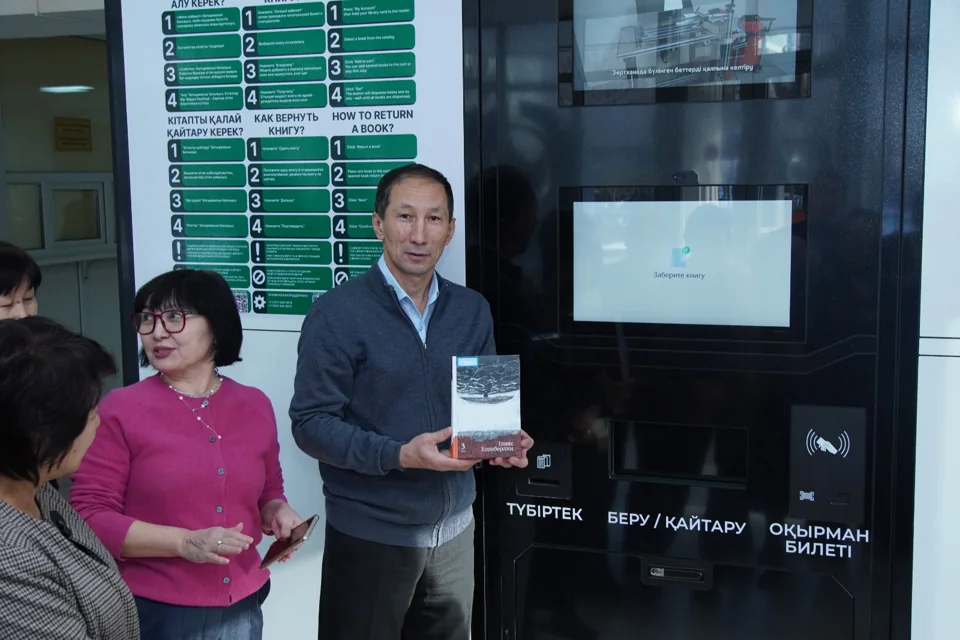
A university report dated 24 December 2025 records the opening of an automated self-service library. The report places the installation within Almaty's Libraries Within Walking Distance initiative. It describes a system through which registered readers use an individual library card to borrow and return books, with a touchscreen interface supporting loan renewal.
The announcement also explains that readers can suggest titles through the university library's circulation desk. This connects the automated facility with the existing library service rather than presenting it as a replacement for staff assistance. The opening is a concrete, dated example of investment in access to reading. The facility adds another way for students and staff to borrow reading materials while retaining a connection with the library's wider collections and reader services.
Sources: Automated library opening, 24 December 2025 ↗
Publishing and language scholarship
The university's Polylingua publishing house dates its history to 1998. Its official page describes work on textbooks, guides, monographs, conference proceedings, bibliographical indexes, regulatory material and university academic journals. Printing and binding services support the production of these materials. The accompanying catalogue includes language-teaching resources, grammar works, terminology dictionaries and conference publications, illustrating the connection between scholarly activity and the materials used in education.
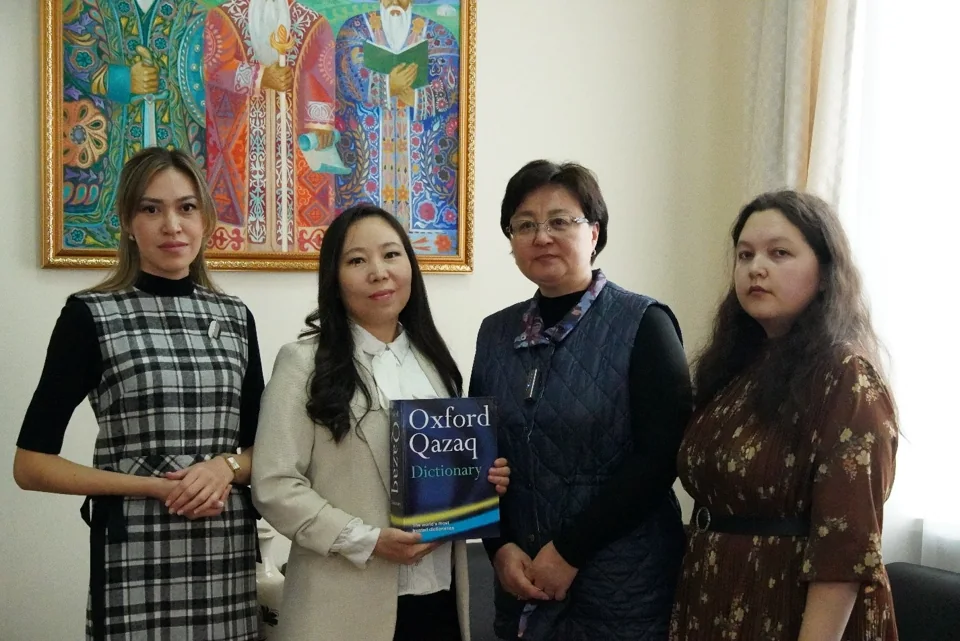
A separate report from February 2024 documents the acquisition of copies of the Oxford Qazaq Dictionary for the university library. It identifies teachers and students from the Faculty of Translation and Philology among those contributing to the dictionary project. This example gives a specific link between the university's translation community and a bilingual reference work. Read together, the publishing-house description and dictionary report show language scholarship reaching beyond classroom instruction into the preparation, production and circulation of educational resources. They provide concrete examples without implying that every university publication follows the same process.
Sources: Polylingua publishing house ↗ · Dictionary acquisition and university contributors, 8 February 2024 ↗