Visa
About Abylkas Saginov Karaganda Technical University
Engineering education in Karaganda
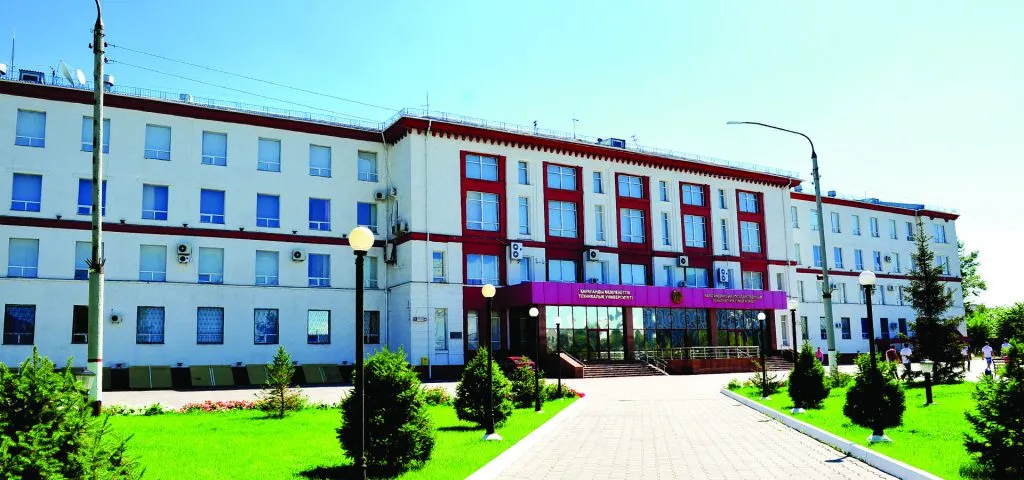
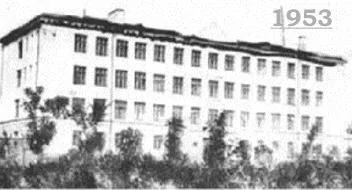
Abylkas Saginov Karaganda Technical University is based in Karaganda, Kazakhstan. Its origins lie in the rapid development of the country's coal industry and the corresponding need for engineering specialists. The Karaganda Mining Institute was established in 1953. In 1958 it became the Karaganda Polytechnic Institute as its educational remit expanded to serve a wider range of industrial and technical fields.
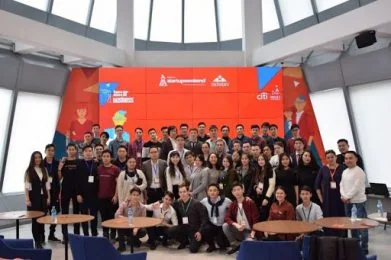
The institution's modern history includes re-registration as Karaganda Technical University in 2020 and its renaming in honour of Abylkas Saginov in February 2022. Saginov was an academician and long-serving rector whose leadership forms an important part of the university's historical account. The campus described by the university combines teaching and laboratory buildings with a sports complex, student residences and a youth palace. Its educational and research infrastructure also includes engineering competence centres, scientific complexes and spaces supporting entrepreneurial skills and emerging businesses.
Sources: University History ↗
Mining and resource-related disciplines
The Mining Faculty retains a direct connection with the university's original field of study. Its departments cover mineral deposit development, mine surveying and geodesy, industrial safety and environmental science, and geology and exploration of mineral deposits. This grouping connects knowledge of geological resources with their measurement, development and the conditions under which industrial activity takes place.
The faculty describes education at bachelor's, master's and doctoral levels. Its public account places emphasis on scientific research, the use of modern technology and continuing development of teaching. Instruction is offered in Kazakh and Russian, with multilingual groups also identified. The faculty presents its programmes in relation to professional requirements across Kazakhstan and beyond. This academic structure shows how mining remains a substantial part of the institution while encompassing environmental, safety and geoscientific questions as well as the extraction of resources.
Sources: Mining Faculty ↗
Architecture, construction and applied expertise
The Architecture and Construction Faculty brings together building materials and technologies, architecture and design, and mechanics. Russian language and culture and social and humanities departments also appear within its faculty structure. The published account connects its educational work with the training needs of the construction sector, innovative technology and the development of advanced academic qualifications.
A significant element of its scientific and industrial base is the Kazakhstan Multidisciplinary Institute for Reconstruction and Development. The university describes this as a research and production unit operating on a contractual basis. Its activities include assessing the technical condition of buildings, structures and utilities, undertaking expert examination and developing designs for strengthening or restoration. The connection places construction education alongside applied investigation of the built environment. It also illustrates how the university's technical knowledge can be used in projects involving new construction, renovation and repair.
Metallurgy and mechanical engineering
The Faculty of Metallurgy and Mechanical Engineering offers study across several related industrial fields. Its programme directory includes metallurgy, materials science, mechanical engineering, digital technologies in mechanical engineering, technological machinery, standardisation, mineral processing, biotechnology and chemical technology. The faculty describes bachelor's, master's and doctoral provision, with the subjects represented at different levels according to programme structure.
The faculty also includes the Kazakhstan Welding Institute and the Kazakh-Belarusian Mechanical Engineering Center. Its teaching and research facilities encompass digital engineering, nanotechnology in metallurgy and materials science. The published account highlights project-based learning as a means of applying knowledge, developing teamwork and approaching complex problems. It also describes technology-supported language learning and virtual or augmented reality within its wider educational activity. This combination reflects an academic unit concerned with industrial processes and materials while also adapting its teaching to digital tools and collaborative practice.
Information technology and industry connections
The Information Technology Faculty traces its development through earlier units concerned with automation and information systems. Its institutional account describes a change to an information technology faculty in 1993, a later period under the name Innovative Technologies, and its current identification as the Faculty of Information Technology. Its departments include cybersecurity and artificial intelligence and information computing systems.
The faculty also lists history of Kazakhstan and physical training departments within its organisation. Its public description connects technical education with Kazakhstan's wider digitalisation and identifies cooperation with technology companies and the Cisco Network Academy. An EPAM Systems laboratory is described as operating within this network of educational and industry relationships. These connections illustrate the faculty's interest in linking academic preparation with contemporary computing practice. They complement the university's longer-established strengths in mining, construction, machinery and materials through an explicit focus on digital systems and technological change.
Sources: Information Technology Faculty ↗
Materials research and shared resources
The International Center for Materials Science supports research cooperation and access to scientific resources. Its objectives include information exchange, coordination among laboratories and research centres, and the conduct of research and development in materials science and the mining sector. The centre also describes connecting experienced and younger researchers and involving students in scientific activity.
Its published research account includes projects concerned with cast irons for mining and metallurgical equipment and heat-resistant alloys for metallurgical production. These examples connect investigations of material properties with the performance of industrial components. Teaching at the centre involves students in metallurgy and materials science, including postgraduate and doctoral study. The account also describes work on casting processes and technological equipment. Together, these activities show how the university combines education with applied materials investigation and collaboration across research facilities, rather than separating industrial problem-solving from its academic mission.