Visa

About Al-Ameen College of Pharmacy
A pharmacy college in Bengaluru
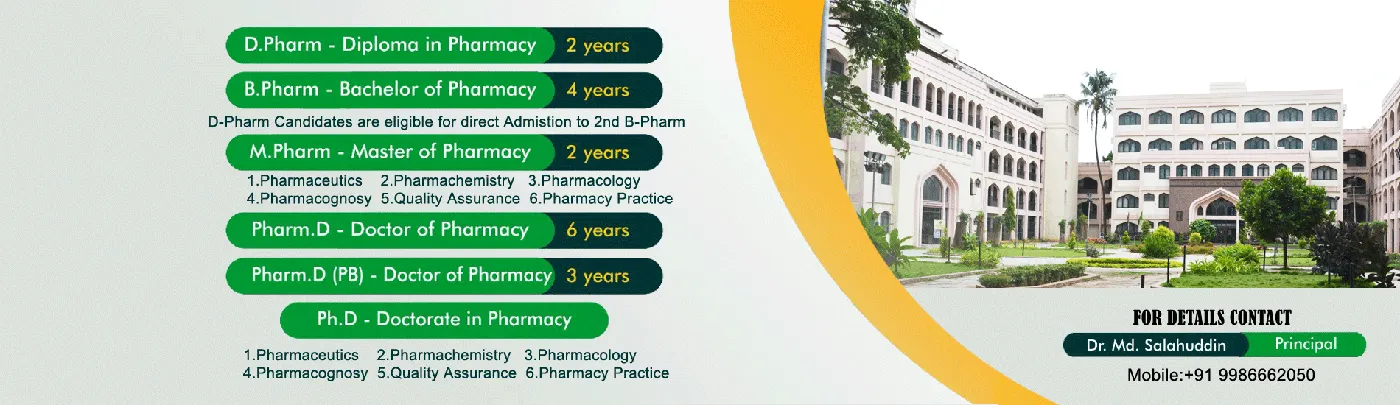
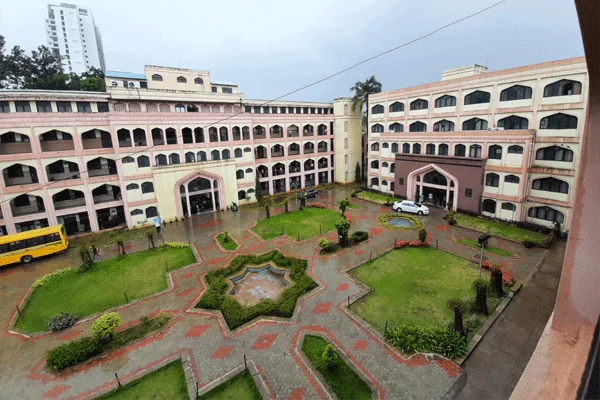
Al-Ameen College of Pharmacy is a specialist educational institution in Bengaluru, Karnataka, established in 1982 under the Al-Ameen Educational Society. Its published address places it on Hosur Road near the main gate of Lalbagh. The college’s institutional introduction emphasises pharmaceutical education, research and contact with industry. Its educational setting brings together taught programmes, departmental research and practical learning in pharmaceutical subjects. The college describes continuing improvement of its educational facilities and interaction with industry as ways to keep teaching connected with developments in the field.
Sources: College introduction ↗
Undergraduate pharmaceutical study
The Bachelor of Pharmacy is described as a four-year undergraduate programme organised over eight semesters under a choice-based credit system. Teaching and examinations are conducted in English. Its subject foundations include pharmaceutics, pharmacology, pharmaceutical chemistry, pharmacy practice and pharmacognosy. This combination connects the preparation and study of medicines with chemical science, biological effects and professional pharmacy subjects.
The programme distinguishes theoretical courses, tutorials and laboratory practicals. Its academic structure also includes practice-school work and a project. Credits reflect the teaching and practical work involved in a course, rather than treating every activity as the same form of instruction. The college’s description therefore presents undergraduate study as a sequence of different learning activities through which students develop their knowledge and practical capabilities.
Sources: Bachelor of Pharmacy ↗
Postgraduate study and specialisation
The Master of Pharmacy extends over four semesters, or two academic years, with English as the language of instruction and examination. The college lists specialisations in pharmaceutical chemistry, pharmaceutics, pharmacognosy, pharmacology, pharmacy practice and pharmaceutical quality assurance. These options allow postgraduate study to concentrate on particular branches of the discipline.
The published credit structure encompasses theory, practical classes, seminars, assignments, research work, discussions with supervisors and journal-club activity. Research presentations and a dissertation are also included in the department’s academic recordkeeping. This structure combines specialised coursework with the discussion, presentation and supervision of research. It gives a more detailed account of postgraduate education than a programme title alone.
Sources: Master of Pharmacy ↗
Formulation and natural-product research
The Department of Pharmaceutics combines teaching with postgraduate and doctoral research. Its identified research areas include advanced drug-delivery systems, nanoparticulate targeting, multiparticulate platforms, and dissolution and diffusion testing. The department describes facilities for particle-size analysis, formulation work, chromatography and cell-culture investigation. A departmental library includes textbooks and research theses to assist students preparing projects, while workshops and guest lectures provide additional academic contact.
Pharmacognosy provides another research focus. Established in 1992, the department studies natural products and herbal materials. Its listed activities include isolating and identifying plant constituents, chromatographic analysis and extract fingerprinting, evaluation of herbal products, and development and standardisation of herbal, nutraceutical and cosmetic formulations. Its infrastructure description also includes plant-tissue culture and antimicrobial studies. The department connects laboratory analysis with the investigation, identification and standardisation of materials obtained from natural sources.
Sources: Department of Pharmaceutics ↗ · Department of Pharmacognosy ↗
Organisation of research and development
The Research and Development Cell coordinates activity involving faculty members, research scholars and students. Its objectives include encouraging research ideas, monitoring the quality and progress of undergraduate, postgraduate and doctoral projects, and informing researchers about opportunities at academic institutions, industry and government organisations. It also helps create awareness of funding opportunities and supports the preparation of research proposals.
The cell’s stated duties include reviewing postgraduate and doctoral progress, scrutinising proposals for funding bodies, monitoring sponsored projects and preparing departmental research activity plans. It encourages publication and helps organise conferences, seminars, scientific-writing workshops and training on research equipment. Industry–institution collaboration and interdisciplinary work also fall within its remit. This provides a coordinating structure for research across the college’s departments, from initial proposals through implementation and communication of findings.
Sources: Research and Development Cell ↗
Library and campus learning facilities
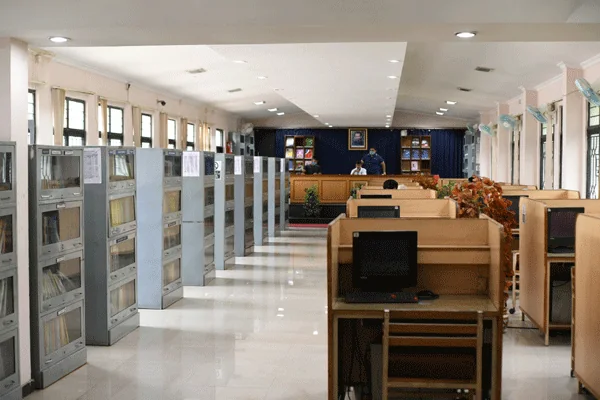
The Library and Information Centre supports students, faculty and researchers. Its published services include current-awareness information, selective dissemination of information and an electronic public-access catalogue. The college also identifies access through information networks including HELINET. These services connect the discovery of material with the needs of coursework and research.
A seminar hall supports guest lectures and workshops, including activities concerned with communication skills and personal development. The campus facilities page also describes a medicinal-plant garden and museum. Plants used in the curriculum are maintained on campus, with labels recording information such as botanical source, family and constituents. This gives students a way to become familiar with plant materials alongside the laboratory and classroom study of pharmacognosy. The college additionally describes accommodation arrangements for women and men.
Sources: Campus facilities and library ↗
Student support and adjustment to college
The Student Counselling Cell offers a setting for students to discuss concerns affecting academic performance or personal wellbeing. Its published functions include supporting academic growth, helping students adjust to college life, and assisting learners from different social, economic and language backgrounds. The cell describes individual counselling as its usual approach, with attention to self-awareness and the development of students’ strengths.
Its activities also include workshops on stress management, emotional intelligence and relaxation. Where more specialised support is required, its framework provides for referral to an appropriate professional. The stated objectives connect support with academic goals, social adjustment and personal development, placing student wellbeing alongside the college’s teaching and research responsibilities.
Sources: Student Counselling Cell ↗