Visa
About Aklan State University
A state university based in Banga
Aklan State University is a public higher education institution based in Bacan, Banga, in the Philippine province of Aklan. Republic Act 9055, approved on 4 April 2001, converted the Aklan State College of Agriculture in Banga into the university. Its founding mandate combines advanced instruction and professional preparation in agriculture, science and technology, education and related fields with research and extension. The charter also preserves its original agricultural orientation while providing for undergraduate, graduate and short technical courses within its areas of specialization. This agricultural foundation remains an important part of understanding the institution's wider educational role. Banga is identified as the main campus in the university's reports, while its teaching and activities extend to other campuses across Aklan.
Sources: Republic Act 9055, Supreme Court E-Library ↗ · University portal and contact details ↗
Research with an agricultural foundation
The university's Research and Development Services unit began in 1992, during the state college period. Early projects focused on agriculture and forestry, and later work expanded through externally supported programmes and multidisciplinary research. Its present mission includes opportunities for faculty and students to develop intellectual work, generate knowledge and create technologies relevant to industry and society. The unit's objectives extend beyond publication to products, services, partnerships, policy and the use of research outputs. It also identifies intellectual property and technology transfer as areas of work. Research themes include cultural preservation, environmental integrity, gender equality, community empowerment and policy development. This places agricultural research within a wider programme of inquiry that considers both technological applications and social questions.
Sources: Research and Development Services history and objectives ↗
Specialist research centres
The university's research-centre directory shows several ways in which that work is organized. The Natural Fibers Technology Research Center covers production, processing, product development, quality assurance and the promotion of natural fibres. It connects research with education and extension, including demonstration sites, training and consultation. Preserving local fibre heritage is one of its stated objectives, alongside developing products and transferring technologies. Other centres listed by the university address climate change, coastal studies, Akeanon heritage and diversity, sustainable tourism, economic development and modernization, and human kinetics, sports and wellness. These centres bring regional materials, environments and cultural interests into the university's research organization, with different units providing a focus for related investigations and partnerships.
Sources: University research centres ↗
Extension and community engagement
Extension and Community Services connects university knowledge with partner communities. Its published mission emphasizes transferring technology, skills and knowledge in support of community welfare. A central goal is the transfer of relevant research-based technologies and gender-responsive services. The office's objectives include developing college-based extension programmes, forming partnerships with regional and international institutions, improving staff capability and building facilities for extension work. These priorities describe an institutional connection between research and engagement: academic results are intended to inform activities undertaken with communities. The office also places the continuing development of extension personnel within that process, recognizing that cooperation depends on the people and organizational arrangements through which services are delivered.
Sources: Extension and Community Services ↗
Shared support for teaching across campuses
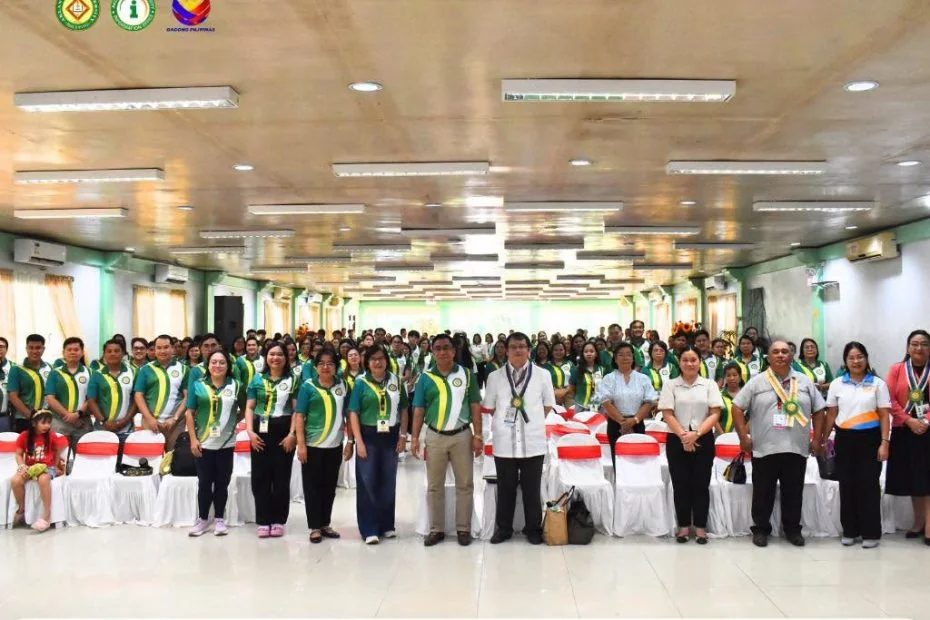
A university-wide training session on 30 August 2024 illustrates how ASU coordinates educational support across its campuses. Held at Kalibo, the refresher course on the university's learning-management system brought together representatives from Banga, Kalibo, Ibajay, New Washington and Makato. The programme concerned effective teaching, monitoring and the sustained use of the platform. Sessions examined the creation and management of Moodle courses aligned with outcomes-based education and the use of tracking tools to review student progress and course performance. The activity was organized by the information technology and management information systems unit with academic affairs and training services. It provides a concrete example of staff development supporting digital course resources across the university's distributed academic community.
Sources: University-wide learning-management training, August 2024 ↗
Academic dialogue and campus specialisms
In July 2025, Aklan State University hosted a three-day academic exchange with Central Bicol State University of Agriculture. The visiting delegation began at Banga and toured selected facilities at Banga, New Washington and Ibajay. The university's report identifies teacher education, student affairs and the university library among the Banga activities. At New Washington, the visit concerned fisheries and marine sciences, including marine biology. At Ibajay, it included teacher education and tourism management. Faculty and programme leaders discussed curriculum development, teaching innovation, research policies and staff development. Visits to local industry partners formed another part of the programme. The event shows how institutional cooperation can bring together academic units with different specialisms across several ASU campuses.
Sources: Academic exchange with Central Bicol State University, July 2025 ↗
Student leadership and university participation
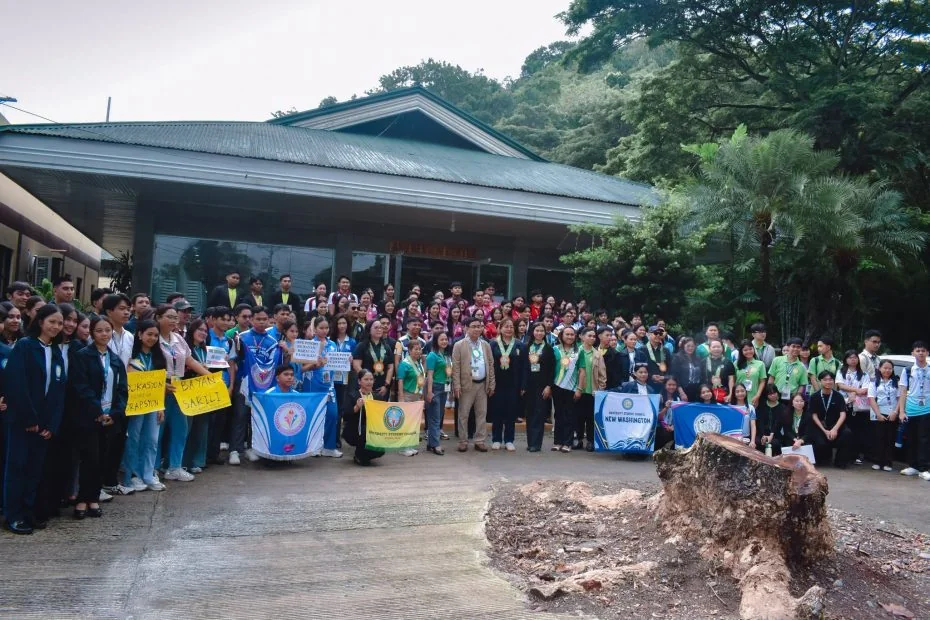
The Federation of University Student Councils provides another setting for activity across the institution. Its leadership training began on 15 October 2026 at the ASU Review Center in Banga. The programme opened with an Integrity Walk and included sessions on ethical leadership, accountability, institutional foundations of student governance and parliamentary procedure. Representatives of the regional Office of the Ombudsman contributed as resource speakers. Student leaders also heard from university officials and their federation leadership. The training's focus on integrity, service and responsibility connected practical organizational procedures with discussion of the values guiding student representation. It is a documented example of education taking place through student governance and organized participation alongside academic coursework.
Sources: Federation of University Student Councils leadership training, October 2026 ↗
Cooperation within the higher education region
The university also participated in the Regional Policy Conference on Future-Ready Higher Education and the twentieth AIMS Annual Review Meeting in Iloilo in October 2026. Its official account describes a delegation led by the university president. The event, held within CHED and SEAMEO RIHED Higher Education Week, brought together higher education leaders and policymakers. Discussion addressed leadership, innovation, sustainability and cooperation among institutions in Southeast Asia. This participation adds a regional dimension to ASU's locally based academic and community work. Alongside the campus exchanges and staff-development activities described elsewhere, it shows the university engaging with other institutions through organized professional and educational forums.
Sources: Regional higher education conference participation, October 2026 ↗