Visa

About Akal University
A university at Talwandi Sabo
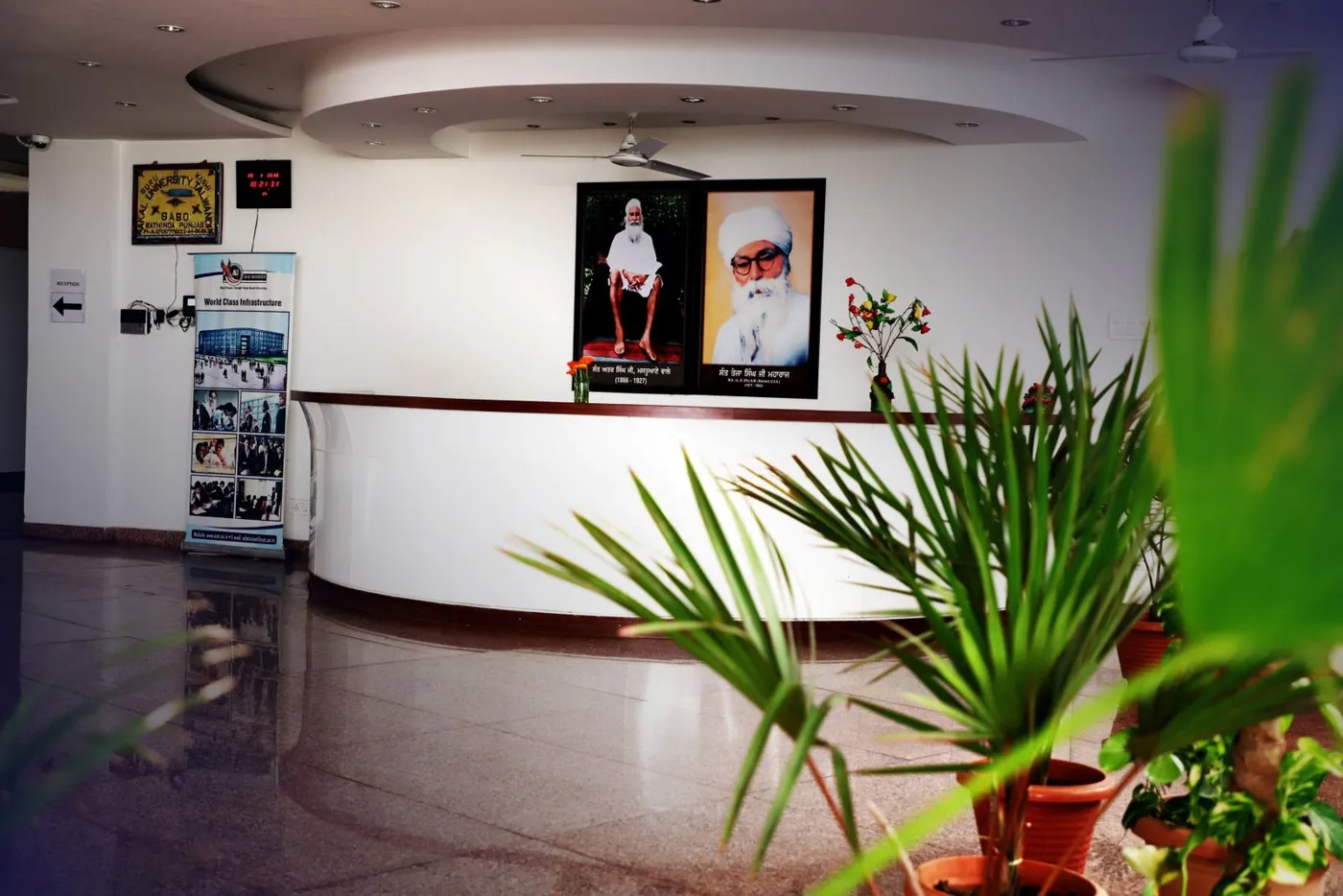
Akal University is located at Talwandi Sabo in Bathinda district, Punjab. Its academic activity began in 2015, with Physics among the departments established at the university’s inception. The institution’s stated educational mission combines scientific learning with ethical and spiritual development, placing subject knowledge within a wider concern for responsibility, social contribution and understanding across communities.
The university draws particular inspiration from the Sikh learning tradition associated with Talwandi Sabo and Sri Guru Granth Sahib. Its institutional account describes education as more than literacy or the acquisition of a qualification. Communication, critical thinking, reasoning and the ability to work across languages and cultural traditions are among its stated priorities. Teaching, learning and research are presented as interconnected responsibilities, supported by mentoring and an emphasis on moral and social values.
Sources: University educational mission ↗ · Physics department ↗
The parent organisation and educational tradition
The university identifies the Kalgidhar Society at Baru Sahib as its parent organisation. The society’s work includes education and wider charitable activity, with a particular interest in rural communities. Its institutional account links schooling with healthcare, women’s empowerment and social welfare, presenting education as part of a broader effort to address disadvantage.
The founders’ page traces this educational tradition through Sant Attar Singh, Sant Teja Singh and Baba Iqbal Singh. It highlights advocacy for girls’ education and the combination of scientific knowledge with spiritual formation. This background helps explain the university’s emphasis on rural educational access, service and the development of personal character alongside academic study.
Sources: Founders and parent organisation ↗
Languages, literature and cultural inquiry
The Department of English Studies brings literary and cultural studies together with linguistics. Its published offerings include undergraduate and postgraduate English study and doctoral research in English literature. The department’s objectives emphasise close and critical engagement with texts, clear expression, research skills and the interpretation of literature within historical, political, philosophical and cultural contexts.
Conferences, seminars, workshops and invited lectures complement classroom teaching. Its listed research interests include Indian English literature, diaspora studies, cognitive linguistics, psycholinguistics, phonetics and language testing. Published student-project listings also show work on gender, folklore, migration and cultural identity. These examples illustrate a department concerned with both the structure of language and the ways literary and cultural expression engage with social experience.
Sources: English Studies department ↗
Physics teaching and research
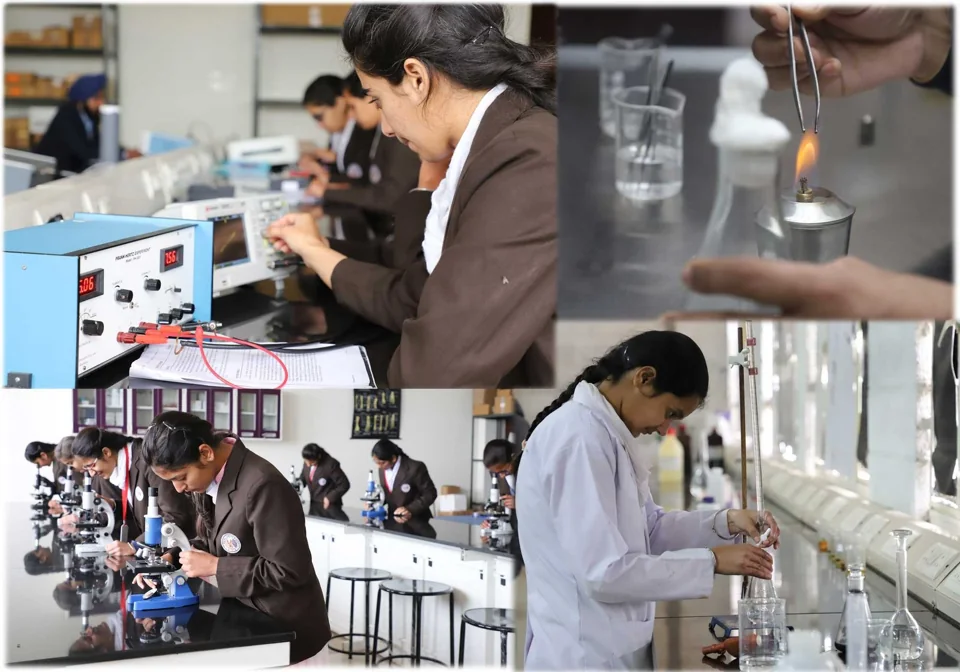
The Physics department combines theoretical study with experimental work. Its published programme range includes honours and multidisciplinary undergraduate study, a master’s programme and doctoral research. The department describes research across condensed matter physics, materials science, nanotechnology, atomic and radiation physics, nuclear physics and high-energy physics.
Laboratory exercises, research projects and problem-solving form part of its educational objectives. Seminars, workshops and invited lectures provide additional opportunities for scientific exchange, while the departmental account describes collaboration with research institutions in India and overseas. Its research listings include nuclear structure and decay-data evaluation, alongside examples of student investigations. This combination connects foundational physics teaching with specialised research questions and the practical methods used to investigate them.
Sources: Physics department ↗
Computing and technology education
The Computer Science and Engineering department offers B.Tech. and Bachelor of Computer Applications routes, with programme listings identifying data science and data analytics. Its teaching description includes artificial intelligence and machine learning, cybersecurity, web technologies, software development and cloud computing. Laboratories and practical exposure are intended to connect computational concepts with their application.
The department’s research interests include distributed and cloud computing, machine learning, bio-inspired optimisation and social-media analytics. Its stated objectives also include innovation, problem-solving and collaboration with industry, research organisations and other academic institutions. The department specifically describes outreach and mentoring aimed at rural learners and women entering technology education. Ethical responsibility and sustainable technological practice appear alongside technical proficiency in its mission.
Library and residential learning resources
The central library provides books, periodicals, newspapers, computing facilities and quiet study space. Its organisation includes a stack area, circulation services, reference and periodical provision, and reading and ICT facilities. Library automation uses Koha integrated with RFID technology. An online public-access catalogue supports searching, browsing and reserving physical materials, as well as checking a reader’s borrowing information. The library also describes video-viewing provision, internet-connected computers and printing facilities, supporting different ways of consulting course materials and carrying out academic work.
Residential provision includes separate hostels for men and women, with wardens, reading rooms and vegetarian meals. The published hostel information also identifies indoor recreation and outdoor exercise facilities. Prayer space and the Darbar Sahib form part of the residential environment. These facilities bring study, daily living, recreation and the university’s spiritual setting into the same campus experience.
Sources: University library ↗ · Hostels and residential facilities ↗
Sri Guru Granth Sahib Studies
The Department of Sri Guru Granth Sahib Studies was established in the 2015–2016 session. Its published honours programme examines the scripture alongside Sikh history, philosophy, religious practice and the teachings of spiritual figures. Comparative study of religions is an integral element, reflecting the department’s stated interest in unity and understanding across religious traditions.
Research areas listed by the department include Gurbani interpretation and pronunciation, Sikh history, Sikh philosophy and comparative religion. It also publishes a certificate-course option for the university’s own students. This specialist department gives the institution’s spiritual and cultural mission a defined academic expression, combining textual learning with historical and comparative inquiry.