Visa

About AJK College of Arts and Science
An arts and science college near Coimbatore
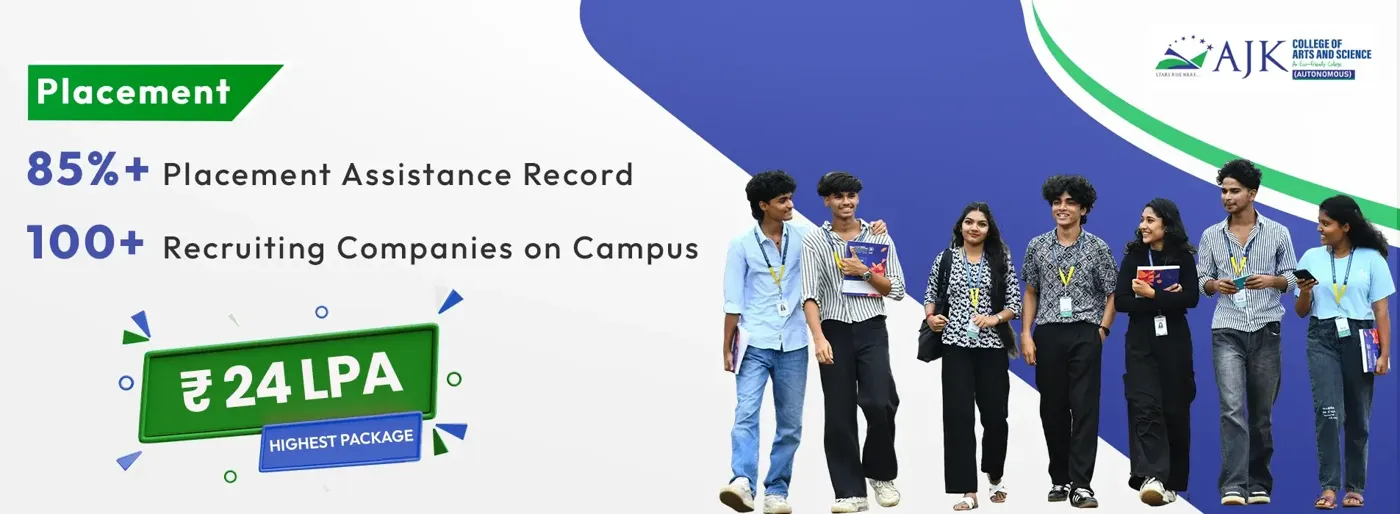
AJK College of Arts and Science, commonly abbreviated AJKCAS, is a coeducational college at Navakkarai on Palakkad Main Road, Coimbatore, Tamil Nadu, India. Established in 2007, it describes itself as an autonomous institution affiliated to Bharathiar University. Its academic provision spans arts, science and commerce, with undergraduate, postgraduate and research study represented in the college’s information.
The college’s stated purpose connects teaching with innovation, lifelong learning, cultural enrichment and outreach. Access to education in rural areas, environmental sustainability, inclusiveness and social responsibility appear among its core values. Its strategic aims include participative learning, exchanges of ideas and opportunities for creativity and entrepreneurship. These statements place specialised courses within a wider educational setting concerned with both disciplinary knowledge and students’ role in society.
Sources: College history, purpose and values ↗ · Academic affiliation and admissions information ↗
Computing foundations and practical projects
The B.Sc Computer Science programme combines computing concepts with programming and analytical work. Its published content includes data structures, database-management systems, operating systems, networks and software development. The programme description links these subjects with laboratory work, projects and practical assignments, giving students ways to apply concepts rather than encounter them only through lectures.
The department also identifies projects, mini-projects, interdisciplinary learning and additional skill courses as forms of curriculum enrichment. Workshops and guest lectures connect students with outside expertise, while communication and career-readiness training sit alongside technical study. Its facilities include computing laboratories, digitally supported classrooms and access to the college’s learning-management and lecture-capture systems. Together, these resources support both independent preparation and organised practical learning.
Sources: B.Sc Computer Science ↗
Catering science and hospitality education
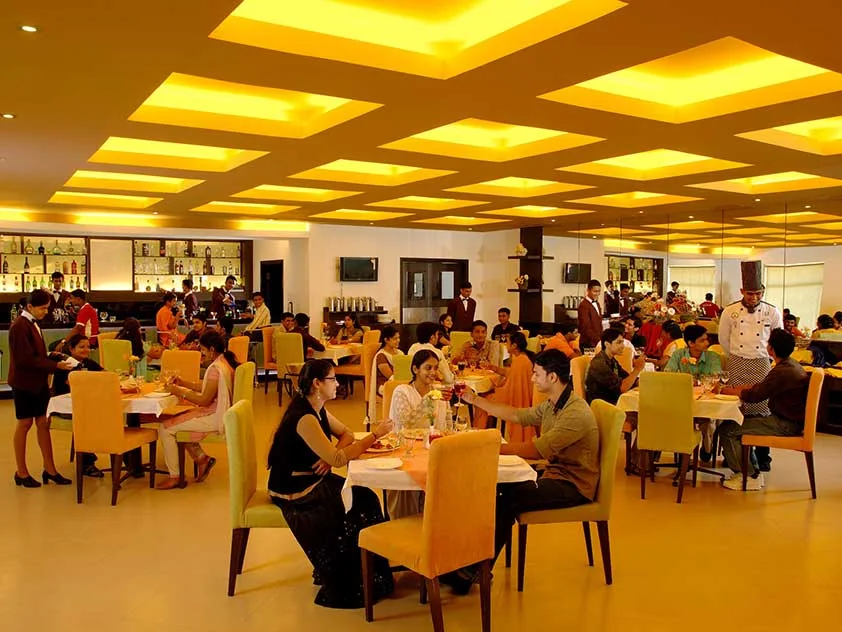
The B.Sc Catering Science and Hotel Management programme addresses several parts of hospitality work. Its published learning areas include food production, food-and-beverage service, front-office operations and housekeeping. The programme also identifies event, banquet and tourism-management skills, connecting food and accommodation services with the organisation of guest experiences.
Practical learning is central to the department’s description. Kitchens, front-office training areas and housekeeping setups provide settings in which students can work with procedures associated with hospitality operations. Internships form another part of the published educational approach. Leadership and communication are included alongside technical preparation, reflecting the importance of working with colleagues and guests. The programme therefore brings together operational knowledge, culinary practice and the interpersonal aspects of service.
Sources: B.Sc Catering Science and Hotel Management ↗
Laboratories across different disciplines
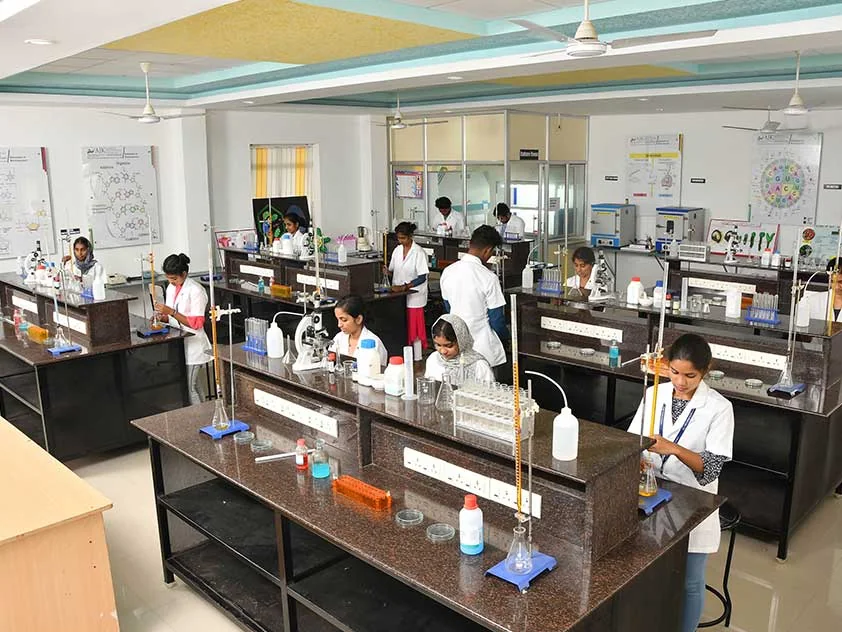
The college’s laboratory provision extends beyond computing and hospitality. Biotechnology facilities cover molecular biology, biochemistry and instrumentation, while physics teaching uses electronic and measurement equipment. Visual Communication includes shooting, audio and video-editing spaces, with facilities for photography, green-screen production and lighting practice.
Costume Design and Fashion has spaces for illustration, pattern making, sewing, draping and computer-aided design, alongside wet processing, dyeing and printing. The published forensic facilities cover document examination, fingerprints, scene management, biology, chemistry and related analytical work. This variety of practical environments reflects the different methods used across the college’s arts and science subjects.
Sources: Laboratories and practical teaching facilities ↗
Library collections and information services
The library supports the college’s teaching and research through books, journals, magazines, student reports and electronic resources. Its automation information identifies SOUL library software, while digital access includes INFLIBNET, DELNET and an electronic-library service. Departmental libraries supplement the main collection for more specialised needs.
Published services include research-oriented reading lists and bibliographies, interlibrary loans, printing, reproduction and user orientation. The digital library provides computers and internet access for academic work. Reference materials include dictionaries, encyclopedias and general reading as well as course-related literature. The library’s stated goals also include cooperation with other institutions and improved ways to retrieve information. These functions connect the availability of resources with guidance on finding and using them throughout study and research.
The resource page also directs readers to open-learning and research platforms, including SWAYAM, Shodhganga and the National Digital Library. These links extend discovery beyond the library’s own shelves and subscribed collections.
Sources: College library ↗
Student interests, service and enterprise
The college groups a range of activities under cells, clubs, centres and organisations. Its published cells include entrepreneurship development, incubation, intellectual property rights, skills development, equal opportunity and women’s empowerment. These provide named organisational settings for interests that cross departmental boundaries.
Student clubs extend from commerce, computing and artificial intelligence to photography, film, languages, culinary interests and biotechnology. Readers, heritage and environmental clubs add cultural and civic dimensions, while electoral literacy, consumer awareness and road safety appear in the same directory. The range allows academic subjects to connect with creative work, public issues and student-led activity. Each club has an identified coordinator, linking participation with staff support within the college.
Residential study and digital communication
The on-campus hostel provides a residential setting with wardens available to assist students. Its published arrangements include designated study time and expectations for cleanliness, responsible use of shared facilities and considerate behaviour. The hostel information also sets out procedures for communicating with wardens when students are unwell or need leave, giving residential life an organised support structure.
The college uses CAMU as part of its learning-management system. Students are registered during admission, and the platform carries assignments, homework, events, holidays and departmental updates. Parents are also connected to attendance information. This digital system sits alongside the college’s physical teaching and residential facilities, bringing routine academic communication and activity monitoring into a shared platform.
Sources: Campus hostel ↗ · Learning management system ↗