Visa

About Ajay Kumar Garg Engineering College
Engineering education in Ghaziabad
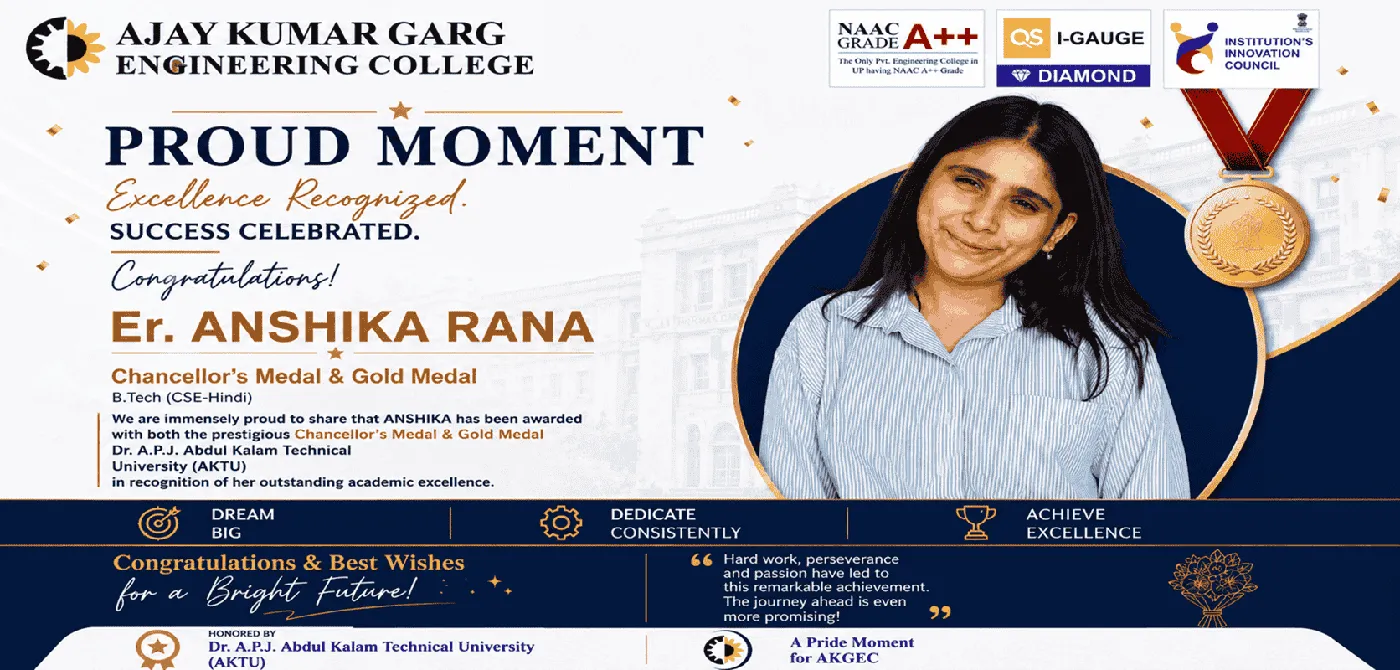
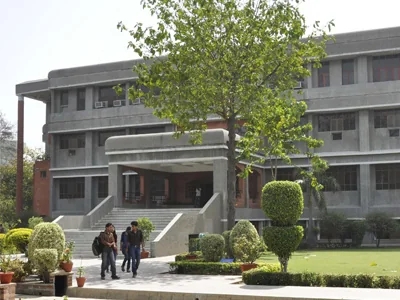
Ajay Kumar Garg Engineering College, commonly abbreviated AKGEC, is an engineering college in Ghaziabad, Uttar Pradesh, India. It was established in 1998 and is affiliated to Dr. A.P.J. Abdul Kalam Technical University in Lucknow. Its campus address is at the 27th kilometre milestone on the Delhi–Meerut Expressway, with the Adhyatmik Nagar postal address.
The published programme list includes undergraduate B.Tech study in computer science and engineering, information technology, electronics and communication, mechanical engineering, electrical and electronics engineering, and civil engineering. Computing options also include artificial intelligence and machine learning, data science and Computer Science in Hindi. Postgraduate provision includes M.Tech programmes in computing, electronics and communication, electrical and electronics, and mechanical engineering, alongside the Master of Computer Applications. This profile concerns the engineering college, which is distinct from the separately identified AKG Institute of Management.
Sources: Institutional homepage ↗ · Courses offered ↗
A foundation in sciences and humanities
The Applied Sciences and Humanities department provides core teaching in applied mathematics, physics, chemistry and humanities. Its description gives particular attention to the first year of engineering study, when students develop foundations that can support later technical specialisation. English-language competence and human values appear alongside scientific knowledge in the department’s educational aims.
Practical facilities include chemistry, physics and computing laboratories. The department describes laboratory work as a setting for experiments and research activity, supported by technical staff and equipment maintenance. Its interdisciplinary approach connects engineering concepts with problem solving and broader social understanding. Horizon, the departmental society, provides another named setting within this part of the college’s academic community.
Sources: Applied Sciences and Humanities ↗
Computing study and project work
The Computer Science and Engineering department dates from the college’s establishment in 1998. It provides undergraduate and postgraduate teaching, with support for M.Tech dissertation work through faculty guidance, laboratory facilities and access to research literature. Its published objectives connect mathematical and scientific foundations with analysing requirements and designing computing solutions.
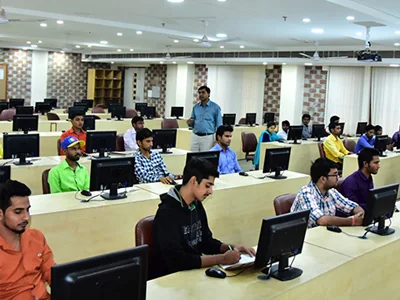
The department identifies laboratories for programming, software engineering, operating systems, web technology and computer networks. Separate postgraduate and project laboratories support further work. These facilities are described as serving practical experiments, student projects and research activities. Teamwork, communication, professional ethics and continuing learning are also included in its educational objectives. The departmental society, Conatus, adds a student-facing organisation alongside the formal teaching and laboratory structure.
Sources: Computer Science and Engineering ↗
Practical training with industrial technologies
AKGEC’s centres of excellence bring several industrial technologies into its educational environment. The KUKA-linked robotics centre offers different levels of industrial robotics training, while the National Instruments LabVIEW Academy addresses graphical programming and associated hardware platforms. A Siemens product-lifecycle-management centre connects digital product engineering with manufacturing and lifecycle management tools.
The Bosch Rexroth collaboration covers automation subjects including hydraulics, pneumatics, sensors, programmable controllers, drives and mechatronics. Other published centres address integrated automation, industrial pneumatics, advanced welding and advanced manufacturing. These are presented as opportunities for practical learning alongside conventional engineering subjects.
The college’s Fab Lab provides another form of project support through digital fabrication and rapid prototyping. Its description connects mechanical, electronic and embedded development with access to tools and trainers. This gives students a setting for developing ideas into prototypes and for relating theoretical learning to making and testing physical products.
Library collections and digital resources
The Central Library brings together physical collections, digital resources and research support. Its catalogue uses the Koha library-management system, while its institutional repository uses DSpace. The library maintains a bank of previous examination papers and model solutions prepared by subject teachers, with electronic and print access described for students.
Digital resources include engineering journals and links to national and international information services. The library page identifies the ProQuest Engineering Collection, the National Digital Library of India, DELNET and directories of open-access journals and books. It also directs readers to lecture and learning resources such as NPTEL. These services connect conventional reading materials with searchable literature and course-related documents, supporting both everyday study and more specialised academic work.
Sources: Central Library ↗
Residential life and shared facilities
AKGEC provides campus hostel accommodation through separate complexes for different student groups. The published arrangements distinguish junior and senior boys’ accommodation and girls’ hostel provision. Room arrangements vary, with shared and single occupancy described across the complexes. The college identifies first-year accommodation separately within this residential structure.
Each complex has dining arrangements, with additional facilities including internet access, reading resources, television rooms, gymnasium space and indoor or outdoor sports. Solar water heating and utility stores are also listed. The hostel description brings together the practical needs of living on campus with opportunities for recreation and independent study, extending the college environment beyond lecture rooms and laboratories.
Sources: Campus hostels ↗
Institutional purpose
The college’s mission connects its academic environment with professional preparation, research, development and consultancy. It emphasises academic and administrative systems as part of creating conditions for learning. Its quality policy adds the development of responsible members of society to its professional educational aims.
These statements place the engineering curriculum within a wider institutional framework: technical competence is paired with professional responsibility, while research and consultancy provide activities through which faculty knowledge can connect with work beyond routine classroom teaching.