Visa

About Air Link International Aviation College
An aviation college in Pasay
Air Link International Aviation College, commonly known as ALIAC, is an aviation-focused educational institution in Pasay City, Philippines. Its contact address is the ALIAC Building on Domestic Road at the Domestic Airport. The college combines aviation and aerospace subjects with programmes connected to tourism, business and the wider operations of the industry.
Its official history traces the institution to a small flying school established by Captain Geronimo Amurao in 1982. It used the name Air Link International Aviation School from 1984, and adopted Air Link International Aviation College in April 2003. The history also records a change in managing leadership in 2017. These stages describe the development from a flying school into an institution with a broader range of academic and technical education.
Sources: Institutional history ↗ · Pasay campus contact address ↗
Institutional approach and values
ALIAC describes itself as a non-stock, nonprofit educational institution concerned with aviation and aerospace sciences. Its academic approach combines theory with facilities intended for practical training. The institution emphasizes an outcomes-based teaching model and the integration of subjects that contribute to understanding aviation as a system.
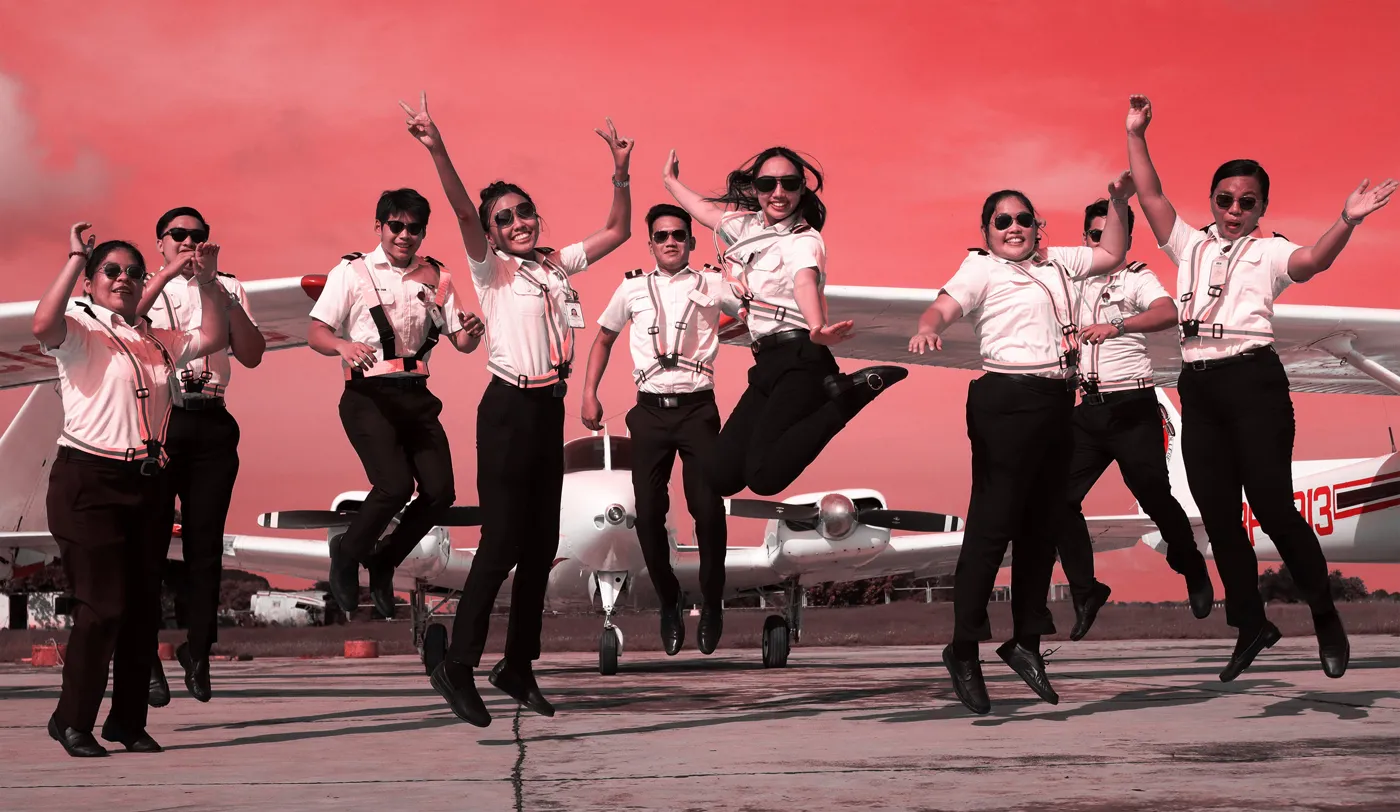
The educational description links engineering principles, applied physics, language and reasoning with attention to human factors. Its FIDES values bring together faith, integrity, discipline, excellence and social responsibility. Expectations for students include punctuality, courtesy, personal discipline and good study habits. The college also describes assigning flight instructors to cadets to monitor learning needs and progress, with different senior instructors involved at later stages. The college requires cadets to wear uniforms during classes and training, linking its expectations for conduct with the professional setting in which students learn.
A range of undergraduate subjects
The undergraduate overview lists Aviation major in Flying, Aircraft Maintenance Technology, Aerospace Engineering, Avionics Technology, Tourism Management, and Office Administration major in Airline Management. This range connects flight operations with the technical, service and administrative work that surrounds aviation.
The same overview also announces newer offerings in customs administration, aviation management and unmanned aerial systems. The institution’s broader description includes diploma and ladderized provision alongside baccalaureate education. Its programme structure therefore reaches beyond a single pilot-training route, covering several ways of studying the aircraft, systems, organizations and services associated with the industry.
Sources: Undergraduate studies overview ↗
Aerospace engineering and research foundations
The Aerospace Engineering programme addresses aircraft and aerospace design, aerodynamics, propulsion, structures, flight and space dynamics, automatic control and component design. Its published curriculum begins with subjects such as engineering drawing, calculus, mechanics and chemistry, placing specialist study on a mathematical and scientific foundation.
Later subjects connect those foundations with materials, heat transfer, computer-aided drafting, electrical engineering and aircraft propulsion. The curriculum also includes aerodynamics, airframe construction and repair, safety management, aerospace laboratories and space engineering fundamentals. Engineering economics and management appear alongside the technical subjects. Additional listed subjects cover rotary-wing and propeller design, aerospace vehicle electronics, and the systems and instrumentation used in aerospace vehicles. The programme page provides lecture and laboratory allocations and prerequisites, showing how practical work and successive levels of study are organized within the published course sequence.
Sources: Aerospace Engineering curriculum ↗
Aviation major in Flying
The Aviation programme’s flying major is designed around pilot-related learning and the development of an understanding of aviation operations and management. Its published curriculum combines general education with specialist aviation subjects and simulator work. Early subjects include principles of aviation, basic instruments, aircraft performance and specifications, mechanical drawing and blueprint reading.
The course sequence also includes civil air regulations and other operational subjects. The programme brief relates the degree to basic and commercial flying training. This combination places practical flight-related preparation alongside academic study. Later curricular subjects include basic and advanced meteorology, navigation and radio aids, flight and engine instruments, aircraft air-conditioning and pressurization, and safety management.
Simulator-based practice
ALIAC’s simulator facilities page identifies PFC CAT III and CAT II desktop devices, a Redbird TD2 and ATC simulator models. The CAT III description includes an instructor operating station, allowing an instructor to control the simulation, together with cockpit-style controls and instrument displays.
The Redbird TD2 is described as representing a generic single-engine piston aircraft, with different landing-gear, propeller and engine configurations available in the simulation. The ATC simulator description discusses cockpit familiarization, procedural sequences and emergency scenarios. Together, these facilities provide settings in which students can encounter instruments and operational situations in a simulated environment. Its CAT II description identifies a Cirrus II console with controls including master and light switches. The CAT III adds manual and electric trim controls and a digital clock and timer.
Sources: Simulator facilities ↗
Laboratories for aircraft and aerospace study
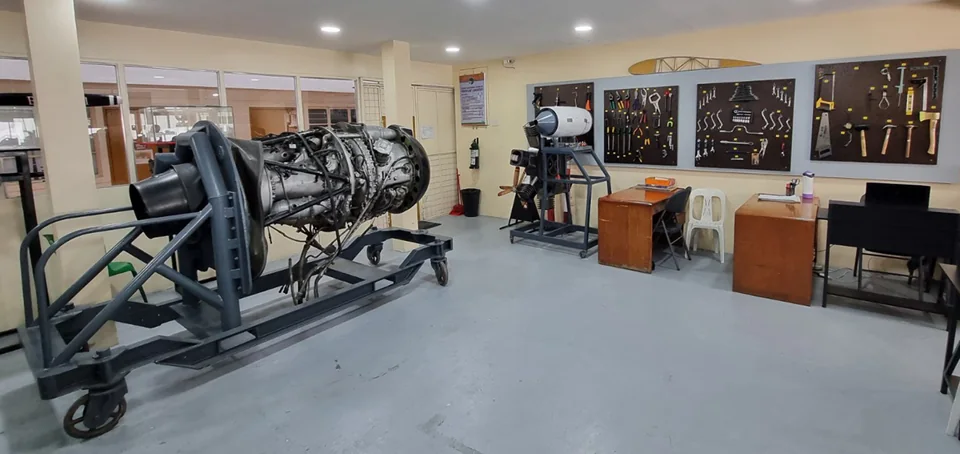
The laboratory facilities connect several parts of the curriculum with physical equipment. The Aircraft Maintenance Technology laboratory contains airframe and powerplant materials, aircraft structures and engines used for workshops and experiments. The avionics laboratory supports practical study of radio communication, navigation and aircraft instruments, including work involving adjustment and calibration.
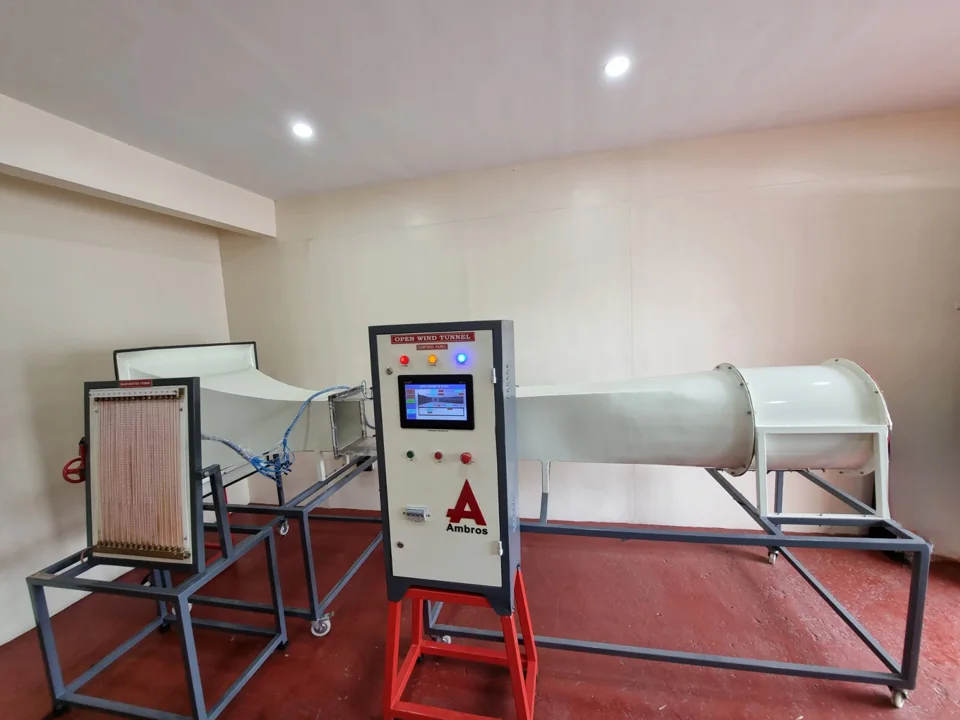
For Aerospace Engineering, the wind-tunnel laboratory allows students and teachers to investigate airflow around objects and examine scale models. The college explains its use for exploring how aircraft behave in moving air. Other laboratory provision supports experiments and measurement. These spaces give practical form to the relationship between a technical explanation, an instrument or component, and an observation made during supervised study.
Sources: Laboratory facilities ↗