Visa

About Ahmet Yesevi University
An international Kazakh–Turkish university in Turkestan
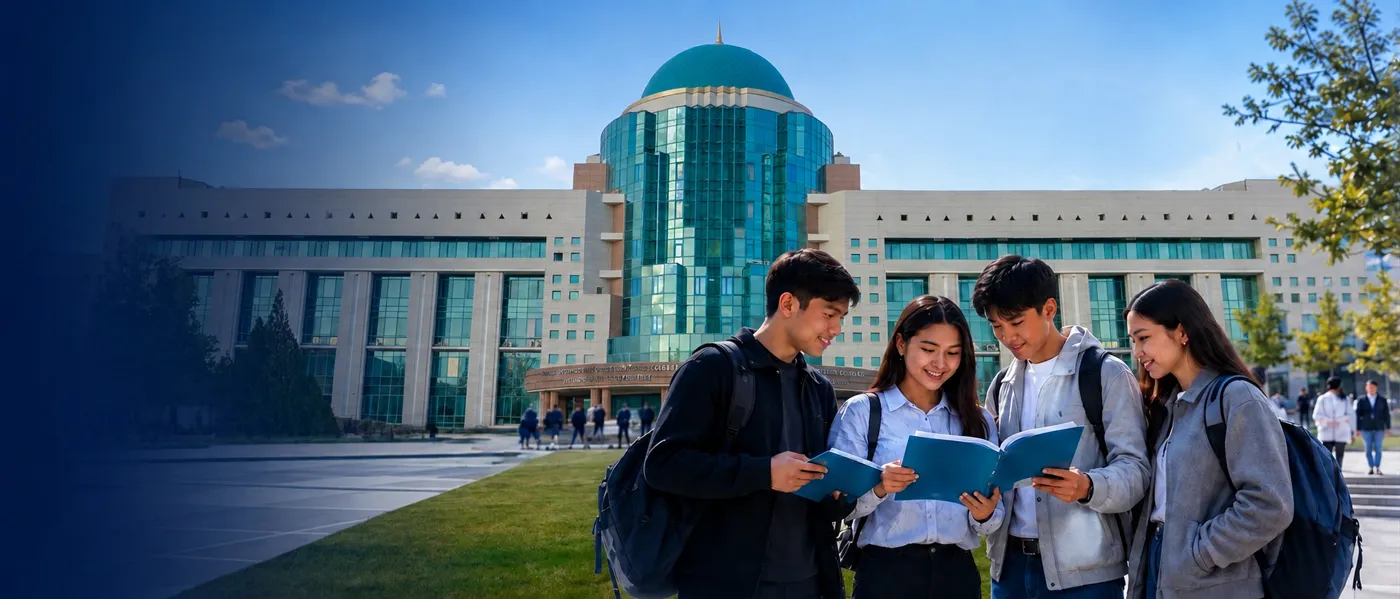
Ahmet Yesevi University is the directory name for Khoja Akhmet Yassawi International Kazakh–Turkish University in Turkestan, Kazakhstan. Its English-language materials use several transliterations of the Yassawi name. The university’s address is on Bekzat Sattarhanov Street in Turkestan, and its institutional identity is rooted in cooperation between Kazakhstan and Türkiye.
The university was established in 1991. Its official history records an agreement signed by the two governments on 31 October 1992 to reorganise it as the international Kazakh–Turkish university. It also records Kazakhstan’s January 2012 ratification of an agreement concerning the university’s operating conditions. These milestones distinguish its initial establishment from the subsequent intergovernmental arrangements.
Its academic provision extends across undergraduate and postgraduate education. The university describes study in Kazakh, Turkish, Russian and English. Current faculty listings encompass engineering, natural sciences, economics and management, philology, social and humanitarian sciences, law, theology, medicine, dentistry, sports, and art, media and design. Research structures include institutes concerned with ecology, Turkology, archaeology, Eurasian studies and the Yassawi heritage. This disciplinary range places scientific and professional study alongside the cultural and historical subjects central to the institution’s identity.
Sources: University introduction and history ↗ · University academic and research structure ↗
Educational mission and shared values
The university’s mission draws inspiration from the intellectual and cultural legacy of Khoja Akhmet Yassawi while affirming freedom of thought and universal academic principles. It connects education with bringing together young people of the Turkic world and developing responsibility towards society. Cooperation and respect for human rights form explicit parts of this account of its educational purpose.
Its published values include partnership and respect, transparency and trust, fairness and integrity, competence and hard work, and innovation and adaptability. The descriptions link these values with practical expectations: respect for individual dignity, accountability for decisions, listening to students and staff, and ethical conduct in teaching and research. The university also emphasises teamwork and openness to new approaches. Its vision presents Turkestan as a shared educational centre for the Turkic world, giving an international and cultural context to its academic activities.
The values statement also connects fairness with merit and respect for the work of employees. Its discussion of transparency calls for institutional activities to be accessible to stakeholders and the public, while its emphasis on adaptability encourages organisational flexibility and the consideration of new opportunities.
Sources: Mission, vision and values ↗
History education and research methods
The Department of History is located within the Faculty of Social and Humanitarian Sciences. Its account identifies it as a department whose work began with the university’s establishment. Earlier departmental names reflected history of Kazakhstan, general history, archaeology and ethnology, and history of Turkic states. Its current programme listings include history, history teacher education, history and social science, master’s study in history, and doctoral study in history teacher education.
The history curriculum describes knowledge of national and world historical processes and the theoretical and methodological approaches used to investigate them. The history and social science teacher-education programme emphasises critical historical thinking, pedagogy, communication and the use of digital learning resources. At master’s level, the department identifies critical evaluation of historical concepts and schools of thought, interdisciplinary methods and research. Its doctoral programme description combines historical research methodologies with scientific and pedagogical competencies. These programmes show how a shared subject area can support both historical scholarship and preparation for teaching.
Cultural facilities and the Turkic heritage
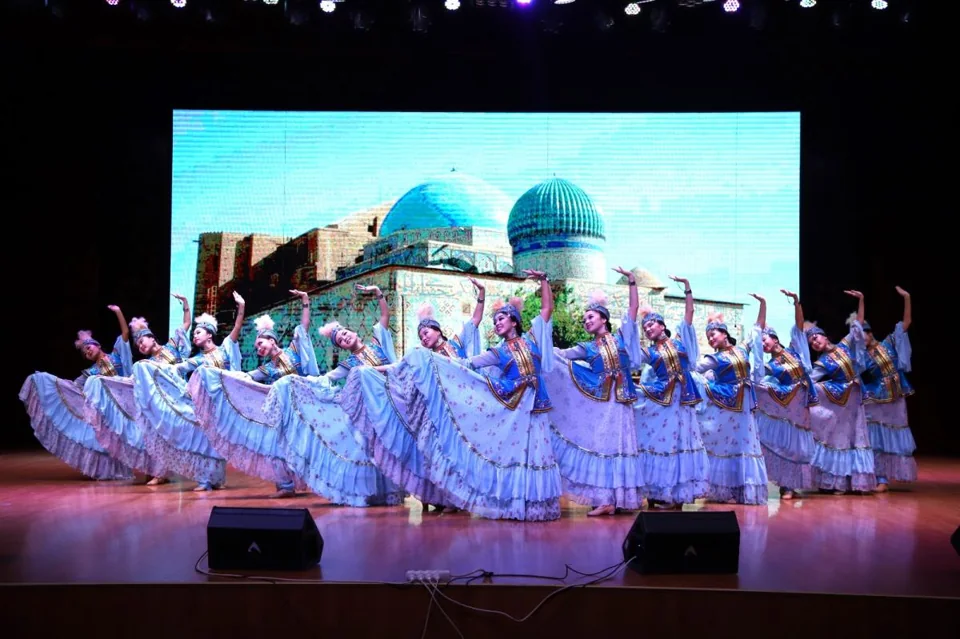
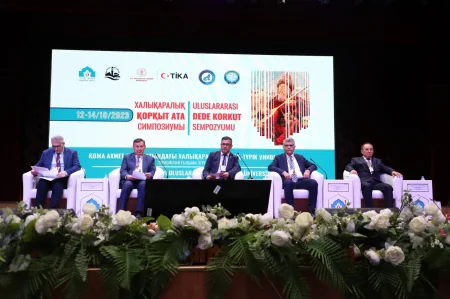
The university’s Cultural Center opened in 1999. Its facilities include a large performance hall and a smaller conference hall, with sound equipment and simultaneous-translation systems. The large hall also has stage lighting and an LED screen. The centre therefore provides settings for performance, public presentations and academic gatherings as well as activities concerned with cultural heritage.
The centre’s museum of the artistic history of the Turkic world includes a panorama on the history of Turkic peoples, a gallery portraying thinkers and other notable figures, and national costumes. Its Yassawi archaeological museum combines archaeological exhibits with displays concerning khans, paintings and historical maps. The centre’s published photographs show both staged cultural performances and conference discussions. These different uses connect the interpretation of historical heritage with contemporary university events, making the centre part of the institution’s educational and cultural life rather than solely a venue for entertainment.
The museum’s panorama traces Turkic history from early periods through later developments. Its displays also include a representation of the Turkic world and maps relating to the history of Kazakh statehood.
Sources: Cultural Center ↗
Sports and residential life
The university’s sports information describes organised activities including judo, Kazakh wrestling, sambo, freestyle wrestling, basketball, taekwondo, boxing, gymnastics, volleyball and togyzkumalak. It also identifies football, swimming, table tennis and weightlifting in its activity listings. The sports centre brings clubs and training spaces into the university’s wider provision for student life, with coaching and opportunities to participate in different forms of physical activity.
The student accommodation information distinguishes student hostels from housing intended for families, workers and employees. It identifies facilities available to students such as a library, reading room, gym, laundry and meeting rooms, together with dining facilities. These resources support everyday study and residential routines beyond the classroom. The accommodation description places spaces for reading, exercise and communal activity alongside the provision of rooms, reflecting the different practical needs of students living within the university environment.
Sources: Sports and Sports Infrastructure ↗ · Student Dormitories ↗