Visa

About Ahalia School of Engineering and Technology
Engineering education in Palakkad
Ahalia School of Engineering and Technology, often abbreviated to ASET, is an engineering college in Palakkad, Kerala, India. It forms part of the wider Ahalia campus, while maintaining its own engineering departments and student activities. The college's institutional profile identifies its affiliation with A. P. J. Abdul Kalam Technological University in Kerala. Its campus setting has views towards the Western Ghats.
The college lists Bachelor of Technology study in artificial intelligence and machine learning, civil engineering, computer science and engineering, electrical and electronics engineering, electronics and communication engineering, and mechanical engineering. Its stated educational direction combines technical learning with research, innovation, entrepreneurship and professional ethics. The institutional programme outcomes also emphasise teamwork, communication, environmental awareness and project management. These are presented as educational objectives guiding engineering study, alongside the subject knowledge developed within individual departments.
Sources: About Ahalia School of Engineering and Technology ↗
Civil engineering and practical investigation
The Department of Civil Engineering began in 2012, the same year as the institution's establishment. It offers a B.Tech. programme supported by laboratories covering several areas of the discipline. The department identifies surveying, materials testing, geotechnical engineering, transportation engineering, design and analysis, and environmental engineering among its practical facilities. This range connects the study of structures and infrastructure with the investigation of materials, ground conditions and environmental questions.
The department also describes industrial visits, internships, lectures and summer training courses as parts of its educational activities. Its programme objectives include developing a foundation for civil engineering work, using engineering tools to investigate problems, and recognising professional ethics and social responsibilities. The emphasis on practical studies places laboratory observation and field exposure alongside classroom instruction. Students also participate in curricular and extracurricular activities within the department.
Computing and technological change
Computer Science and Engineering is another department established in 2012. Its B.Tech. programme addresses both computer hardware and software, with practical learning and hands-on application forming part of its stated approach. The department describes updating its course structure to incorporate emerging topics as computer science develops. Academic teaching is supported by technical and teaching-assistant roles as well as faculty members.
The department's educational aims extend from the design and implementation of software solutions to logical problem-solving and the use of appropriate computing technologies. Its mission includes opportunities for interdisciplinary research and collaborative projects, together with awareness of ethical, social and legal responsibilities. Innovation, entrepreneurship and sustainability appear in these aims. This gives the computing programme a framework that considers how technical decisions affect users and society, alongside the development of programming and computational skills.
Sources: Computer Science and Engineering ↗
Mechanical engineering studies
The Mechanical Engineering Department also traces its formation to the college's opening in 2012. It offers a B.Tech. degree with a syllabus encompassing production, manufacturing, thermal engineering, fluid mechanics and design. The department identifies practical learning as an important component of the programme. Computer-aided machining and manufacturing are included in its description of the course structure, connecting engineering design with methods used to make components and products.
Its stated mission encourages creative thinking, research activity and attention to industrial and societal challenges. Programme objectives refer to technical knowledge across mechanical engineering, leadership and ethical values, and the development of entrepreneurial skills. The departmental account places these goals within the broader engineering expectations of communication, teamwork, experimentation and continuing learning. The combination of design, manufacturing and thermal subjects gives this department a distinct focus within ASET's wider range of engineering programmes.
Library and digital information services
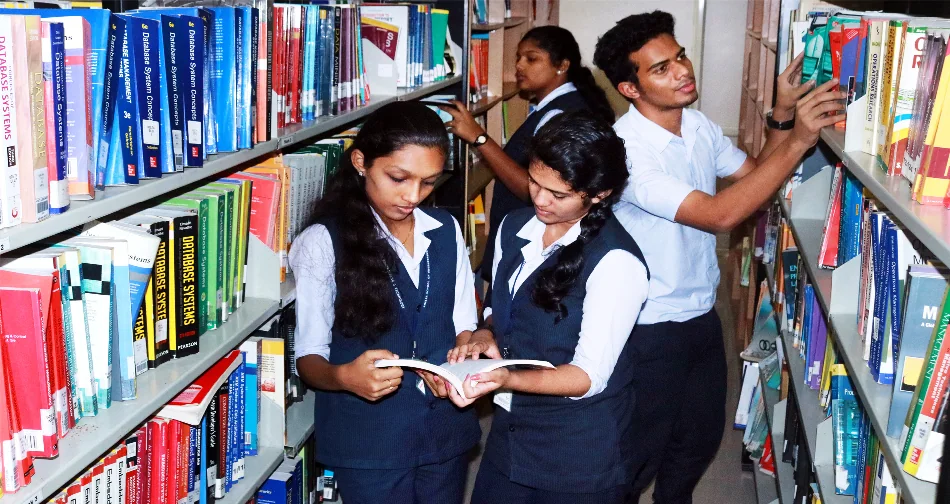
ASET's Library and Information Center provides resources for engineering, science and humanities. Its services include a reading room, printed books and periodicals, electronic information resources and reference support. Maps and audiovisual learning materials are also included in the library's account of its learning aids. The collection serves the college's different branches rather than a single department.
The library uses the KOHA integrated library system and offers an online public access catalogue through its digital library. This allows staff and students to search for material they need. Barcode-based circulation supports borrowing transactions, while internet browsing and reprographic services provide additional assistance. The library also describes DSpace@ASET, an institutional digital repository for making digital documents available centrally. Links to resources such as the National Digital Library of India, university examination papers and DELNET complement its local information services.
Sources: Library and Information Center ↗
Innovation and entrepreneurship
The Innovation and Entrepreneurship Development Centre at ASET operates within the Kerala Startup Mission's Startup Bootcamp framework. Its purpose is to encourage an entrepreneurial culture among students and faculty and support the development of innovative student projects. The centre describes programmes organised with bodies including the Directorate of Industries and Commerce in Palakkad, the Entrepreneurship Development Institute of India and the Kerala State Council for Science, Technology and Environment.
Its listed functions include entrepreneurship awareness camps, development programmes, faculty development and skill-based sessions. Guidance can cover project reports, available support agencies, technologies and the processes involved in establishing an enterprise. The centre also identifies interaction with entrepreneurs, mentoring and industrial visits as ways to connect ideas with practical problems. Its emphasis is on providing information, opportunities for exploration and project support within the college's engineering setting.
Sources: Innovation and Entrepreneurship Development Centre ↗
Community activity beyond campus
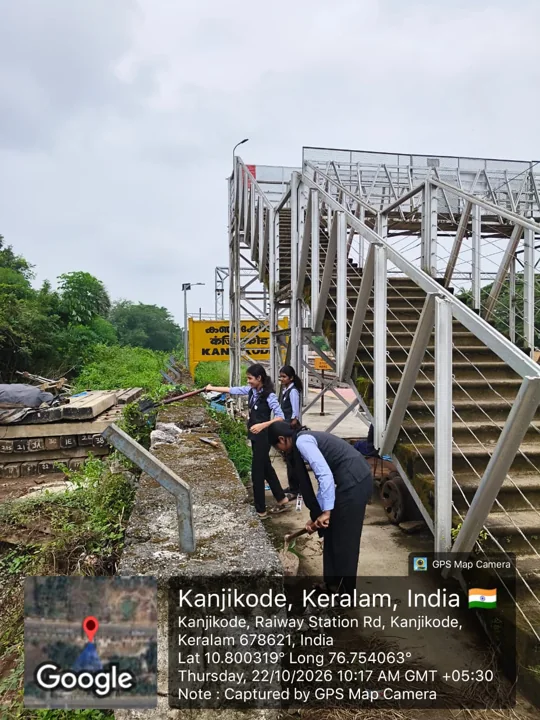
An example of ASET's National Service Scheme activity took place on 22 October 2026, when volunteers and faculty visited Kanjikode Railway Station. The college's report places the visit within Rail Jan Samvaad and Special Campaign 6, in association with Southern Railway. The programme addressed cleanliness, environmental care and responsibility for shared public spaces.
Railway officials and station staff spoke with students about maintaining clean and safe stations and the part that citizens can play. Volunteers then carried out a cleanliness drive, removing weeds and collecting waste around the station premises. The group also interacted with passengers and local residents about waste disposal and keeping the station surroundings tidy. Observation of the platform and conversations with travellers formed part of the visit. The activity provides a specific example of students participating in service outside the college campus.
Sources: NSS visit to Kanjikode Railway Station, 22 October 2026 ↗