Visa

About Agriculture University, Jodhpur
A university for western Rajasthan
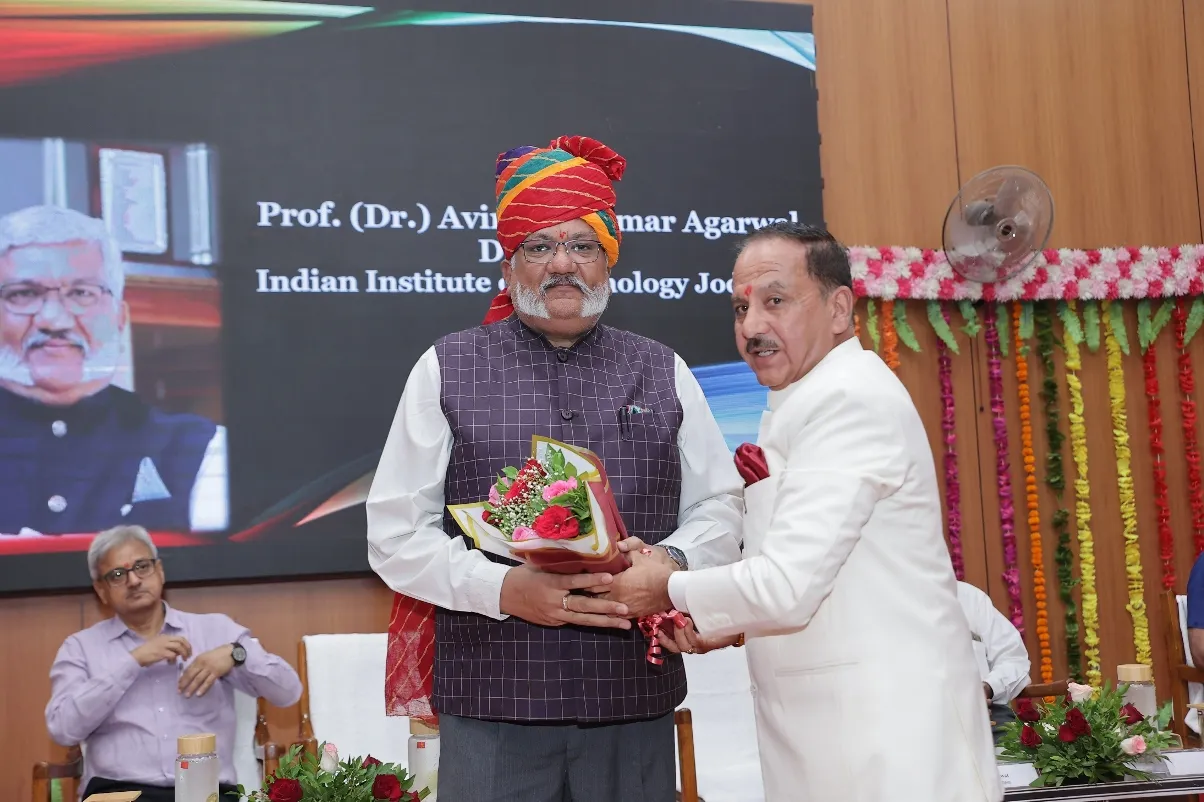
Agriculture University, Jodhpur is a state agricultural university headquartered at Mandor in Jodhpur, Rajasthan, India. The Government of Rajasthan established it on 14 September 2013 under Act 21 of 2013. Its purpose centres on agricultural development in the state's arid and semi-arid areas, bringing teaching, research and extension education into one institutional framework. The university's regional setting gives particular importance to farming under limited water availability and to the varied conditions found across western Rajasthan.
Its work extends across three agro-ecological settings: the Arid Western Plains, the transitional plains of the Luni Basin and part of the transitional plains of inland drainage. Alongside agriculture, its institutional structure includes dairy and food technology, agricultural engineering and agribusiness management. Research stations and Krishi Vigyan Kendras connect the university headquarters with agricultural communities outside Jodhpur. A Kisan Kaushal Vikas Kendra also provides skill training in agriculture and related activities.
The College of Agriculture at Mandor
The College of Agriculture, Jodhpur predates the university itself. It opened on 31 July 2012 as a constituent college of Swami Keshwanand Rajasthan Agriculture University, Bikaner. When Agriculture University, Jodhpur became a separate institution in September 2013, the college became part of the new university. Its address opposite Mandor railway station places this teaching unit within the same Mandor setting as the university headquarters and agricultural research facilities.
The college's institutional account records the contribution of Agricultural Research Station faculty to teaching during its establishment. That history illustrates a close connection between agricultural education and the university's research base. Academic specialisms represented in the college's staff directory include agronomy, horticulture, entomology, extension education, plant pathology, soil science, animal science, and genetics and plant breeding. These subjects encompass crop production, crop health, the management of agricultural resources and communication with farming communities.
Sources: College of Agriculture, Jodhpur ↗
Research facilities at Mandor
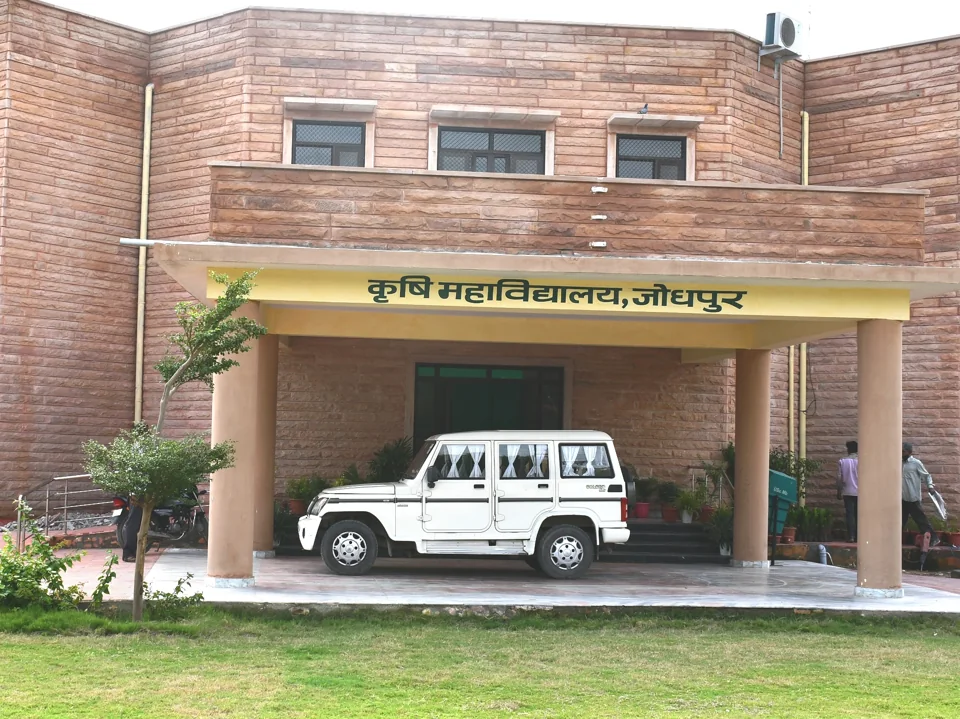
Agricultural Research Station, Mandor was established in 1983, considerably earlier than the formation of the present university. Situated on the outskirts of Jodhpur on the route towards Nagaur and Bikaner, it serves the Arid Western Plains zone. Its stated objectives combine the development of agricultural technologies and crop varieties with conservation of soil, water and vegetation. Research across different locations and agro-climatic conditions forms part of that mandate.
The station's facilities inventory describes laboratories, farm land, greenhouses, irrigation infrastructure and machinery for agricultural operations. Equipment includes seed drills, threshers, seed grading facilities and implements for cultivating and preparing land. An automatic weather station and an agrometeorological facility add a weather observation component to its research setting. Conference and auditorium facilities provide space for meetings and scientific exchange. Together, these resources support an institution concerned with field experimentation as well as laboratory work.
How regional research priorities are developed
The Directorate of Research coordinates the university's scientific work through its research stations and sub-stations. Its network includes Mandor and Samdari in the Arid Western Plains, Keshwana and Sumerpur in the Luni Basin setting, and Nagaur in the inland drainage zone. Seed production programmes form a specific part of the directorate's responsibilities. Research support includes state grants, Indian Council of Agricultural Research coordinated projects and other research projects.
The university describes a process that brings farmers' concerns into research planning. Feedback collected through Rajasthan's Department of Agriculture is assembled at zonal level and discussed by Zonal Research Extension Advisory Committees during the kharif and rabi seasons. University scientists meet with agricultural, animal husbandry and other relevant agencies to identify researchable problems. This provides a practical link between field experience and proposed investigations. Improving crop production and protection, water productivity and the diversification of farming systems are among the directorate's research priorities.
Sources: Directorate of Research ↗
Extension education through KVK Sirohi
Krishi Vigyan Kendra, Sirohi provides a concrete example of the university's extension work. Established in 1989, the centre operates near Ambeshwar temple on the Pali road outside Sirohi. Its role includes assessing locally appropriate agricultural technologies and providing practical training for farmers, farm women, rural young people and extension personnel. It also returns information from local experience to researchers.
The centre describes on-farm testing, frontline demonstrations, capacity development and agricultural advisory services among its activities. Its priorities include dryland farming in watershed areas and commercial crops such as castor, cotton, fennel and mustard. Horticultural diversification, livestock management and measures that reduce demanding manual work also feature in its programme. Vocational training areas identified by the centre include dairy management, nursery raising and the repair and maintenance of agricultural machinery. These activities place agricultural learning in farm, household and rural enterprise settings alongside the university's formal teaching.
Sources: Krishi Vigyan Kendra, Sirohi ↗
Library resources for agricultural learning
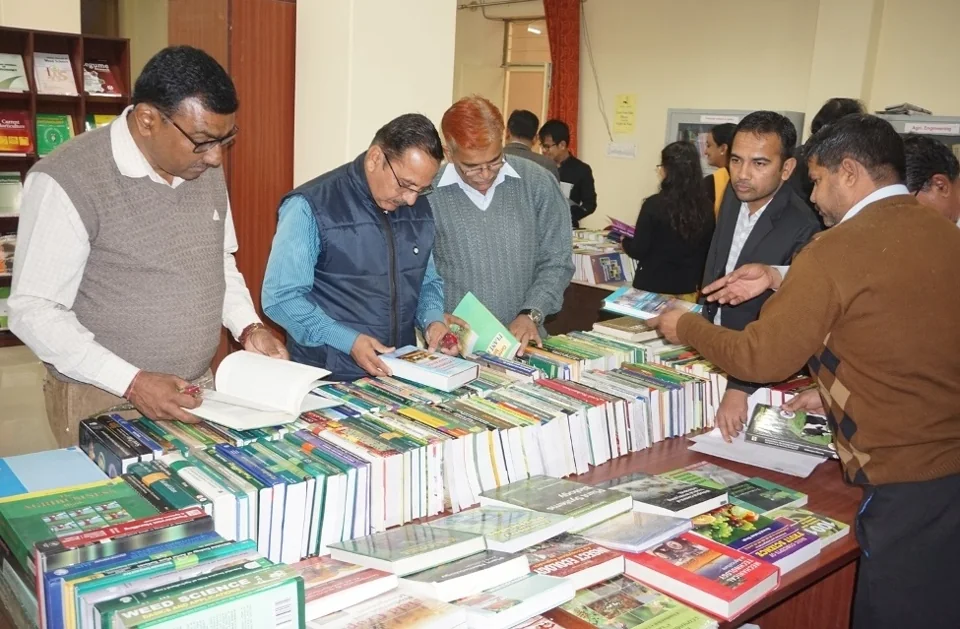
The university library supports teaching, research and extension through printed and electronic information. Its account describes a central library facility at the Agricultural Research Station in Mandor and faculty library provision associated with constituent colleges. Collections encompass books, journals, periodicals and government publications. Reading space, computers and internet facilities complement access to physical materials.
Services described by the library include a book bank and support for finding academic and scientific information. The official page also provides links to agricultural learning and research resources, including ICAR electronic courses, the Krishikosh repository and open-access journals through DOAJ. These resources cover different stages of academic work, from learning subject foundations to locating specialist research literature. The library's stated audience includes students, teachers, scientists, researchers, trainees and agricultural officers. Its remit therefore reflects the university's wider combination of higher education, agricultural investigation and the communication of knowledge beyond the classroom.
Sources: University Library ↗