Visa

About Agricultural University of Athens
A century of agricultural higher education
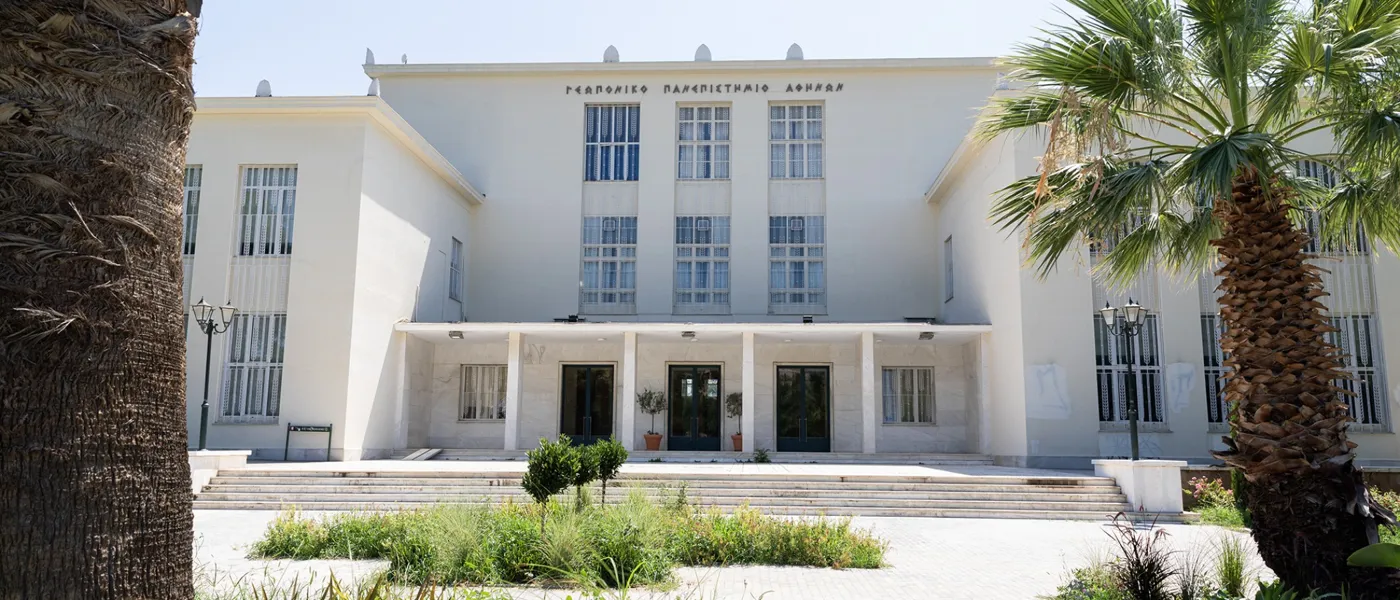
The Agricultural University of Athens, commonly abbreviated AUA, is a Greek university devoted to agriculture and the sciences, technologies and economic activities connected with it. Its Athens address is on Iera Odos, and its institutional history reaches back to 1920. It was established under Law 1844/1920 as an independent higher education institution with university status, initially bearing the name Highest Agricultural School of Athens.
The institution adopted the English name Agricultural University of Athens in 1989. A later modification of its Greek title in 1995 left that English name unchanged. Its historical account presents education as a combination of theoretical teaching, laboratory exercises and practical training, closely related to the problems and possibilities of Greek agriculture. It also describes a role in basic and applied research, natural resource management and the development of agricultural production. The university’s archives preserve documents, books, manuscripts and other material relating to its development since its foundation, providing evidence of its place in the modernisation of Greek agriculture.
Sources: History of the university ↗
Agriculture connected with society
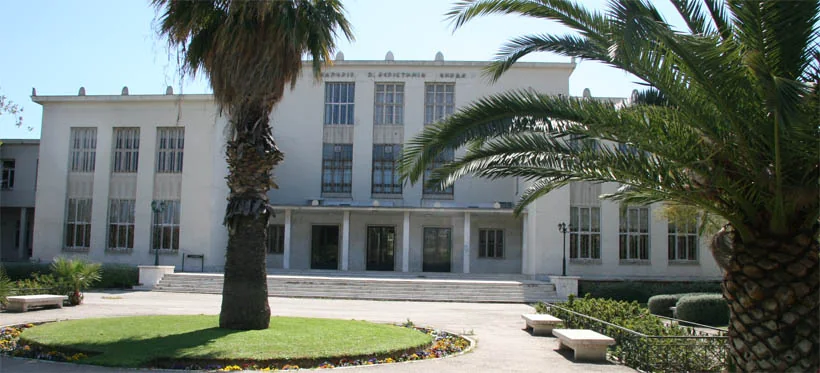
AUA’s stated vision brings undergraduate and postgraduate education together with agricultural research. It emphasises responding to the productive and developmental needs of Greek society and maintaining contact with the people and organisations involved in the agri-food sector. Its educational and research ambitions are therefore connected with questions of production, food and the wider economy.
The university’s academic fields extend well beyond the cultivation of plants. Its official schools and departments directory includes crop science, forestry, animal science, hydrobiology and aquaculture, natural resources and agricultural engineering. Food science, human nutrition, biotechnology, agricultural economics and rural development also form part of its academic landscape. Other listed areas include agribusiness, supply chains, agricultural and environmental informatics, and regional development. This range places biological sciences alongside engineering, environmental study and economic analysis within an institution centred on agriculture and its relationships with society.
Sources: University vision ↗ · Schools and departments ↗
Research across living systems and production
The university describes its research purpose as developing new knowledge and applying existing knowledge in agri-nutrition, environmental ecology and agricultural economics. Its areas of interest encompass soil, the atmosphere, water resources, microorganisms, plants, animals, feed and food. Research objectives include improving production processes and the safety and quality of products while addressing innovation and sustainability.
This work combines fields such as genetics, biotechnology, plant protection, physiology, nutrition, bioinformatics and agricultural economics. Process and bioprocess technologies also appear in the research framework. The institution explicitly identifies interdisciplinary work and cooperation as central to its projects. Funding sources described by the university include national and European research programmes, public and private organisations, and endowments. Financial administration of research is undertaken through its Special Research Funds Account, known as ELKE. These arrangements connect a broad scientific agenda with the organisational support needed to carry out research projects.
Sources: Research aims and areas ↗
Practical experience within study programmes
Internships provide a structured connection between academic study and professional settings. AUA’s internship arrangements allow placements in public services, local government organisations, other public bodies, private organisations and businesses. A supervisor at the host organisation guides the placement, while a faculty member provides academic supervision. Placements abroad are organised through Erasmus+.
The university’s updated internship information ties the duration and timing of placements to departmental regulations. Its Internship Office supports the process and provides information for students and prospective hosts. Published arrangements describe different funding routes, including co-financed programmes, funding by an eligible host organisation and Erasmus+ mobility. Announcements specify available positions and application procedures. The placement framework is intended to help students use and consolidate the knowledge and abilities developed in their programmes through experience of work beyond the classroom.
Sources: Internship arrangements ↗
Library resources and academic support
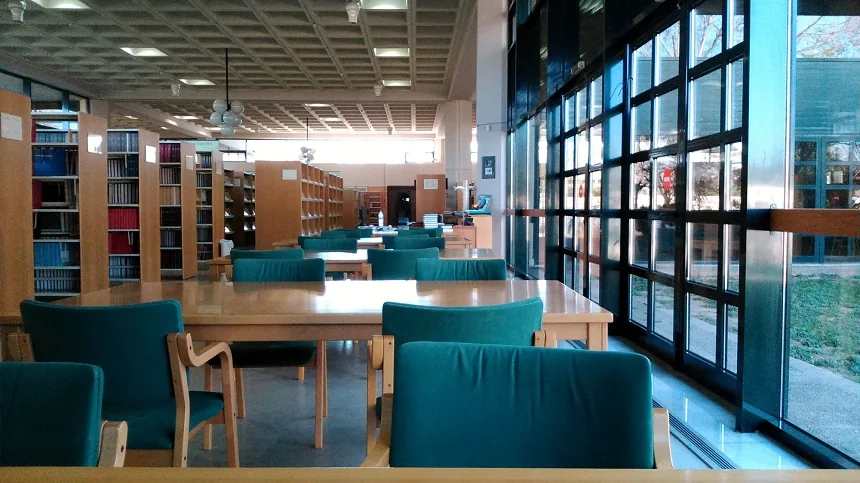
The Library and Information Centre supports the university’s educational, scientific and research activity through the collection, organisation and dissemination of information. Its services include circulation and reference assistance, interlibrary loans, document delivery and acquisitions. An online reference service extends access to assistance beyond the physical desk.
The library also provides user training, wireless networking, virtual private network access and disability support. These functions address both the discovery of information and the practical ability to use it. Its stated commitment to updating services reflects the changing information needs of an academic community whose work includes classroom study, laboratory investigation and research publication. The library is thus part of the university’s learning infrastructure as well as a collection of books and other scholarly resources.
Sources: Library and Information Centre ↗
Agricultural heritage and museum collections
The Museum of Agriculture, established in March 2005, explores the university’s contribution to Greek agriculture and rural life. Its purpose includes examining relationships between people and the environment, farmers and land, and scientific developments and agricultural production. It places the university’s own history within a wider account of changes in rural communities.
Its collections include scientific instruments and laboratory equipment, farming tools and domestic implements. The Emmanuel Vathis collection brings together paintings of fruit trees, vegetables and flowers, plaster fruit models, travel notes and photographic material. These objects connect scientific observation with the recording of cultivated plants. The museum also houses the Eleftheria Davi collection of minerals and rocks, transferred there in 2009. Exhibits from Greece include minerals, fossils, marbles and geological maps, adding the study of the physical environment to the museum’s agricultural themes.
Sources: Museum of Agriculture ↗