Visa
About Agrarian State University of Northern Zauralye
From an independent university to an institute of UTMN
The Agrarian State University of Northern Zauralye is the historical name of an agricultural higher education institution in Tyumen, Russia. Its present continuation is the Agrarian Institute of the University of Tyumen, commonly abbreviated UTMN. The university announced the reorganisation under a Russian Ministry of Science and Higher Education order dated 20 March 2025. Its 2026 intake report subsequently described that year’s admission campaign as the first following incorporation into UTMN. The former university name therefore belongs to an institution whose teaching and research now operate within a larger university.
The Agrarian Institute prepares specialists across agriculture and its associated industries. Its remit includes crop and animal production, food processing, aquatic resources and aquaculture, forestry, environmental management, genetics, and engineering. The institute describes provision at bachelor’s, specialist, master’s, and postgraduate research levels. These subjects connect agricultural production with the scientific study of living systems and the equipment, land, and processing operations that support regional farming.
Sources: Agrarian Institute: About ↗ · 2025 reorganisation announcement ↗ · First intake following incorporation, 2026 ↗
Educational roots in Tyumen
The institution traces its educational ancestry to a real school opened in Tyumen on 15 September 1879. The building was designed by architect Evgraf Vorotilov, with substantial construction funding donated by the merchant and city head Prokopy Podaruyev. The school later received the Alexandrovsky name. Its teaching facilities included laboratories, while its teachers and benefactors developed a library and museum.
In 1920, an agricultural technical school and the Ulyanovka experimental farm were organised on that earlier foundation. A new stage began in September 1959 with the establishment of the Tyumen Agricultural Institute. Its initial academic structure combined agronomy and animal husbandry faculties. The institution later became an agricultural academy and received the State Agrarian University of Northern Zauralye name in December 2012. This history explains the combination of agricultural education, experimental work, and regional engagement carried into the current institute.
Sources: Institutional history ↗
Crops, soils, and land management
The Agrotechnological Department dates its current organisational origins to 1999 and its agronomy faculty ancestry to 1959. Its undergraduate subjects extend beyond crop cultivation. Programmes encompass agronomy, agrochemistry and soil science, horticulture, food biotechnology, environmental management, ecology, land management and cadastres, and biology. Named specialisations include digital-field agroecological technologies and horticulture, lawn science, and floristry.
At master’s level, the department lists field-crop breeding, innovative crop technologies using space systems, and ground-based and remote monitoring of agricultural ecosystems. Other areas include land reclamation and protection, the organisation and evaluation of land use, and management of animal resources in natural communities. Its departments bring together plant breeding, farming systems, soil science, environmental management, and land surveying, giving the academic unit a scope that joins production with stewardship of agricultural landscapes.
Sources: Agrotechnological Department ↗
Animal sciences and agricultural engineering
The Biotechnology and Veterinary Medicine Department was formed in 2006 from veterinary, animal husbandry, and aquatic resources units. Its teaching covers aquaculture, livestock biotechnology, veterinary and sanitary examination, and veterinary medicine. The master’s provision includes dairy-cattle breeding, selection, and genetics. The department identifies the institute’s educational experimental farm and the Tyumen branch of the Russian fisheries research institute VNIRO as bases supporting research and specialist preparation.
The Engineering and Technology Department developed in 2000 from agricultural mechanisation. Undergraduate provision includes technical systems in agribusiness, electrical equipment and technologies, technical servicing, plant-based food production, forestry, wood-processing engineering, and fire safety within technosphere safety. Master’s subjects include enterprise energy supply, the digitalisation of agricultural engineering systems, and biotechnology of foods derived from plant materials. The department also lists teaching and production workshops, alongside academic units concerned with machinery, food technology, energy, forestry, and safety.
Sources: Biotechnology and Veterinary Medicine Department ↗ · Engineering and Technology Department ↗
Research connected with practical agriculture
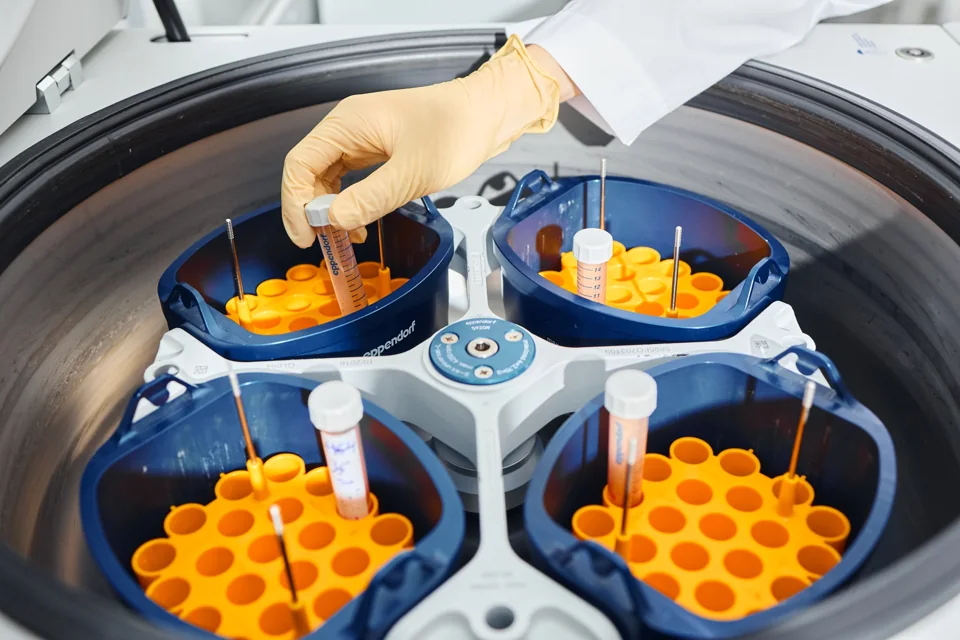
The Centre for Fundamental and Applied Agrobiotechnologies works across biology, chemistry, and agricultural engineering. Its research programme includes developing crop varieties suited to the Tyumen climate, studying soil fertility, and investigating precision agriculture. The centre also tests biological products intended for plant protection and growth stimulation. Its analytical work includes assessing soils and examining the quality of agricultural raw materials and finished products such as grain and milk.
The centre connects this research with education by involving undergraduate and postgraduate students in experiments, laboratory work, research projects, and practical placements. Students can base course and graduation projects on experimental data generated there. The institute’s wider research environment includes genomic technologies, precision farming, breeding and seed production, and agrobiotechnology. A young scientists’ council and student scientific society provide additional structures for participation in research alongside formal courses.
Sources: Agrarian Institute: About ↗ · Centre for Fundamental and Applied Agrobiotechnologies ↗
Learning through enterprises and student activity
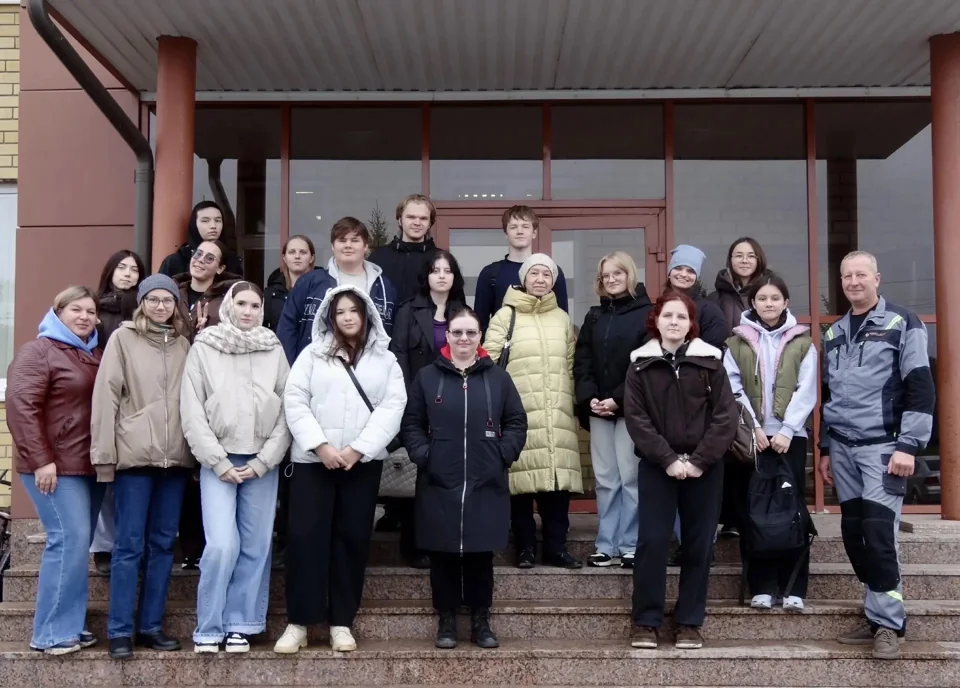
Project-based education combines compulsory subjects with elective modules and contributions from practitioners. An October 2026 report offers a concrete example: first-year animal husbandry students visited Evika-Agro in the Iset district to learn about a working dairy enterprise. The visit formed part of the Professional Identity and Career course, which introduces students to agricultural businesses, specialists, laboratories, and production situations. The institute states that such visits are adapted to different subject areas.
Outside formal study, the institute describes scientific and entrepreneurial communities, sporting and creative clubs, and student media activity. Its named associations include the Cyberleague esports club, the EcoVolna environmental group, and the Agrotigers sports club. Together with student research circles, these activities give the current Agrarian Institute a campus community that extends beyond its specialised agricultural curriculum.
Sources: Agrarian Institute: About ↗ · First-year students encounter agricultural enterprises, October 2026 ↗