Visa
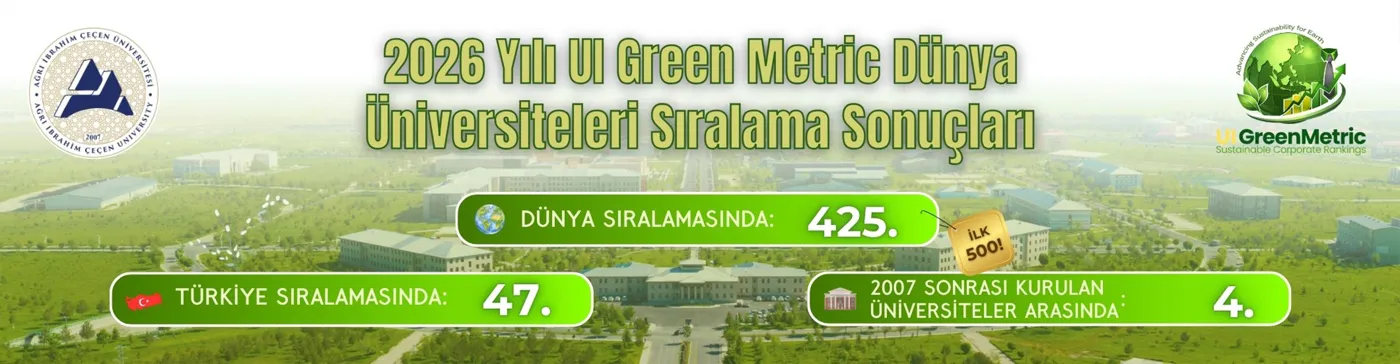

About Ağrı İbrahim Çeçen University
A university rooted in teacher education
Ağrı İbrahim Çeçen University is a university in Ağrı, in eastern Türkiye. This directory entry refers to the same institution also listed under an alternative spelling of its name. Its Turkish name is Ağrı İbrahim Çeçen Üniversitesi, and both directory records identify the university through its official agri.edu.tr website. Its institutional history combines a relatively recent establishment as an independent university with a much longer local tradition of teacher education.
The earliest institution in that history was the Ağrı Girls Primary Teacher School, opened under the Ministry of National Education in the 1967–1968 academic year. It became a two-year education institute in 1977–1978. In 1982, the Ağrı School of Education was attached to Atatürk University’s Kazım Karabekir Faculty of Education. A further reorganisation in 1992 created the Ağrı Faculty of Education. The independent institution was established as Ağrı Dağı University in May 2007 and adopted its present name in June 2008. These successive changes explain why the university traces educational activity in Ağrı to decades before its independent foundation.
Sources: University history ↗
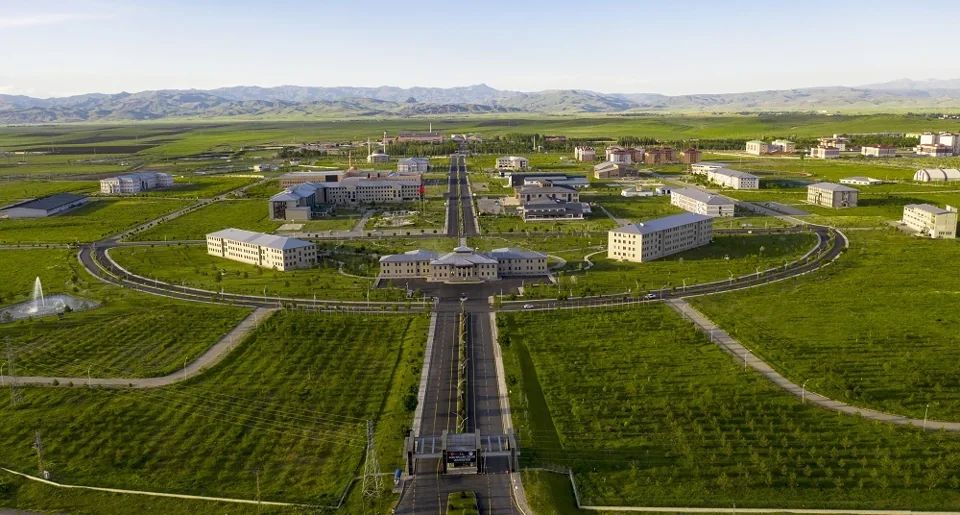
Educational purpose and regional responsibilities
The university’s mission places professional competence alongside critical thinking and the ability to solve problems. It describes the education of people who recognise social and environmental responsibilities and can work with both national and universal values. Its contribution to the surrounding region is consequently presented through education, scientific activity and sustainable projects that support social and economic development.
The accompanying vision emphasises producing knowledge that responds to social problems, developing areas of specialisation and improving quality through innovation. These are stated institutional ambitions. The values underlying them include justice, merit, ethical conduct, scientific thinking, freedom, empathy and respect for the environment. Transparency and participation also appear in the university’s account of how it intends to operate. Together, these commitments connect the university’s teaching role with its responsibilities as an institution serving Ağrı and the wider region.
Sources: University mission and vision ↗
Research infrastructure and analytical work
The Central Research and Application Laboratory, known as MERLAB, is an important part of the university’s scientific infrastructure. Its stated role includes providing facilities for researchers and carrying out analytical services for organisations beyond the university, including the private sector. Its description specifically identifies routine analysis of water, petroleum and solid fuels. This combination gives the laboratory a role in academic investigation and in practical testing needs in the region.
The laboratory’s specialist facilities span chemical, biological and materials-related work. Its official directory includes liquid chromatography with tandem mass spectrometry, gas chromatography, inductively coupled plasma mass spectrometry, atomic absorption spectroscopy, high-performance liquid chromatography, infrared spectroscopy and nuclear magnetic resonance. Other listed areas include molecular biology, biochemistry, sample preparation, microscopy, materials and metallurgy, and construction materials. Facilities devoted to three-dimensional design and printing, cell culture and molecular cancer studies, and zebrafish research indicate the variety of subjects supported by the centre. The range of named facilities provides a concrete picture of research activity extending beyond conventional classroom teaching.
Sources: Central Research and Application Laboratory: about ↗
Library services and access to knowledge
The Library and Documentation Department defines its mission around supporting education, research and publication. It organises information resources and services for the university community while also recognising the social value of access to knowledge. Its vision links effective information provision with communication, accountability and the sharing of knowledge.
The department’s published values include scientific integrity, honesty, innovation, cooperation and continuing development. It also stresses tolerance, fairness and responsibility. These priorities frame the library as a service for learning and scholarly work, with attention to the people who use it as well as to the organisation of its resources. The emphasis on communication is consistent with its stated intention to develop library services through interaction rather than treating information provision as a fixed collection of materials.
Sources: Library mission and vision ↗
Student welfare, culture and recreation
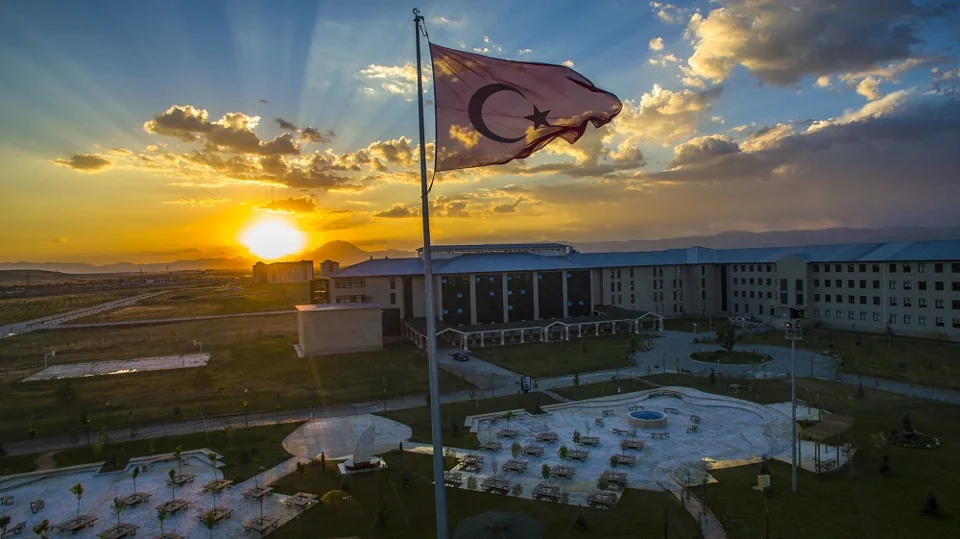
The Health, Culture and Sports Department has a broad set of responsibilities relating to student life. Its published objectives encompass health services and psychological guidance, together with work addressing nutrition, accommodation, transport, rest and the use of free time. It also includes assistance concerning scholarships, loans and opportunities to work. These are areas of departmental responsibility rather than promises of an individual entitlement.
The department’s remit extends to spaces and activities that support life outside formal lessons. Its objectives refer to canteens, reading rooms, residences, meeting rooms, cinema and theatre halls, sports grounds and camps. It is also tasked with coordinating relevant work with other university units and outside organisations. This connects welfare services with cultural and recreational provision, recognising that a university community needs opportunities to meet, participate in activities and seek support alongside its academic programmes.
Quality and institutional improvement
The library’s published quality policy connects its work to the university’s strategic aims and quality management system. It calls for attention to social and economic needs and for interaction with stakeholders. Learning and the production of knowledge are linked to improving services, teaching and institutional management.
The policy describes improvement in both qualitative and quantitative terms and identifies a departmental quality commission. Its composition brings together the department’s leadership and staff with different operational responsibilities. This provides a defined organisational setting for quality work within the library. The emphasis is on an institution that continues to learn, develop its services and apply knowledge, complementing the university’s wider educational mission.