Visa

About African Institute for Mathematical Sciences
A mathematical sciences centre in Kigali
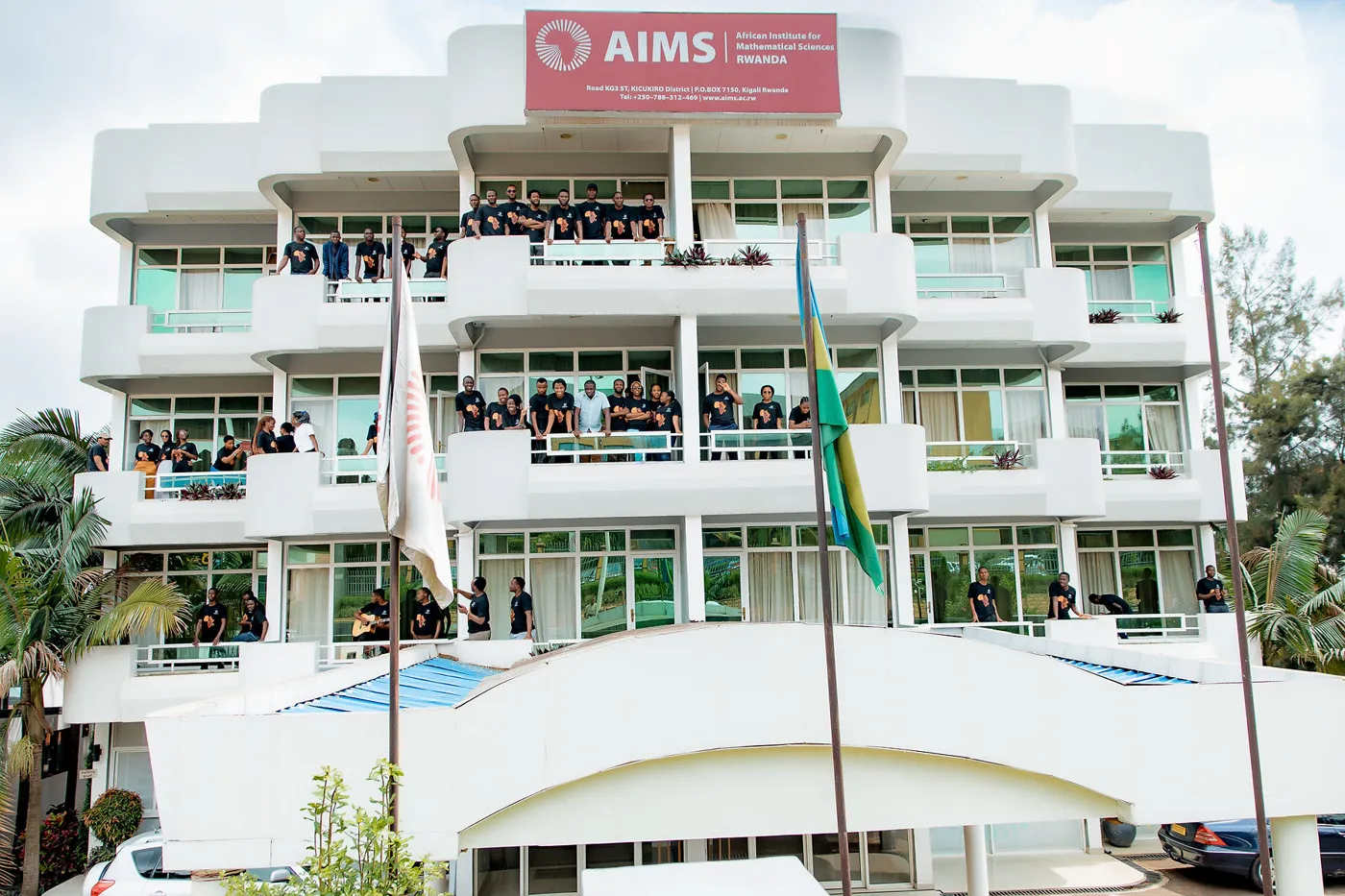
The African Institute for Mathematical Sciences in Rwanda, generally known as AIMS Rwanda, is a postgraduate teaching and research centre within the wider pan-African AIMS network. Established in 2016 with support from the Rwandan government, it became the network’s fifth Centre of Excellence. Its Kigali location is in Remera. The centre brings together mathematical education, scientific research and engagement with schools and industry, with a mission to develop African scientific talent and leadership.
Its institutional values include excellence, equity and inclusion, integrity and pan-Africanism. The Rwanda centre forms part of a network whose first centre opened in South Africa in 2003. Within that shared framework, Rwanda has developed its own academic community, research activities and partnerships. Its principal educational routes include the structured master’s in mathematical sciences, a longer co-operative education option and a climate science stream.
Sources: About AIMS Rwanda ↗
How the structured master’s works
The structured master’s combines coursework and research over ten months. Its curriculum develops the ability to formulate a problem, estimate quantities, decide which questions to prioritise, choose mathematical and computational methods, and explain results in a scientific report. Applications described in the programme include large datasets, financial mathematics and computer security. Visiting scientists teach alongside tutors who support students and assist lecturers, creating regular opportunities to discuss difficult material beyond formal teaching sessions.
The programme progresses through three stages. Compulsory skills courses establish foundations in mathematics, computing and problem solving. Elective review courses then allow students to explore mathematical, physical, computational and interdisciplinary subjects, with academic guidance to keep their choices coherent. The final research phase involves working with a supervisor, studying relevant scientific literature, undertaking appropriate calculations or experiments, writing a report and defending the work orally. The emphasis is on understanding and communicating a substantial topic as well as acquiring technical methods.
Sources: Structured Master’s Program ↗
Work-integrated learning and machine intelligence
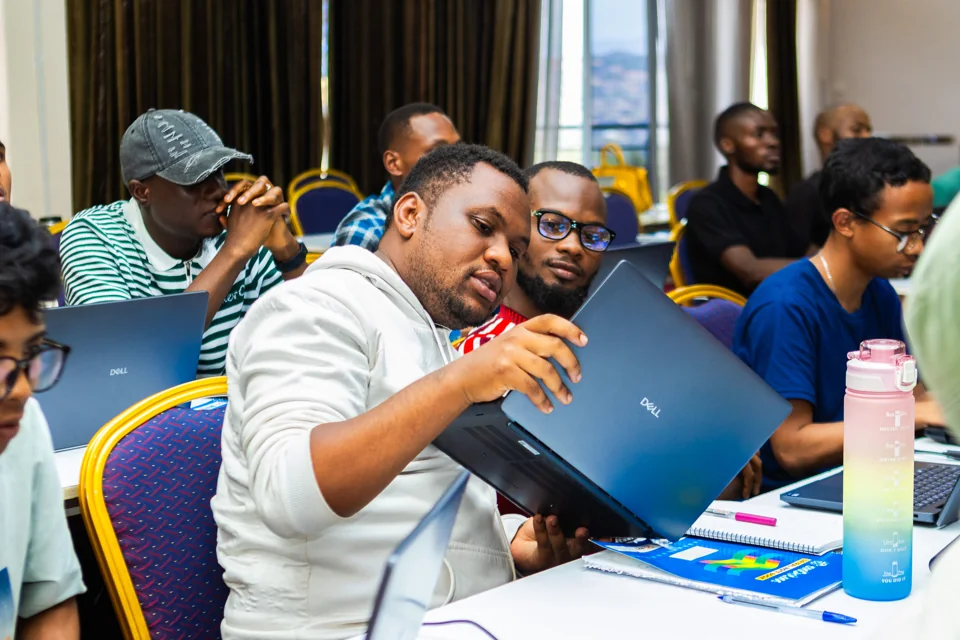
The co-operative education route extends the mathematical sciences master’s to eighteen months and incorporates professional experience. Its curriculum combines compulsory foundations with subjects such as machine learning, neural networks, databases, biomathematics, computational finance and industrial case studies. Communication, computing, entrepreneurship and leadership also form part of the training. A six-month placement in a local or international company gives students a setting in which to apply their academic work, and an internship report records that experience alongside the research component.
Rwanda also played a founding role in the African Master’s in Machine Intelligence, known as AMMI. The programme launched there on 15 October 2018 with sponsorship from Facebook and Google and support from the international artificial intelligence community. Founded by Moustapha Cissé, it was designed as an intensive one-year graduate programme in machine learning and its applications. Its stated educational purpose is to develop researchers and practitioners who can address problems relevant to Africa and the wider world.
Sources: Co-operative Education Program ↗ · African Master’s in Machine Intelligence ↗
Research across mathematics and computation
AIMS Rwanda’s Research Centre works across several connected mathematical fields. Its described research areas include data science, discrete mathematics, probability and the optimisation of water-system networks. Other areas include climate modelling, disease modelling, computational immunology, applied mathematics and Bayesian methods. The research community includes postdoctoral fellows, visiting researchers, postgraduate students and interns, connecting advanced study with opportunities for scientific collaboration.
The centre shares facilities with Quantum Leap Africa, an initiative concerned with quantum science and the continent’s participation in emerging computational research. Conferences, research schools and workshops bring junior and senior researchers together and provide contact with local and international institutions. This research role complements the master’s curriculum: students encounter an environment in which mathematical and computational tools are used to investigate questions extending into climate, public health and other applied fields.
Sources: About the Research Centre ↗
Supporting mathematics teaching in Rwanda
The Teacher Training Program began in Rwanda in 2018 with a focus on mathematics and STEM learning in secondary schools. Its approach combines teacher development, learning materials and information technology, public engagement, and evidence for education policy. Training topics described by the programme include subject knowledge, assessment, gender-responsive teaching, inclusion, English proficiency and the use of ICT. Participants have included teachers, school leaders and education officers.
The programme also describes equipping fourteen schools with smart classrooms to support Rwanda’s competence-based curriculum. Its outreach activities have included mathematics camps, science caravans and events marking the International Day of Women and Girls in Science. During pandemic restrictions, radio provided another way to reach schools. These activities extend the centre’s educational work beyond its postgraduate classrooms into teaching practice and public interest in mathematics.
Sources: AIMS Teacher Training Program ↗
The academic community in 2026
The incoming 2026–2027 mathematical sciences cohort was welcomed in September 2026. Students came from fifteen African countries, and women represented forty percent of that intake. Orientation covered academic work, research, mental health and practical arrangements for campus life before the ten-month programme. The range of sessions reflects the importance of helping an international cohort establish both its working routines and its connections within the centre.
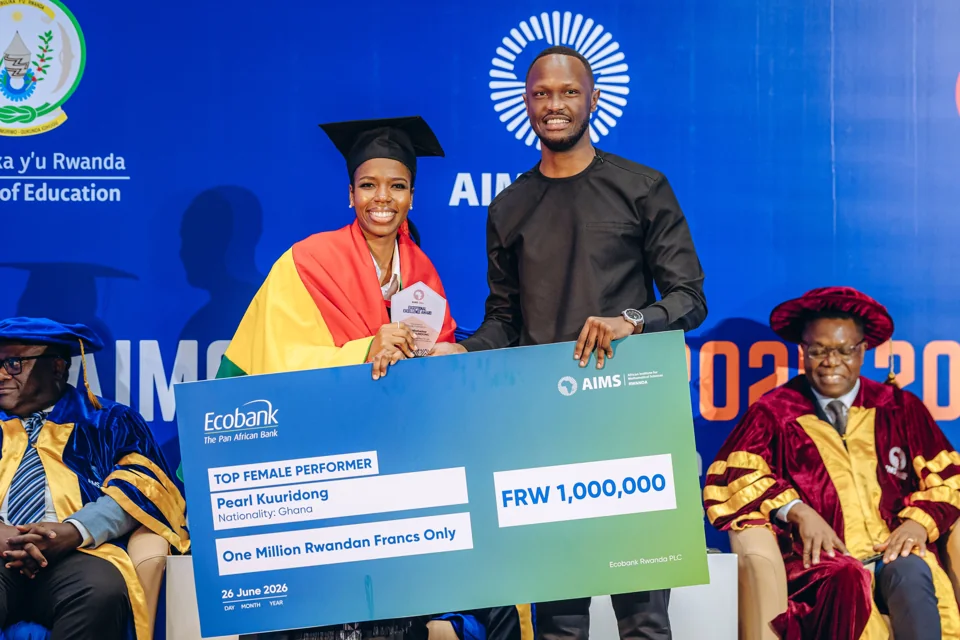
Earlier that year, forty-three regular master’s students graduated at the Kigali Convention Centre on 26 June. That graduating class represented eleven African nationalities and included twenty women. AIMS Rwanda’s account describes teaching support from thirty-five visiting lecturers associated with twenty-five universities and eleven teaching assistants. These are figures for the 2025–2026 graduating cohort, illustrating the international teaching relationships surrounding that particular academic year.
Sources: 2026–2027 master’s cohort welcome ↗ · Regular master’s graduation, June 2026 ↗
Professional data science training
A further strand of recent activity is the Data Science Capacity Building Initiative. Its first cohort completed six months of training and received certificates on 30 January 2026. The forty-one participants were professionals from Rwandan government institutions. Delivered in partnership with the National Institute of Statistics of Rwanda and Cenfri, the initiative focused on practical data science skills relevant to their daily responsibilities and to the country’s statistical system. It provides a concrete example of the centre’s engagement with professionals beyond its regular degree programmes.
Sources: Data Science Capacity Building Initiative graduation ↗