Visa
About Africa Health Sciences University
A health sciences university in Kigali
Africa Health Sciences University, or AHSU, is a health-professions institution in Kigali, Rwanda. It began operations in September 2024 and connects its development with King Faisal Hospital Rwanda and the country's effort to expand its health workforce. Its mission centers on health sciences education that combines professional competence with compassion and ethical practice. The university's stated values include integrity, collaboration, lifelong learning, cultural competence and evidence-based practice. These principles provide the educational context for its undergraduate midwifery and postgraduate specialist training. AHSU describes a model that joins academic preparation, professional conduct, research and service. Its published institutional account places interdisciplinary learning and the needs of Rwanda's health system at the center of that model.
Sources: About AHSU: launch,mission and values ↗
Clinical partnerships and the learning environment
AHSU's development relies on relationships with clinical teaching sites as well as classroom teaching. Its history page identifies support from the King Faisal Hospital Rwanda Foundation and describes King Faisal Hospital Rwanda as a major partner for residency teaching and core rotations. Other named sites include Kibungo and Kibuye Level II Teaching Hospitals, Rwanda Military Teaching Hospital, Butaro Level II Teaching Hospital and several additional hospitals and health centers. These partnerships give students and residents experience in different settings and with varied patient populations. The university connects this network with its aim of making education responsive to the health system. It also describes continuing work on academic systems, faculty capacity, learner welfare, assessment and institutional quality processes.
The undergraduate midwifery programme
The Bachelor of Science with Honours in Midwifery is a four-year program that welcomed its first cohort in September 2024. Its curriculum combines foundational health sciences and midwifery theory with simulation, supervised clinical learning, research exposure and professional development. Clinical rotations begin in the first year, allowing classroom teaching to be connected with practical experience early in the course. The university identifies King Faisal Hospital Rwanda, Kacyiru District Hospital, Kibagabaga Level II Teaching Hospital and health centers among the training sites. Faculty supervisors support students during rotations, while campus skills-laboratory sessions provide another setting for practice. The program's educational objectives include respectful maternal and newborn care, effective communication and participation in interdisciplinary learning. Its faculty draws on experience from Rwanda and several other countries.
Sources: Undergraduate midwifery programme ↗
Residency education and assessment
AHSU's postgraduate page describes four-year residency training in pediatrics and child health, obstetrics and gynecology, internal medicine, general surgery, emergency medicine and critical care, and anesthesiology and critical care. The training model combines experience across teaching hospitals with mentorship, research and leadership development. Residents receive guidance not only in clinical growth but also in teaching, supervision, scholarship, ethics and professionalism. The Master of Medicine programs use competency-based assessment. Progression takes account of demonstrated competence, professional conduct, clinical requirements, workplace assessments, electronic logbooks, written examinations and practical examinations such as OSCEs. Assessment is an ongoing feature of training. The published model links supervised practice with documented progress throughout the residency.
Sources: Postgraduate residency programmes ↗
Research as part of professional education
The university encourages students and residents to participate in research during their training. Its student research page describes support for developing proposals, scholarly writing, supervised investigation and presenting work. Mentorship extends to research supervision, preparing ethics submissions and working on manuscripts. The page also describes thesis work and preparation for publication as parts of scholarly development. This places research alongside taught and clinical components of education. Students are expected to learn how to frame an investigation, work with supervision and communicate their findings. The emphasis on proposals, ethics and manuscripts gives a practical picture of the stages through which an academic project develops, connecting an initial question with a piece of work that can be shared with others.
Sources: Student research opportunities ↗
A new cohort and a specialist programme
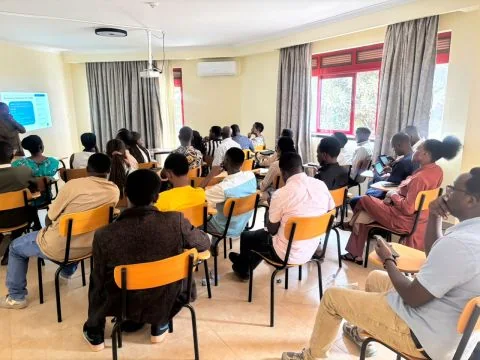
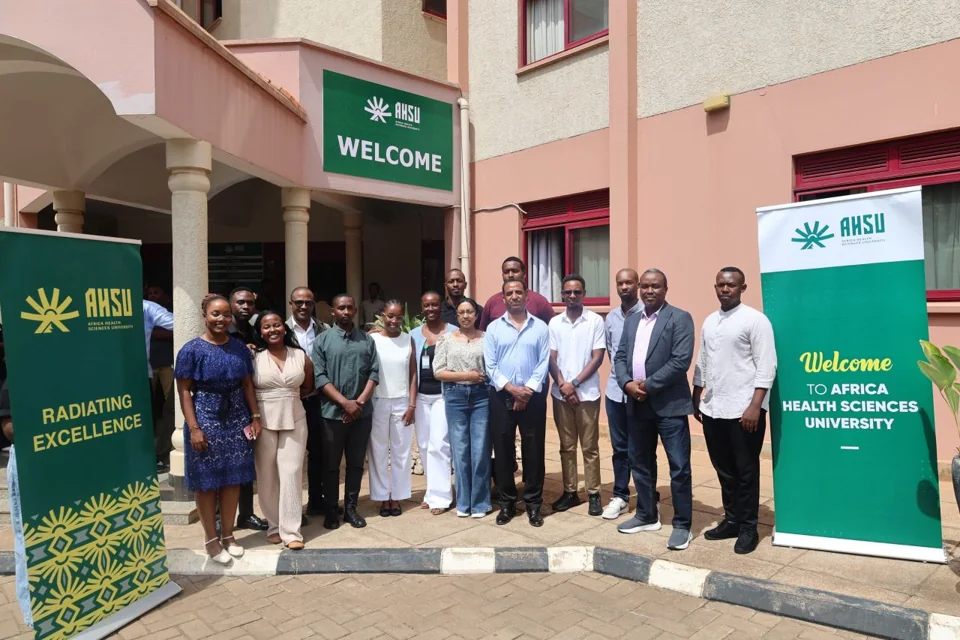
An official report published on 4 October 2026 records the welcome and induction of AHSU's third cohort. The incoming group included midwifery students, residents in specialist programs and the first students in the MSc in Cardiovascular Perfusion. The report marks the latter as an inaugural intake, adding specialist postgraduate provision to the university’s developing academic portfolio. Induction brought students together with classmates, faculty and mentors and introduced the university's educational values and campus environment. This shared beginning illustrates how different programs contribute to the same academic community. It also records a stage in the university's early development as it added specialist postgraduate provision alongside its initial midwifery and residency education.
Sources: Cohort3 welcome and first cardiovascular perfusion intake,October2026 ↗
Continuing education in emergency care
AHSU's educational activity also extends to health workers already practicing outside its regular degree programs. In an October 2026 announcement, it reported the start of implementation of the Basic Emergency Care course across Rwanda's district hospitals and medicalized health centers. The university described collaboration with the Rwanda Emergency Care Association, Ministry of Health investment and partner support including the World Health Organization and Laerdal Global Health. The stated participants were frontline emergency-care workers. The rollout was linked with the broader Acute Care Transformation initiative, including planned data collection on outcomes following training. The announcement therefore describes both a continuing-education activity and a research component intended to inform future implementation. It presents a launch and planned rollout, with further results to be reported as the work progresses.
Sources: Basic Emergency Care course implementation,October2026 ↗