Visa
About Adıyaman University
A university with a regional foundation
This directory entry identifies Adıyaman University, the same Turkish institution also listed under the spelling Adiyaman University. Both names refer to the university represented by the official adiyaman.edu.tr website.
Adiyaman University, known in Turkish as Adıyaman Üniversitesi, was founded on 17 March 2006. Its establishment brought together faculties and vocational schools previously connected with İnönü, Gaziantep and Harran universities within Adıyaman province. The university therefore combines its own institutional history with academic units whose beginnings predate the 2006 foundation.
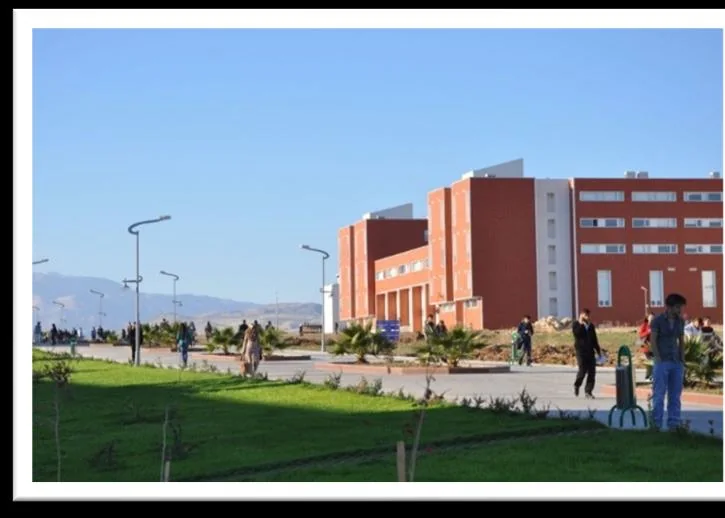
Its institutional account identifies a central campus and campuses in Kahta, Besni and Gölbaşı. The history records the development of health sciences, education, arts and sciences, engineering, tourism and other disciplines at different stages. For example, education and arts and sciences had roots in the 1990s, while the tourism faculty was established in 2014. This pattern explains an institution formed through both the transfer of existing educational activity and the later creation of new fields.
Sources: University history ↗
Historical study and teacher education
The Department of History was established within the Faculty of Arts and Sciences in 2007 and began admitting students in 2009–2010. Its mission emphasises historical perspective, critical thinking, scientific methods and interdisciplinary approaches. The department's published fields of expertise extend across ancient, medieval, Ottoman, modern and Turkish republican history, giving students different chronological and thematic contexts for investigation.
Teacher education has a separate institutional lineage. The Educational Sciences department traces its origins to Gaziantep University and continued under Adıyaman University after 2006. Its published teaching areas include psychological counselling and guidance, curriculum and instruction, and educational administration. It also provides educational psychology, assessment and educational sociology courses for other teacher education programmes. Turkish Education began admitting students in 2008–2009 and was placed within Turkish and Social Sciences Education during the 2016 restructuring.
Sources: Department of History ↗ · Educational Sciences history ↗ · Turkish Education history ↗
Library development and access
The university's Central Library developed by combining the collections of its campus units after the university was founded. Its institutional history records several moves as the service grew: first within the Faculty of Arts and Sciences, then the School of Health, and subsequently the administrative section of the Medico-Social Building from September 2011.
Students, academic staff and administrative employees can use library services through membership. The library also welcomes external researchers to consult its information resources. Its published service structure includes electronic resources, reader services, technical services and administrative support. Remote database access, lending and interlibrary loan information, collection development and research identifiers appear among the resources linked from its website. These functions support both course-related reading and more specialised academic research.
Sources: Library history and access ↗
Research across disciplines
Adıyaman University describes its research activity through specialised centres, project support, laboratories and scientific publishing. Its research directory covers subjects including astrophysics, environmental management, social research, urban culture, women and family studies, and the history of science and technology. Remote sensing and geographical information systems provide another area of application.
The published structure also includes a Scientific Research Projects unit and a central research laboratory. Separate ethics committees address social and humanities research, clinical research and animal studies, reflecting the different forms of work undertaken across the university. Scientific journals are listed in education, natural sciences, engineering, health, theology and social sciences. Together, these units provide organisational routes for research and dissemination beyond the activities of an individual department.
Sources: Research organisation ↗
Tourism education and practical learning
The Faculty of Tourism's official 2025–2026 catalogue identifies tourism guidance, gastronomy and culinary arts, tourism management and recreation management within its structure. It distinguishes the departments actively recruiting students in that edition: Tourism Guidance began admission in 2018–2019, while Gastronomy and Culinary Arts began in 2024–2025.
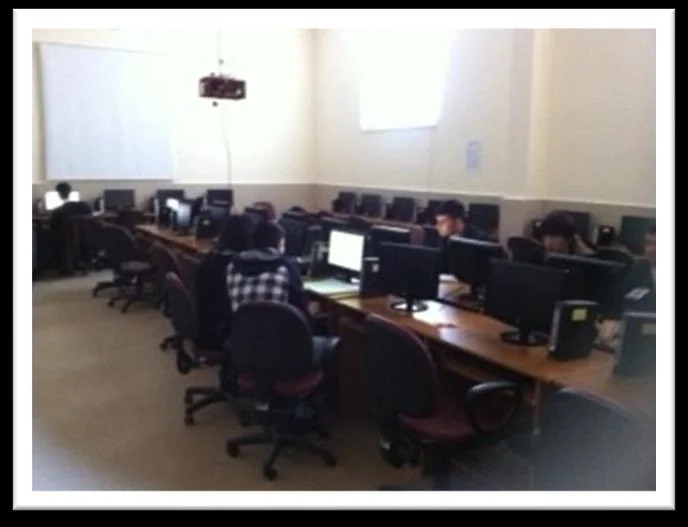
The catalogue describes a teaching approach combining professional knowledge, practical training, information technology and foreign languages. It places the faculty in the central classrooms building, with lecture halls, a computer laboratory and a smart classroom. Its account also connects students with the central library and electronic resources.
Sources: Tourism Faculty introductory catalogue2025–2026 ↗
Student activities and the regional setting
The tourism catalogue describes learning beyond classroom teaching through trips to places of cultural, historical and natural interest. Its examples include visits within Adıyaman and to other Turkish cities and regions. The Tourism Club provides a setting for students to participate in organising such activities, linking academic interests with direct observation of destinations and cultural environments.
The same catalogue outlines a broader campus environment of seminars, conferences, panels, student clubs and sporting opportunities. Cafeteria and canteen provision accompany facilities for activities such as basketball, football, volleyball and tennis.
International work on Mediterranean soils
A university report dated 2 November 2026 describes Adıyaman hosting young soil scientists through the international MedSoils Challenge programme. The gathering brought together specialists and students from several countries for scientific discussion, training and practical work concerned with Mediterranean soils. Adıyaman University participated as a project partner.
The programme addressed soil health, erosion, desertification, land degradation and the effects of climate change. Field activities in agricultural land around Adıyaman were intended to develop experience in soil analysis, land assessment and conservation methods. The report also records meetings about international cooperation and subsequent mobility activities planned in other participating countries. This event gives a recent example of how the university connects research, practical training and international exchange around a problem relevant to its surrounding landscape.