Visa
About Adventist International Institute of Advanced Studies
Graduate education in Silang
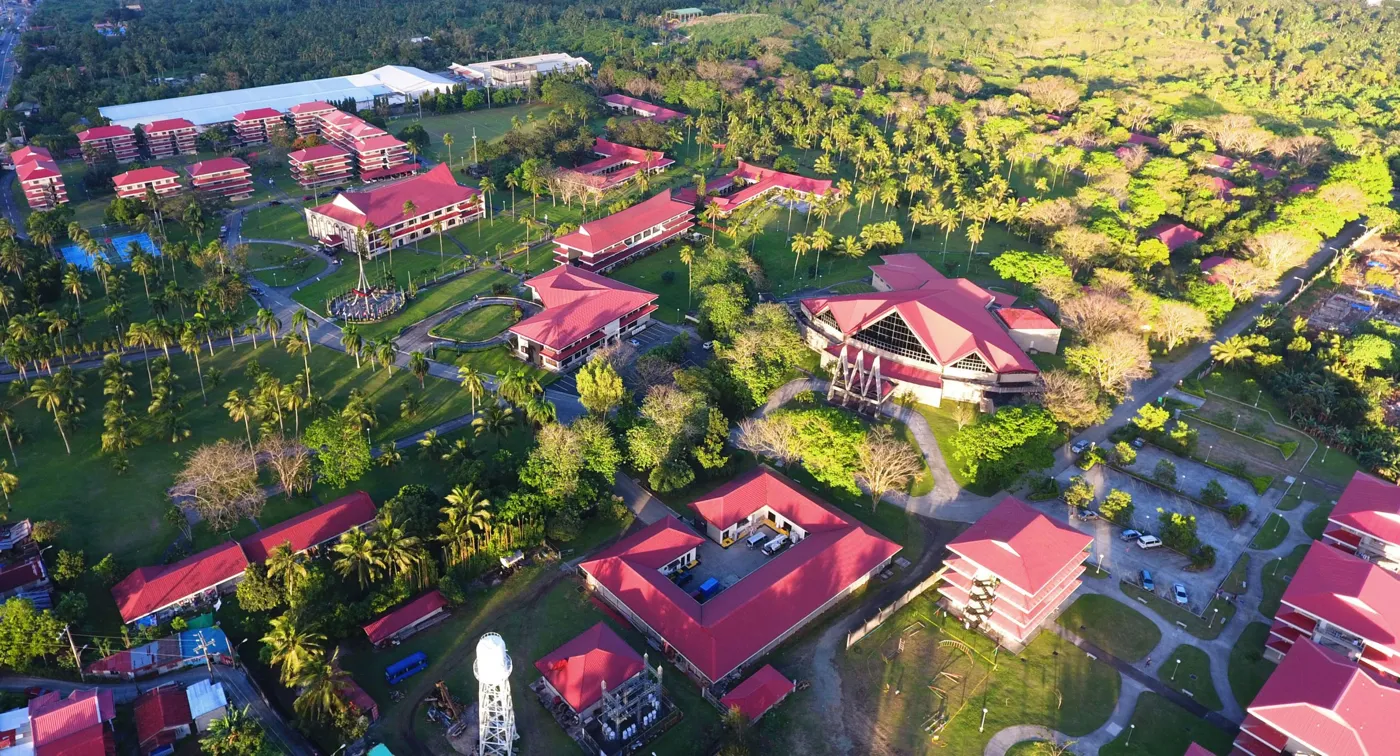
The Adventist International Institute of Advanced Studies, known as AIIAS, is a Seventh-day Adventist graduate institution in Silang, Cavite, Philippines. Its development reflects the Church's need for advanced education for teachers, theologians, administrators, health professionals and other leaders. The institution brings together a Graduate School and a Theological Seminary, with programmes addressing both academic scholarship and professional service.
Its roots include graduate extension courses offered from 1956 on the campus of Philippine Union College. A division seminary was established in 1972, and the Graduate School began in 1988, producing its first graduates in 1991. AIIAS moved to its present Silang campus in 1991. Its history also describes the development of off-campus education and the establishment of AIIAS Online in 2001. These forms of delivery extended its graduate educational work beyond the central campus.
An Adventist educational purpose
AIIAS frames its mission around spirituality, scholarship and service. Its educational goals connect advanced study with the beliefs and mission of the Seventh-day Adventist Church. Biblical foundations, engagement with community needs and the integration of faith with learning are therefore part of the institution's stated approach to graduate education.
The learning objectives include critical and creative thinking, effective communication, research and publication, and leadership grounded in service. A global perspective is paired with attention to local cultural contexts. The institution also identifies integrity, excellence, service and faith as core values. Its wider goals include appreciation of culture and the arts, support for other educational institutions and community engagement beyond the campus. These commitments give a shared framework to programmes whose subject matter ranges from business and public health to education and theology.
Sources: Mission and educational goals ↗
Business, education and public health
The Graduate School organises its work around business, education and public health. Education offerings include a Master of Arts in Education, a research-oriented doctorate and a graduate certificate. The master's programme addresses educational theory, curriculum and instructional techniques, while doctoral study is designed particularly for educational administrators, teacher educators and tertiary-level faculty.
Business study includes the Master of Business Administration, Master of Science in Administration, a doctorate and a graduate certificate. The administration master's is intended in part for people moving into management who may not have an undergraduate business background. The MBA emphasises leadership, decision-making and interpersonal skills across different organisational settings. Public health provision includes a master's and a graduate certificate, with attention to evidence-based programmes and the needs of both clinical and non-clinical learners. These fields share the school's emphasis on integrity, scholarship and Christian service.
Sources: Graduate School programmes ↗

Theological study and ministry
The Theological Seminary combines academic religious study with professional ministry education. Its academic programmes include master's study in religion and theology and a doctorate in religion. The Master of Arts in Religion offers concentrations for students pursuing advanced religious scholarship, including preparation for teaching. Doctoral study develops research and scholarship for higher education and related settings.
Professional programmes include ministry certificates and degrees such as the Master of Divinity, Master of Arts in Church Ministry and Doctor of Ministry. Intercultural studies and missiology address ministry across cultural settings. The Seminary's departments cover applied theology, biblical studies and theological-historical studies. Together these areas connect biblical interpretation, the history of Christian thought and the practical work of worship and ministry. The portfolio accommodates different purposes rather than treating all theological study as a single academic route.
Sources: Theological Seminary programmes ↗
Resources for graduate learning
The Leslie Hardinge Library supports academic, research and spiritual study through books, journals, electronic resources and inter-library cooperation. Its online services include a catalogue, research guides, virtual reference assistance and a repository of theses and dissertations. Library instruction and workshops address practical aspects of scholarship, including reference management, formatting and presentation tools.
The Instructional and Media Resources Center adds materials and equipment for developing teaching resources and recorded learning content. A computer laboratory supports electronic research and document preparation. The Writing Center provides peer tutoring in academic writing, referencing and formatting, while the English Center prepares learners for graduate study through intensive language instruction. A placement assessment identifies the appropriate English level. These services complement subject teaching by addressing the information, language and communication demands of graduate work.
The campus academic information system also supports course registration, access to grades and financial statements. Online library access and web-based learning resources serve users both on and away from campus.
Sources: Academic centres and support ↗
Research with regional relevance
The Asia Pacific Research Center conducts scholarly work for the Adventist denomination and other organisations and provides research experience for graduate students. Its role includes helping researchers design and implement studies, select suitable instruments and consider questions about populations and samples. Advice on data analysis and interpretation supports the later stages of an investigation.
The Centre also serves as a resource for developing and validating research instruments suited to the Asia-Pacific context. Its public research platform brings together research groups and facilities, events, faculty research, publications and student resources. Ethics review and research compliance are included alongside opportunities to communicate findings. This gives AIIAS research activity an institutional setting beyond the individual thesis, linking scholarly projects with methodological guidance, regional questions and the wider community of researchers.