Visa

About Adnan Menderes University
A university rooted in Aydın
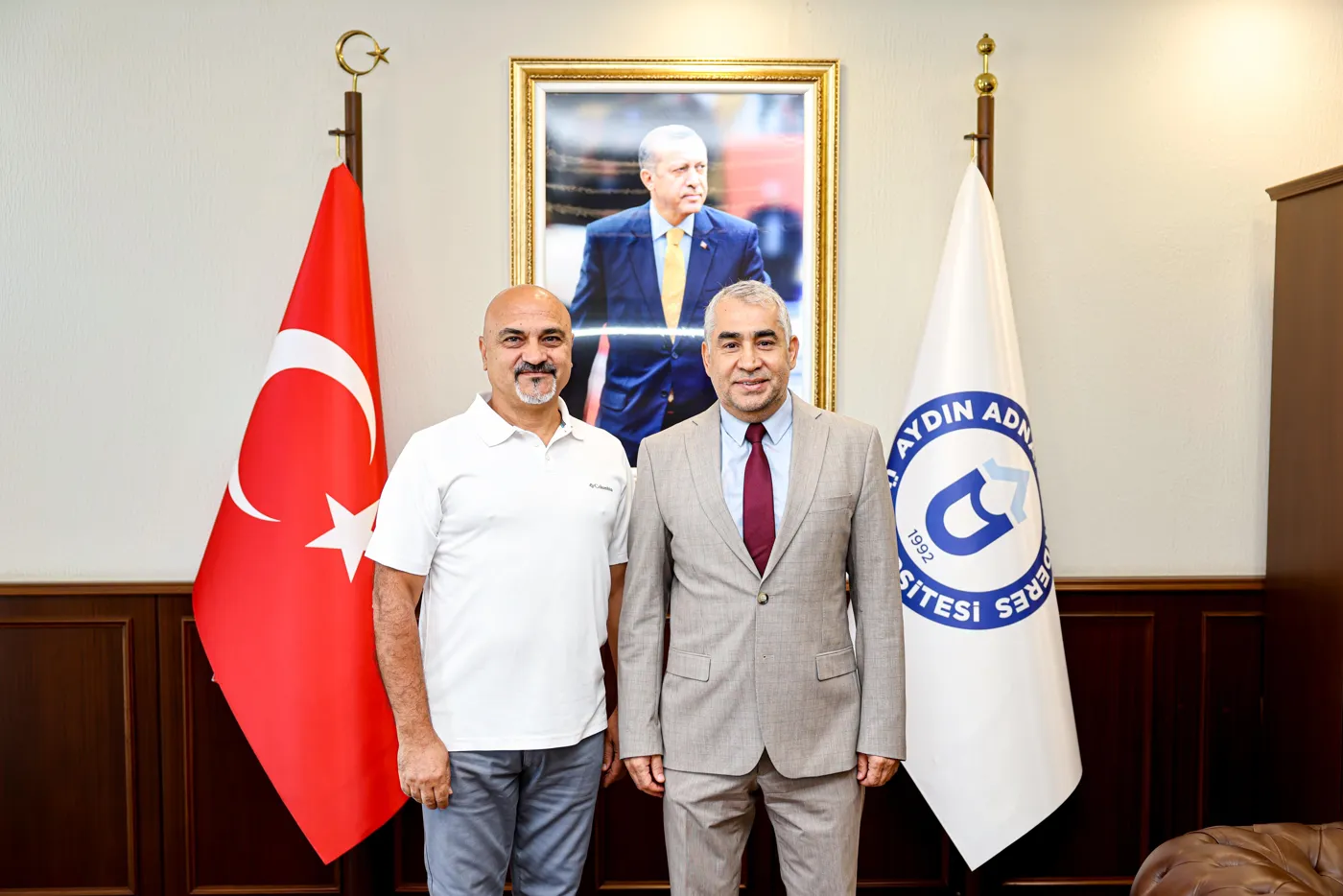
Adnan Menderes University is the institution now formally presented as Aydın Adnan Menderes Üniversitesi, or Aydın Adnan Menderes University. Its central campus and rectorate are in Efeler, Aydın, while its teaching activities extend into several districts of the province. Established in 1992 under Law No. 3837, the university began with an academic framework that brought together scientific, professional and regional interests. Its founding legislation included faculties of arts and sciences, economics and administrative sciences in Nazilli, medicine, veterinary medicine and agriculture, alongside three institutes, a tourism and hotel management school, and Söke Vocational School.
The institution initially operated in Aydın and Nazilli and subsequently developed a wider geographical presence. Its history identifies locations including Çakmar, Işıklı, İsabeyli, Didim Akbük, Nazilli Sümer, Çine and Karacasu, as well as teaching activity in other districts. This distributed structure is an important feature of the university: its identity encompasses a network of academic communities across Aydın rather than a single teaching site. Its mission links education and innovative research with sustainable development and human welfare. Agriculture, tourism, health and energy are specifically named among the fields in which its vision seeks innovation.
Sources: Establishment and history ↗ · Mission and vision ↗
Academic breadth and specialist research
The faculty directory shows the breadth of this educational environment. It includes engineering, science, education, communication, humanities and social sciences, theology, sports sciences, tourism, agriculture and veterinary medicine. Professional health education is represented by medicine, dentistry, nursing and health sciences. Other units have distinctive locations and subject identities, including Söke Business, Söke Architecture and Design, Nazilli Fine Arts, and Nazilli Economics and Administrative Sciences. Alongside these faculties, the university maintains graduate institutes, vocational schools and a State Conservatory, bringing different forms and levels of education within the same institution.
Research and application centres add specialised areas of work to this structure. The official directory includes centres concerned with geothermal energy, water resources development, agricultural biotechnology and food safety, olive oil production technologies, and botanical gardens and herbarium collections. It also identifies centres for women and family studies, psychological counselling and guidance, art history, continuing education and distance education. These units indicate the range of subjects around which the university organises research, applications and educational activity, from regional natural resources and production to culture and social questions.
Sources: Faculties ↗ · Research and application centres ↗
Library development and study spaces
The central library began operating in 1993 with 2,214 books transferred from the tourism and hotel management school. Its subsequent history traces a transition from building a printed collection to providing digital information services. Library automation began in 1994; an internet catalogue followed in 1999; and remote access to databases was introduced in 2004. In 2014 the university established eArşiv@Adu to store and make available academic material such as books, articles, theses, conference papers and reports. These developments connect the library's original collection with the university's later electronic research infrastructure.
The library moved into its newer building in November 2018. Its description includes group study rooms, computer facilities, a multimedia room, a conference room, quieter study areas and a room designed for round-the-clock study. Wired and wireless internet connections are provided across the floors. Printed books are arranged by classification across the upper levels, with periodicals and multimedia facilities also included. Ground-floor services bring together lending, electronic resources, open-access searching and interlibrary resource sharing, giving the building several functions beyond the storage of books.
Sources: About the university library ↗
Accessibility within the library
Accessibility is a specific part of the library's design and services. Its published description identifies entrance gates with audible and visual signals, wheelchair-width access, an alternative barrier gate, lifts with low call buttons and audible announcements, and accessible toilets on each floor. An accessible resources unit on the ground floor combines Braille material, audio books, a scanner and a computer with speech facilities. A dedicated group study room is also described for students with disabilities. These are practical features of the study environment, addressing both movement through the building and access to information in different formats.
Sources: Accessible library services ↗
Music education and performance
The State Conservatory was established in March 2005 and began teaching in the 2005–2006 academic year with piano and string instrument branches in Nazilli's Sümer campus. It has conducted its educational activities in Kuşadası since 2015. Its development includes a Music and Ballet Middle School, which began operating in January 2017, and a Music and Performing Arts High School, which began teaching in the autumn of 2020. Traditional Turkish Music undergraduate and thesis-based master's programmes also began in 2020–2021, followed by a doctoral programme in the spring of 2023–2024.
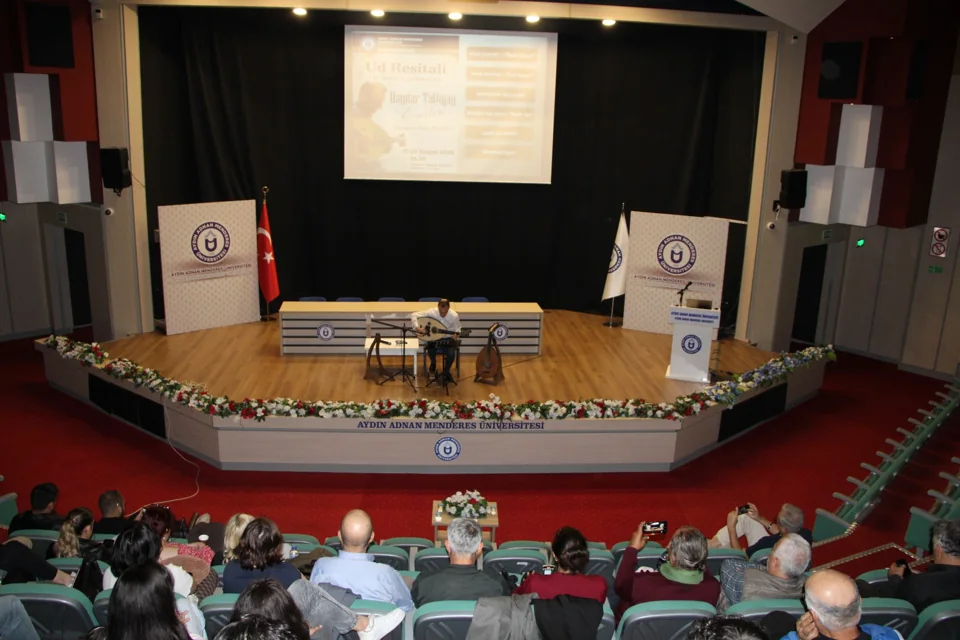
Performance provides a public expression of this musical activity. On 2 November 2026, the conservatory organised an oud recital at the Aydın Bey Hall of the Atatürk Congress Centre. Faculty member Emre Üstgül performed works by oud musician Haydar Tatlıyay. The event illustrates how specialist music teaching is accompanied by concerts that bring a particular repertoire before university audiences and other listeners.
Sources: State Conservatory: general information ↗ · Oud recital, 2 November 2026 ↗
Learning through cultural heritage
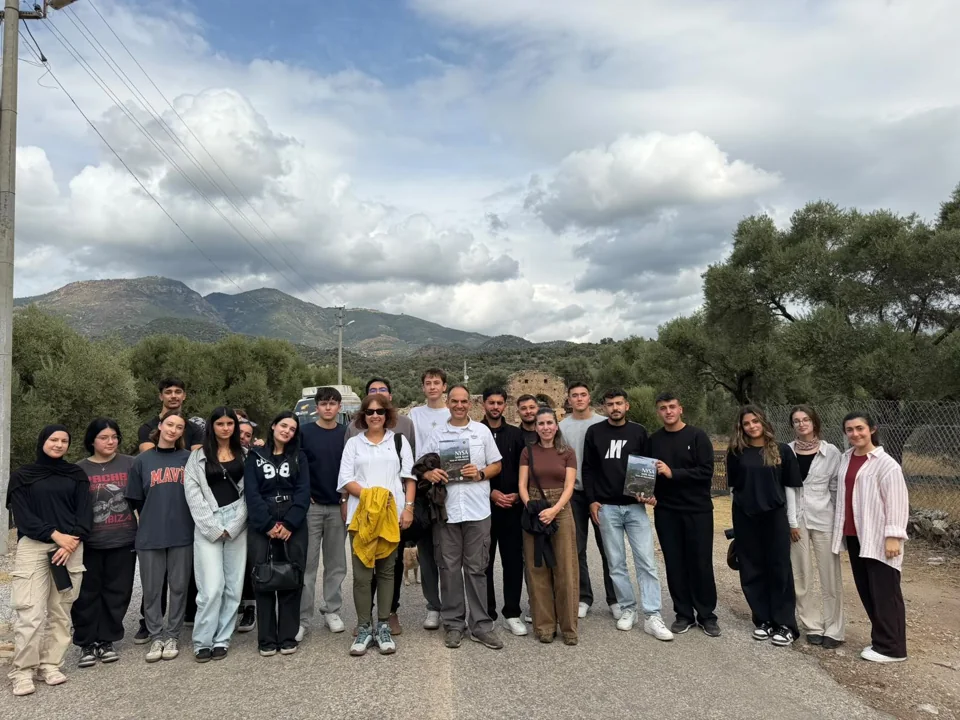
Field activity also appears in vocational education. On 13 October 2026, second-year Architectural Restoration students from Karacasu Memnune İnci Vocational School visited the ancient city of Nysa with their instructors. Excavation director Serdar Hakan Öztaner introduced the site's history, archaeological significance and architecture. Students examined historical structures, construction techniques and conservation work, observed excavation activity, and some participated in cleaning ceramic finds. This documented visit brought classroom subjects into contact with surviving buildings and archaeological material, providing a concrete example of education connected with Aydın's cultural heritage.
Sources: Architectural restoration field visit to Nysa, 20 October 2026 ↗