Visa
About Admiral Ushakov State Maritime University
A maritime university in Novorossiysk
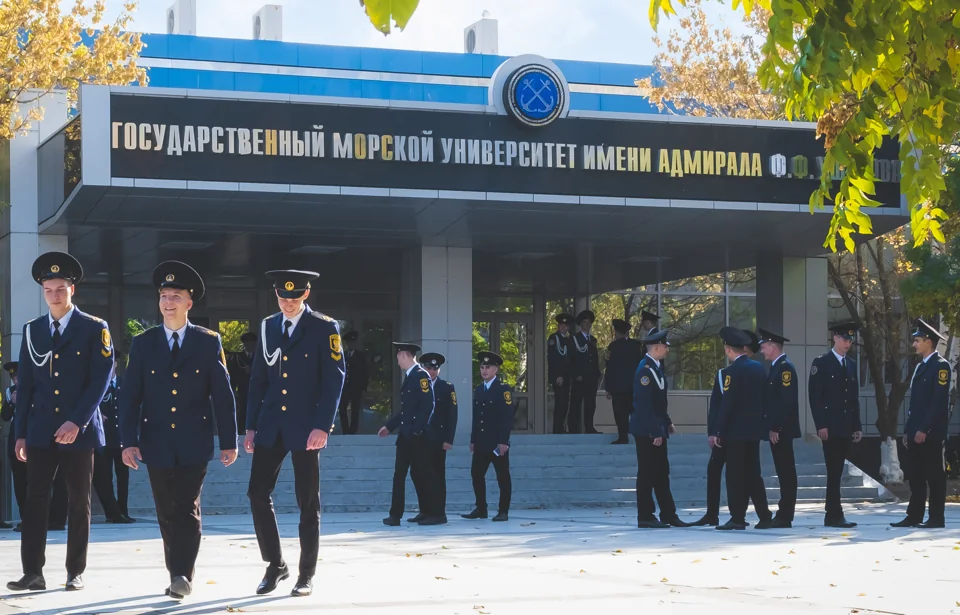
Admiral Ushakov State Maritime University is based in Novorossiysk, Russia, on the Black Sea coast. Its origins lie in the Novorossiysk Higher Engineering Maritime School, established by a government decision in April 1974 and operating from September 1975. Navigation, marine engineering, radio engineering and correspondence study formed part of its initial organisation. This foundation connected the institution with the technical and operational needs of maritime transport, a focus that continues to shape its educational identity.
The institution became the Novorossiysk State Maritime Academy in March 1992. It adopted Admiral Ushakov's name in 2005 and gained its present state maritime university title in December 2011. Its academic development has included both seagoing subjects and shore-based fields such as transport management, economics and law. These different areas reflect the range of organisations and professional functions involved in operating ships, maintaining their systems and coordinating transport activity ashore.
Sources: University history ↗
Navigation, radio electronics and practical learning
The Faculty of Water Transport Operation and Navigation dates to September 1975. Its published programmes include navigation, the technical operation of transport radio equipment, and information systems and technologies. The navigation and radio-equipment routes are described as specialist engineering programmes, while information systems also provides bachelor's and master's study. Departmental subjects include navigation, foreign languages, radio electronics and information technology, bringing communication and digital systems into a faculty traditionally associated with ship operation.
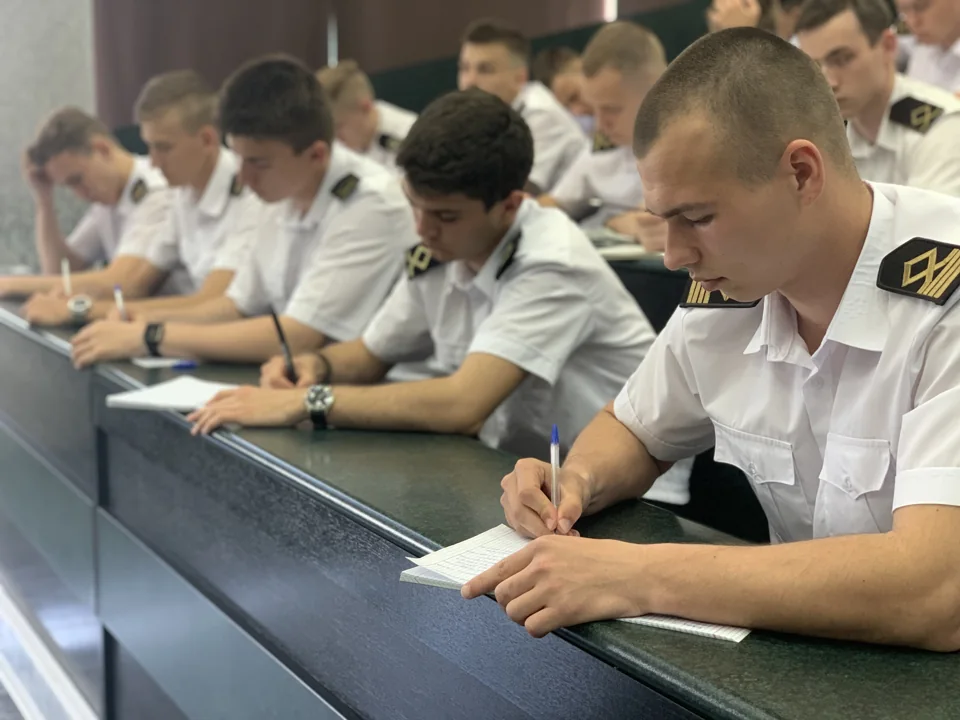
Practical preparation uses simulation and supervised training environments alongside academic study. The faculty identifies ship-handling and virtual-bridge simulation, electronic charts, maritime communication equipment and other specialist teaching resources. Its account also describes training at a maritime practice ground, a shore-based training centre, training vessels and industry organisations. These settings allow students to connect theoretical work with structured practical learning. The faculty's research interests include maritime safety, the reliability of technical systems and the prevention of environmental pollution.
Marine machinery and electrical engineering
The Marine Engineering Faculty was also established in September 1975. Its core programmes concern the operation of ship power plants and the operation of ship electrical equipment and automation. These subjects bring together machinery, energy systems, maintenance and electrical engineering within a maritime context. The faculty's published specialist programmes distinguish the mechanical engineering route from the electromechanical route, recognising the different responsibilities and technical knowledge associated with the systems found aboard ships.
Shore-based engineering forms another part of the faculty's provision. Its programme descriptions cover land transport and technological equipment, together with the operation of transport machinery and mechanisms. Related master's study extends this area of learning. Departments include mechanics and engineering graphics, marine mechanical installations, electrical equipment and automation, lifting and transport machinery, mathematics and physics. This organisation connects specialist maritime education with the scientific foundations and broader mechanical systems on which it depends.
Sources: Marine Engineering faculty ↗
Management, economics and law
Education for shore-based transport functions developed alongside the university's seagoing programmes. Economics and management in maritime transport began as a new speciality in the early 1990s, and a dedicated economics and management faculty was established in 1996. Legal education developed through a separate maritime-law faculty in 2005 and a maritime-law and customs institute in 2010. These organisational strands were brought together in September 2012 as the Institute of Maritime Transport Management, Economics and Law.
Its academic fields address the economic, organisational and legal dimensions of transport. The published programme descriptions include maritime transport economics, international and maritime law, public administration and the legal regulation of transport, customs at maritime border points, port cargo-handling processes and logistics. These subjects broaden the university's view of maritime activity from the operation of an individual vessel to the institutions, services and regulatory relationships that enable transport networks to function.
Sources: Institute of Maritime Transport Management, Economics and Law ↗
Library resources and continuing learning
The university library supports technical, educational and scientific reading through printed materials, a reading room, an electronic catalogue and digital resources. Its services also include fiction and access to materials relevant to research and final qualification work. The library's online guide brings together information on electronic book systems and educational platforms such as Lan, Urait, Znanium, BOOK.ru and IPR SMART. Open scholarly resources, including CyberLeninka, are identified alongside subscription-based collections.
Continuing professional education has a separate place in the university's history. A southern regional continuing-education centre was established in August 1997, and this activity developed into an Institute for Advanced Training in December 2011. The historical account identifies shore-based and maritime simulation training among its components. Together with the library and academic faculties, this provision reflects an institution concerned with learning at several stages, from initial university study to the updating of professional knowledge and skills.
Sources: University history ↗ · University library ↗
Sport and university life
Sport has been part of the institution since its early years. The Compass sports club was organised in 1976, followed by the opening of a sports hall in 1977. Its published sports programme for 2025–2026 includes basketball, volleyball, badminton, football, athletics, table tennis, chess and other activities. The timetable identifies university sports spaces as well as some external venues. This organised programme gives cadets and students opportunities for participation and teamwork alongside their academic and practical maritime training.
Sources: University sport ↗