Visa
About Admiral Makarov National University of Shipbuilding
A Ukrainian university shaped by shipbuilding
Admiral Makarov National University of Shipbuilding is a Ukrainian university based in Mykolaiv. Its history is closely connected with the development of technical education and the city's shipbuilding industry. The institutional account traces earlier roots to a mechanical engineering school established in 1902. A higher-education technical college followed in 1920, while the Mykolaiv Shipbuilding Institute name dates to 1930. These changes reflect the development of a specialist educational community alongside the engineering needs of the region.
The institution was named after Admiral Makarov in 1949. It gained university status in 1994 and adopted its present national-university name in March 2004. Today its work extends beyond ship construction into related engineering, computing, environmental, economic, legal and humanities fields. Current official reports document academic activity during wartime, including an October 2026 Academic Council discussion of admissions and the quality of training and research in the Shipbuilding Institute.
Sources: University history ↗ · Academic Council meeting, 30 October 2026 ↗
Ship design, materials and marine engineering
The Shipbuilding Educational and Research Institute connects naval architecture with materials, structural design and production processes. Its published educational fields include ships and ocean engineering, the design and strength of vessel hulls and floating structures, welding and related processes, and materials science. Study is described across bachelor's, master's and research levels. This breadth brings together questions about the form of a vessel, the behaviour of its structure and the materials and methods used to construct it.
The institute's departmental development also illustrates how shipbuilding connects different engineering disciplines. Materials science and metal technology became an established subject area in 1932, while welding production developed as a department in 1959. Research and education cover composites, powder materials, coatings and the investigation of material properties. The institute describes computer-supported design and analysis among its methods, linking the study of structures and production with the digital tools used to model and evaluate engineering work.
Mechanical, energy and electrical disciplines
The Mechanical Engineering Educational and Research Institute was created in May 2004, with earlier roots in the institution's mechanical division. Its academic profile covers applied mechanics, power engineering and the equipment used in ships and other industrial settings. Published programmes address internal-combustion engines, turbines and compressor installations, refrigeration and air conditioning, thermal engineering, energy management and manufacturing technologies. These subjects connect maritime applications with broader questions about energy conversion, machinery, production and efficient operation.
Automation and electrical engineering provide another major academic strand. The institute in this field grew from a Faculty of Marine Electrical Equipment established in 1965. Its published subjects include computer engineering, cybersecurity, electrical engineering, electronics, telecommunications, measurement technologies, automation and robotics. Departments focus on areas such as marine electrical power, computerised control, information security and marine instrumentation. These fields extend the university's maritime engineering identity into the systems that monitor, power and control complex equipment.
Sources: Mechanical engineering institute ↗ · Automation and electrical engineering institute ↗
A wider university and research community
The current university structure includes institutes concerned with computer science and project management, humanities, and teacher education through the V.O. Sukhomlynsky Educational and Scientific Pedagogical Institute, alongside its engineering institutes. It also identifies maritime law, philology, marine economics and ecology. This wider organisation places technical specialisation within a more varied university community. Educational and research centres and associated colleges provide additional organisational settings for academic and professional learning, while individual units retain their own disciplinary focus.
The university's research-school account records established traditions in subjects such as energy technologies, thermal processes, refrigeration, environmental and resource-saving technologies, materials and welding. It also identifies research concerned with projects, infrastructure and maritime systems. The account emphasises the involvement of students and younger researchers in scholarly work. These research traditions help connect successive generations of academic activity, while linking theoretical investigation with the practical problems that have shaped the university's engineering development.
Sources: Current university structure ↗ · Research schools ↗
Library resources and academic practice
The Scientific Library supports learning and research through printed collections, electronic resources and remote services. Its services include guidance on databases and search systems, consultations about publishing activity and assistance with the eIR NUOS institutional repository. It provides access to an electronic catalogue and information about journals, open-access resources, dissertations and patents. This combination supports both the discovery of literature and the organisation and dissemination of work produced within the university.
Library guidance also addresses academic integrity, bibliographic references, citation styles, research profiles and the management of scholarly information. Students and staff can seek help in selecting and attributing sources rather than treating access to information as a matter of searching alone. Recent library reporting includes online academic-integrity and information-culture teaching for mechanical engineering students. These activities connect library services with the research and writing practices required in undergraduate and postgraduate education.
Current teaching and international engagement
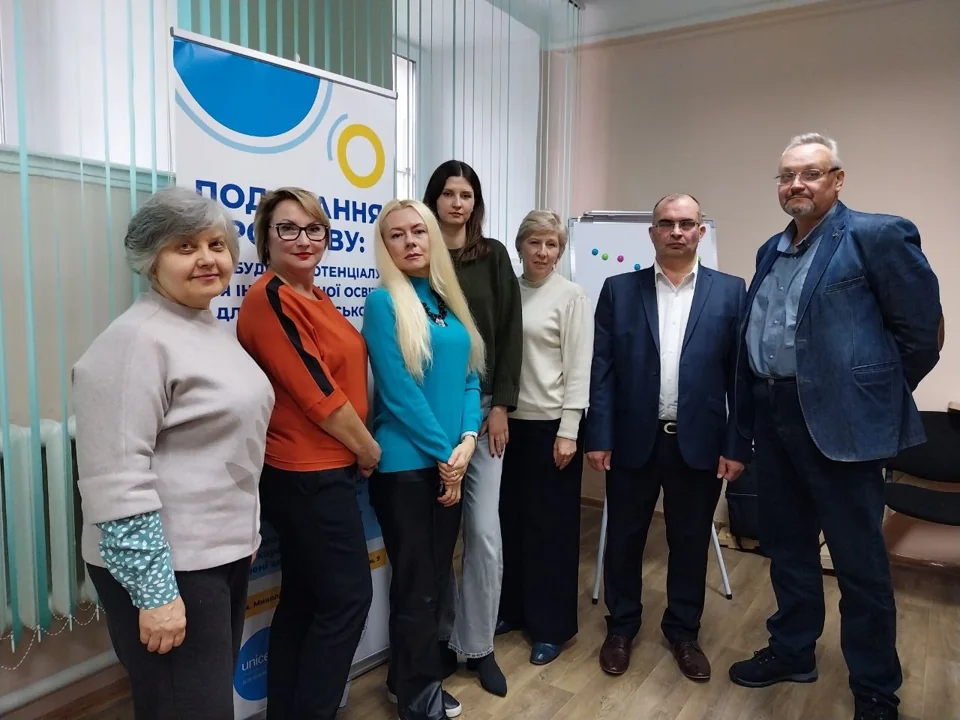
On 29 October 2026, a teacher seminar took place at the university's Inclusive Education Center. Organised by the Department of Social and Humanitarian Disciplines and Philosophy, it brought teachers and university staff together to discuss admissions, student adaptation and the centre's role in supporting students with additional needs. The report describes an exchange of experience concerning the transition from school into university life, giving a specific example of the institution's educational outreach.
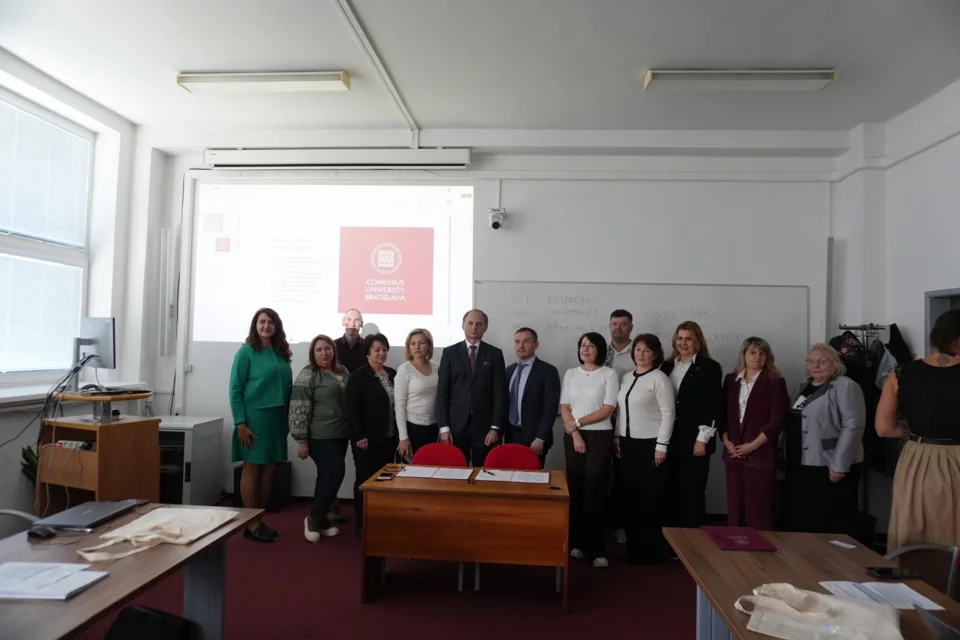
International engagement is also documented through participation in a sustainability workshop at Comenius University in Bratislava on 19–22 October 2026. Discussions addressed green campuses, living laboratories, resource use, environmental monitoring and resilient university management. The university reported a cooperation memorandum between the participating economics faculties. This activity connects its environmental and economic interests with European academic exchange, while demonstrating a current form of cooperation beyond its traditional shipbuilding subjects.
Sources: Teacher seminar, 29 October 2026 ↗ · Sustainability workshop in Bratislava, October 2026 ↗