Visa
About Academician Stepan Demianchuk International University Of Economics and Humanities
A private university in Rivne
Academician Stepan Demianchuk International University of Economics and Humanities is a private higher-education institution in Rivne, Ukraine. Its history begins in 1993 with the Rivne Scientific Advisory Center, associated with the International Pedagogical Academy. In December 1994 it became the Rivne Institute of Economics and Humanities. The institution awarded diplomas to its first graduating group in 1998, marking the completion of its earliest cycle of university-level preparation.
The history records another name change in 2001 to International University RIEH named after Academician Stepan Demianchuk. Its current name followed in 2004. The founder's educational interests also shaped activities beyond degree teaching: a Museum of Peace opened in 1999 on his initiative. Over time, the institution developed academic work across economic, educational, humanitarian, scientific and professional fields. Its present identity retains both the economics-and-humanities title and the founder's name, connecting the university's current teaching with its development as an educational institution in western Ukraine.
Sources: University history ↗
Academic scope and campus resources
The university's mission focuses on preparing specialists capable of research, innovative thinking and continued professional development. Its academic fields encompass education, economics, law, humanities, computing, communication, natural sciences, and physical education and sport. The mission page describes study at bachelor's, master's and educational-scientific levels, bringing initial higher education and advanced study within the same institution.
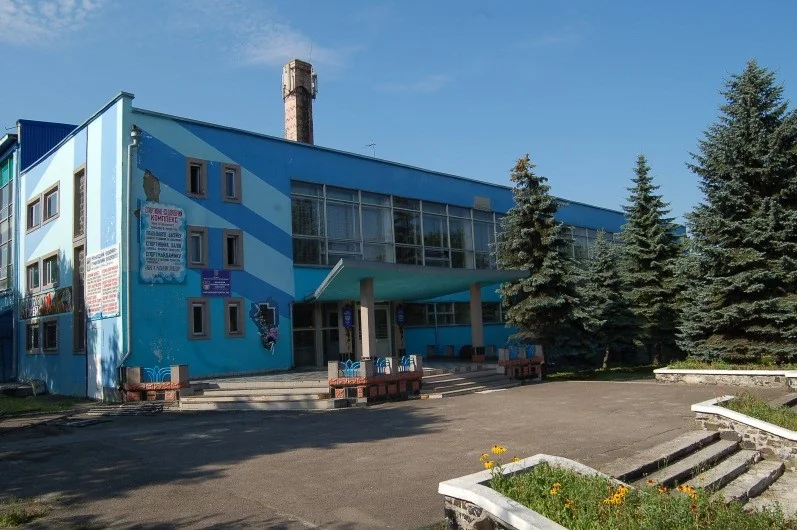
Campus infrastructure includes academic buildings, dormitories, laboratories, teaching rooms and a library. Sports provision includes an indoor complex, swimming pool, gyms and an artificial-surface stadium. A television studio, radio studio and student information agency provide media-related learning resources. The university also identifies wireless-network areas and a student-support resource centre. These facilities connect different kinds of learning: laboratory work, media production, academic reading and physical activity. They form a shared institutional setting around faculties with distinct subject interests, while the university's stated values emphasise professional growth, creative activity, research and international cooperation.
Sources: Mission, vision, values and campus infrastructure ↗
Courses linking subject knowledge and practice
The international department's course guide gives concrete examples of the university's academic range. Computing-related study includes software engineering, computer science and secondary education in computer science. Teacher-education programmes address Ukrainian language and literature, English and foreign literature, history and civic education, and geography. The guide also lists tourism and recreation, law, social work, physical culture and sports-related provision.
Practical settings accompany these subjects. The Law Faculty describes a forensic laboratory and rooms used for court and trial activities, alongside student research seminars and conferences. Geography, history and tourism provision includes geological and zoological collections and activities associated with travel, field exploration and tourist clubs. Philology students are described as participating in reading projects, intercultural exchange and language competitions. These examples show several ways in which coursework extends into applied activity: analysing legal situations, studying natural collections, communicating across languages and working with public reading initiatives. The course guide presents academic knowledge together with opportunities to practise and investigate it.
History and preparation for teaching
The Department of History describes bachelor's preparation in secondary education with a historical focus. Its published subject list spans ancient, medieval, modern and recent Ukrainian history, together with the history of Europe and America, Asia and Africa, and the Slavic peoples. This gives future teachers a framework that combines national history with wider geographical and chronological perspectives.
Other subjects include archaeology, ethnology, genealogy, historical geography and regional studies through history. Teaching preparation is explicit in courses on the theory and methods of history teaching, social-studies teaching, and the school history courses of Ukraine and the world. This combination connects the content of the discipline with the work of explaining and organising it for school learners. Students encounter both historical enquiry and educational methods, placing subject expertise and classroom preparation alongside each other within the university's broader teacher-education tradition.
Sources: Department of History: subjects and teaching preparation ↗
Library, digital collections and academic assistance
The university library was founded in 1996. Its collection began partly with books from Stepan Demianchuk's own library, giving pedagogy a significant place in its early holdings. Later development involved donations, purchases, exchanges and journal subscriptions. The library describes reading rooms for students, lecturers and researchers, as well as collections containing the scientific and educational work of university staff.
An electronic catalogue supports discovery, while an institutional repository forms part of the digital collection. The library's online description links subject-oriented digital reading rooms covering education, economics, geography, history, law, journalism, computing, languages and sport. Staff help readers find documents, prepare bibliographies and use reference-search tools. Exhibitions, literature reviews, textbook presentations and meetings with cultural and scientific figures add a public educational dimension. These services place the library within teaching and research activity while also making it a setting for discussion and the presentation of new academic work.
Sources: University library ↗
The Museum of Peace and public education
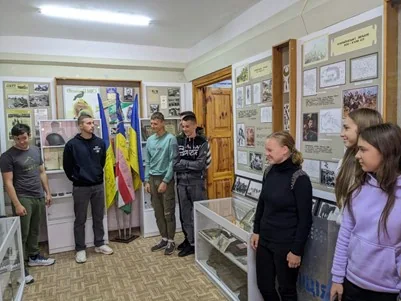
The Museum of Peace opened in 1999 on the initiative of the university's founder. Its stated educational purpose concerns peace, humanism and democracy. The university describes the museum as a place for learning beyond the formal curriculum, linking historical memory with reflection on social responsibility. Its collections and events provide a setting for pupils, students, researchers and other visitors.
The museum is associated with public student readings titled I Vote for Peace. It also hosts tours, discussions, student research meetings, conferences, seminars and open lectures. Renovation through a cooperation-and-compassion project supported changes to displays and equipment for educational activities. A memorial to sculptor Tomasz-Oskar Sosnowski adds a further connection with Ukrainian-Polish cultural memory. The museum's role combines preserving and presenting material with creating opportunities for young people to express their experiences and ideas about peace, making it a distinctive element of the university's cultural and educational life.
Sources: Museum of Peace ↗