Visa


About Aditya University
A university built on an earlier college
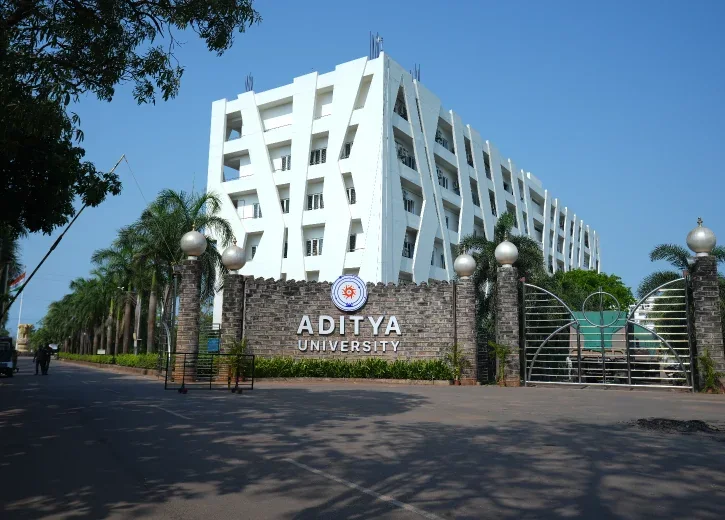
Aditya University is a state private university at Surampalem in Kakinada district, Andhra Pradesh, India. Its current academic offering spans undergraduate, postgraduate and doctoral study. The university’s official public disclosure identifies 2024–25 as its establishment year, while another official programme page states that it was established in 2024. This university history is distinct from the longer history of the educational institutions that preceded it.
The university evolved from Aditya Engineering College, founded in 2001 by Aditya Academy. The academy itself dates to 1984. The official overview places these developments within an educational group originally concerned with opportunities for students in Andhra Pradesh, including rural learners. The university describes its present purpose through collaborative education, research and a sustainable and inclusive community. Integrity, ethical conduct, diversity and a global outlook appear among its declared values.
Sources: University overview and history ↗ · Official public self-disclosure ↗ · Executive education and university establishment ↗
Fields of study
The academic structure includes schools of engineering, computing, business, sciences and pharmacy. Engineering subjects listed by the university include civil, mechanical, electrical and electronics, electronics and communication, agricultural engineering, mining and petroleum technology. Computing study covers areas such as computer science, artificial intelligence and data science.
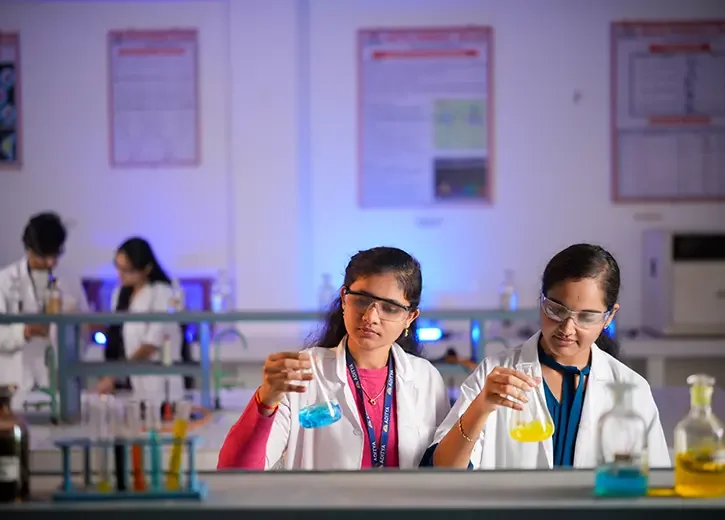
Business programmes include undergraduate and postgraduate study, with areas such as business analytics, finance, financial technology and healthcare management. The sciences offering includes forensic science and cybersecurity and digital forensics. Pharmacy programmes extend from undergraduate study to postgraduate specialisation. The university describes practical exposure, laboratories, projects, research and industry engagement as ways of connecting subject knowledge with applications. These fields show how its former engineering base has developed into a broader multidisciplinary offering.
Sources: University overview and history ↗
Research support and collaboration
The Research and Development Cell coordinates support for investigation and innovation in science and technology. Its stated mission is to address academic and societal challenges through new ideas and research-based solutions. The research overview describes assistance for faculty and students through facilities, mentoring and opportunities to work with external experts.
Faculty seed grants are identified as one means of helping researchers develop ideas. The university also describes support for conference participation and incentives associated with research publications. Policies on research, grants and incentives provide a framework for these activities. Collaboration with industry and other universities is presented as a route for exchanging expertise and developing work relevant to practical challenges. This support structure links individual projects with a wider institutional research environment. The overview also connects research with patents and consultancy, identifying these as ways in which ideas may move beyond publication. Its account places innovation within an ecosystem involving both academic participants and outside organisations.
Sources: Research and development ↗
Teaching development and continuing learning
Aditya Learning Academy supports the development of teaching and learning through professional development and new instructional approaches. Its official page describes work with faculty, universities and industry participants. The academy’s programme listings demonstrate activity across technical subjects and broader professional skills, rather than concentrating on one academic field.
The completed-events record includes October 2026 training in Power BI, covering data preparation, visualisation, modelling and dashboards. Another listed programme addressed artificial-intelligence-enabled wireless communication, while September activity included geotechnical engineering and sustainable infrastructure. Communication and employability skills also appear among the academy’s offerings. These dated examples illustrate additional learning opportunities alongside degree programmes and show how short courses can connect specialised technical knowledge with presentation, analysis and professional practice.
Sources: Aditya Learning Academy ↗
Facilities for study and campus life
The facilities overview identifies academic blocks, classrooms equipped with information and communication technology, departmental laboratories, an auditorium and seminar halls. The Knowledge Resource Centre provides printed books and access to electronic research journals. Wireless internet is described across campus, supporting access to digital resources alongside classroom and laboratory work.
Everyday amenities include food outlets, stationery and photocopy services, and banking facilities. The broader campus description also identifies accommodation for male and female students and recreational spaces. Environmental measures listed by the university include rooftop solar power, rainwater harvesting, energy-efficient infrastructure, a biogas plant, battery-operated vehicles and waste management. These provisions connect the physical campus with its stated interest in sustainability and the practical requirements of daily student life.
Sources: Campus facilities ↗
Clubs, sport and participation
Student clubs provide opportunities to work with peers around shared interests. The Google Developers Groups club describes workshops, coding sessions, hackathons and technical talks covering topics such as mobile development, cloud computing and artificial intelligence. Business-related groups address finance, marketing, strategic thinking and leadership through discussion, case studies and activities. Other clubs focus on culture, social outreach and interdisciplinary interests.
These groups offer settings in which students can organise events, exchange ideas and collaborate outside formal coursework. The clubs page also describes an emphasis on teamwork and initiative, connecting shared activities with the wider student community.
Sports provision includes cricket grounds, volleyball and basketball courts, badminton, table tennis and chess. Fitness centres support strength training and general recreation. The sports page describes coaching, practice matches and participation in intra-campus and inter-college competitions. Annual sporting events are presented alongside cultural and technical festivals as part of campus life, creating additional opportunities for students to take part in group and individual activities. The published provision includes both competitive play and recreation, allowing participation to take different forms according to students’ interests and experience.
Sources: Clubs and societies ↗ · Sports and fitness ↗