Visa
About Adhiyamaan College of Agriculture and Research
Agricultural education in Krishnagiri
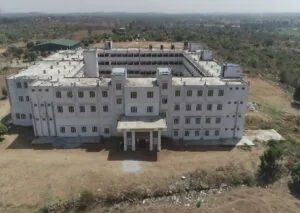
Adhiyamaan College of Agriculture and Research, commonly known as ACAR, is located at Athimugam village in Shoolagiri taluk, Krishnagiri district, Tamil Nadu, India. It was established in 2016 by Adhiyamaan Educational and Research Institutions Trust, or AERI Trust. The college identifies Tamil Nadu Agricultural University in Coimbatore as its affiliating university. Its academic purpose centres on agriculture and allied fields, combining classroom learning with farm-based activity and engagement beyond the campus.
AERI Trust dates to 1986 and operates educational institutions in several fields. Its account explains the choice of Athimugam in relation to agricultural education and the needs of the surrounding district. Mango cultivation, horticulture and cut flowers form part of the local agricultural setting described by the college. ACAR’s stated objectives connect agricultural and horticultural teaching with research and the transfer of knowledge from laboratories to farms. Soil and water conservation, farm machinery and opportunities for rural skills development also feature in this institutional outlook.
Sources: College background and educational approach ↗ · ACAR and AERI Trust ↗
Learning through farms and laboratories
The college’s educational approach places practical observation and activity alongside academic study. Its About page describes a crop cafeteria where students can practise farming, as well as farm laboratories and an animal-husbandry unit. The latter includes livestock, poultry and fish alongside fodder cultivation. These facilities allow different aspects of plant and animal production to be encountered within the college environment.
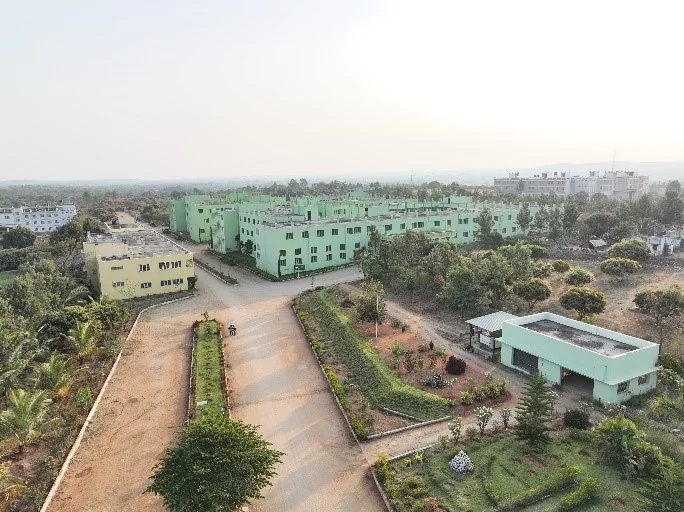
The campus description identifies dryland, wetland and garden areas, an orchard, botanical and herbal gardens, experimental fields and nursery space. Greenhouses, a polyhouse and a mist chamber are also listed. This variety of learning environments supports the college’s interest in crop biodiversity, cultivation, natural-resource management and agricultural enterprise. Classrooms and laboratories are complemented by field settings where students can connect scientific ideas with practical agricultural work. The trust’s campus account also identifies extension facilities, a canteen, transport and play areas among the amenities supporting college activity.
Sources: College background and educational approach ↗ · ACAR and AERI Trust ↗
A broad agricultural curriculum
The published curriculum spans agronomy, soil science, horticulture, agricultural botany, plant biochemistry, economics and rural sociology. Later subjects include microbiology, entomology, seed technology, crop production, genetics, plant disease management and farming systems. Communication, statistical methods, environmental studies and agricultural engineering contribute further perspectives. The listed courses combine theoretical and practical components, reflecting the different skills involved in understanding and managing agricultural production.
A rural agricultural work experience and agro-industrial attachment phase includes orientation, village or unit attachment, an industrial placement and project reporting. The curriculum also identifies experiential learning modules in the final semester. Listed examples include beekeeping, mushroom production, nursery technology, composting, plant tissue culture, biofertilisers, seed production and agribusiness management. These modules provide a framework for studying production processes and enterprise-related activity through practical work. The course page therefore connects scientific foundations with field experience, reporting and applied learning.
Research linked to production questions
The college’s research page records a scheme received from the Coconut Development Board in 2025 concerning frontline demonstration and training in integrated pest management for coconut rugose spiralling whitefly. This places crop-protection training within its documented research and extension activity, connecting an identified pest problem with demonstration work.
A second scheme, attributed to the Tamil Nadu State Council for Science and Technology in 2023, concerns enriching vermicompost with organic sources and studying different application rates in bhendi, or okra. Its stated focus is yield and quality. These are examples of the questions investigated under named schemes; the page does not report results. Together they illustrate attention to pest management and the use of organic inputs within agricultural production.
Sources: Research schemes ↗
Library and digital learning resources
The Library and Information Center serves students and faculty with agricultural books, journals and other learning resources. Its operations use Auto Lib software, and the library describes itself as automated. The public page provides routes to journal searching through CeRA and J-Gate and to electronic books through the National Digital Library of India. These resources complement the college’s practical and classroom learning by supporting reading and information discovery.
The ACAR Digital Unit describes computer facilities used for study and examinations across two laboratories. Its account identifies a centrally managed network and software deployment and maintenance arrangements. Internet connections extend to the hostels as well as the academic computing spaces. The unit also describes the college’s role as a venue for online examinations, indicating an additional use of its digital infrastructure beyond routine coursework.
Sources: Library and Information Center ↗ · ACAR Digital Unit ↗
Residential life and everyday facilities
The hostel facilities page describes separate accommodation for women and men, with wardens responsible for residential arrangements. Rooms are furnished with beds, tables, chairs and storage, and the buildings include shared spaces and dining facilities. Drinking-water arrangements, backup power and wireless internet are among the listed services. Housekeeping staff maintain rooms, corridors and common areas.
Reading rooms and newspapers provide opportunities to study and follow current affairs outside class. Indoor recreation includes badminton, carrom and chess. Dining is organised through self-service meal arrangements, and visitor lounges are identified within the accommodation description. These facilities place everyday living alongside the academic programme, supporting a residential setting in which students can study, share meals and take part in recreation between their scheduled college activities.
Sources: Hostel facilities ↗