Visa

About Adesh University
A university in Bathinda
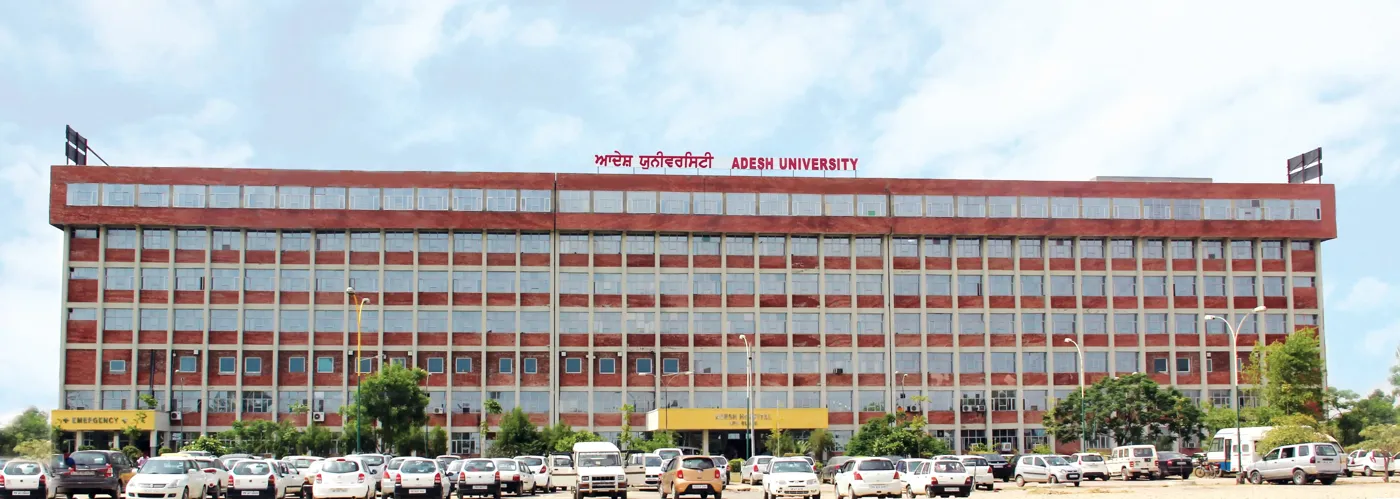
Adesh University is based at Bhucho Kalan in Bathinda district, Punjab, India. It is an academic and research institution operated by Adesh Foundation, with an educational focus that includes medicine, dentistry, pharmacy, nursing, physiotherapy and allied health fields. Its location on Barnala Road places its constituent institutions within the Bathinda setting. This university is distinct from similarly named Adesh institutions elsewhere, including the medical college in Haryana.
The university came into existence in July 2012 under Punjab Government Act No. 6 of 2012, notified in the state gazette on 10 July. Its parent foundation was established in 1995 at Sri Muktsar Sahib. The foundation’s earlier educational work included engineering institutions before the creation of the university. Its Bathinda health-education institutions developed over several years: nursing and physiotherapy colleges date to 2005, pharmacy education expanded in 2006 and 2007, and the dental institute was established in 2008. These earlier colleges form part of the background to the university created in 2012.
Sources: University profile ↗
Educational purpose and constituent fields
The university’s mission places teaching, research and training alongside the educational needs of society. It gives particular attention to learners from rural areas and to the relationship between academic education and practical skills. Its stated objectives also include industry-oriented work, ethical and moral values, character development and the overall development of students. These priorities describe an institutional ambition that extends beyond subject instruction alone.
The official university directory identifies Adesh Institute of Medical Sciences and Research, Adesh Institute of Dental Sciences and Research, and Adesh Institute of Pharmacy and Biomedical Sciences among its constituent institutions. It also lists nursing, physiotherapy and pharmacy colleges associated with the medical institute, together with allied and healthcare professions. Management and hospital administration, library and information sciences, and specialised research centres add further dimensions to the academic setting. This structure brings health-professions study into contact with administrative and research disciplines.
Sources: Vision and mission ↗ · University constituent colleges ↗
Coordinating university research
The Research and Development organisation provides a framework for research across constituent colleges, institutes and centres. Its published responsibilities include monitoring and supporting ongoing work, coordinating collaborative projects and directing proposals towards funding agencies. Management of research allocations is also identified as part of this coordinating function.
The organisational description distinguishes collaborative, clinical, doctoral and pharmaceutical research programmes, alongside research in other faculties. This indicates that the university treats research as an activity extending across its constituent institutions. The framework is intended to connect investigators, funding opportunities and external partners, while providing oversight of projects and resources. It complements the subject-specific work of departments and centres rather than placing every investigation within a single discipline.
Interdisciplinary biomedical investigation
The Centre for Interdisciplinary Biomedical Research supports research training across several biomedical fields. Its objectives identify biochemistry, biotechnology, genetics, microbiology, dental sciences, nursing sciences, health sciences and pharmaceutical sciences among the areas relevant to doctoral work. Collaboration with other organisations and securing research grants are also part of its published remit.
The centre’s research-group structure draws on faculty from different university departments. Areas represented include anatomy, biochemistry, molecular biology, clinical medicine, dentistry, epidemiology, nursing, medical genetics, pharmacology, physiology and health-professions education. Its facilities description identifies laboratory capacity for activities such as cell culture, pathogen culture, genotyping and molecular diagnostics. These details describe an environment for scientific investigation and research training. The centre is located within the hospital premises and describes access to inpatient departments for research-related work. It also lists an animal house for experimental investigation and support from university faculty across disciplinary boundaries.
Hospital administration and applied projects
The Department of Management and Hospital Administration was started in 2016. Its stated purpose is to develop understanding of the operational and administrative work of hospitals, including planning, organisation and decision-making. The department describes a combination of theory and practice, with lecture and seminar spaces supporting presentations and discussion.
Its programme page lists hospital-administration study in MBA, executive postgraduate and postgraduate-diploma formats. The published project archive provides examples of questions investigated by earlier student cohorts. Topics include nursing staff job satisfaction, hand-hygiene awareness, discharge delays, outpatient pharmacy services and dietary services. These are presented as examples of completed or listed student research topics, rather than as findings about the quality of the institution’s own services. They show how management education can examine everyday organisational questions in healthcare settings.
Campus resources and shared activities
The infrastructure description places university facilities on a contiguous campus and identifies library space serving its constituent colleges and research centre. Library provision is therefore distributed across the different subject settings within the institution. Residential accommodation is listed for students and different staff categories, with separate student hostel arrangements for male and female residents.
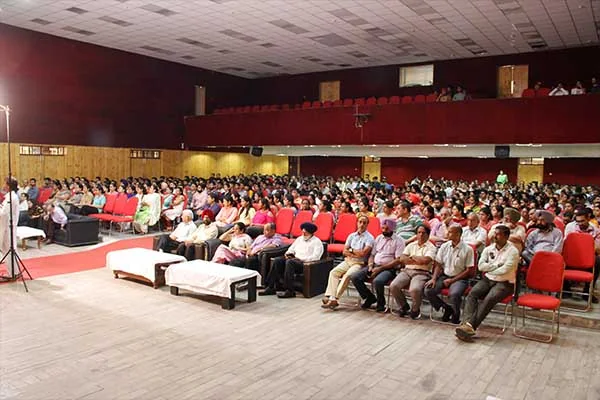
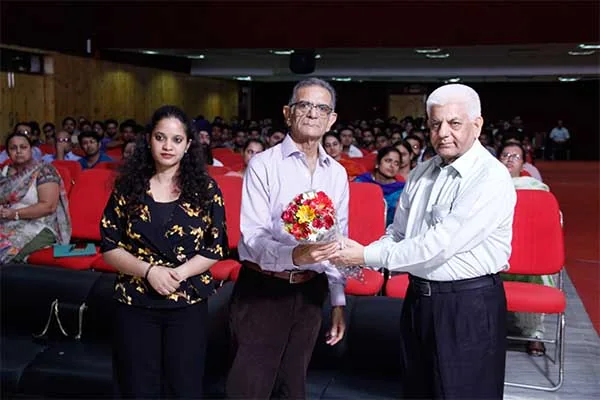
Recreation facilities include outdoor playing areas, basketball and volleyball courts, badminton, table tennis, chess and carrom, together with a gymnasium. These offer activities beyond formal academic work. The official photo gallery also documents an organ-donation and transplantation event dated 9 August 2019, showing an auditorium gathering and a presentation to a participant. Such recorded events add a further perspective on campus life, alongside the university’s teaching, residential and research facilities.
Sources: Campus infrastructure ↗ · Organ donation and transplantation event gallery, August2019 ↗