Visa
About Acharya Ranga Agricultural University
A state agricultural university with a regional mission
The institution listed here as Acharya Ranga Agricultural University is Acharya N. G. Ranga Agricultural University, commonly known as ANGRAU. It serves agricultural education, research and extension in Andhra Pradesh, India, with its administrative office at Lam, Guntur. The institution began as Andhra Pradesh Agricultural University on 12 June 1964 under the Andhra Pradesh Agricultural University Act of 1963.
The university was renamed on 7 November 1996 in honour of Acharya N. G. Ranga, the parliamentarian and farmers’ leader. The division of Andhra Pradesh in 2014 also divided the agricultural university system: ANGRAU continued for the remaining Andhra Pradesh state, while Professor Jayashankar Telangana State Agricultural University served Telangana. This distinction is central to understanding the present institution and its geographic responsibilities.
The historical milestones also record the establishment of separate veterinary and horticultural universities in 2005 and 2007. ANGRAU’s development therefore reflects both the growth of agricultural higher education and changes in the organisation of specialised disciplines and state institutions.
The university’s 2019–2020 annual report records the transfer from Rajendranagar, Hyderabad, to Lam, Guntur, in May 2016, following the division of the state.
Sources: Historical milestones ↗ · Annual report 2019–2020: relocation after state division ↗
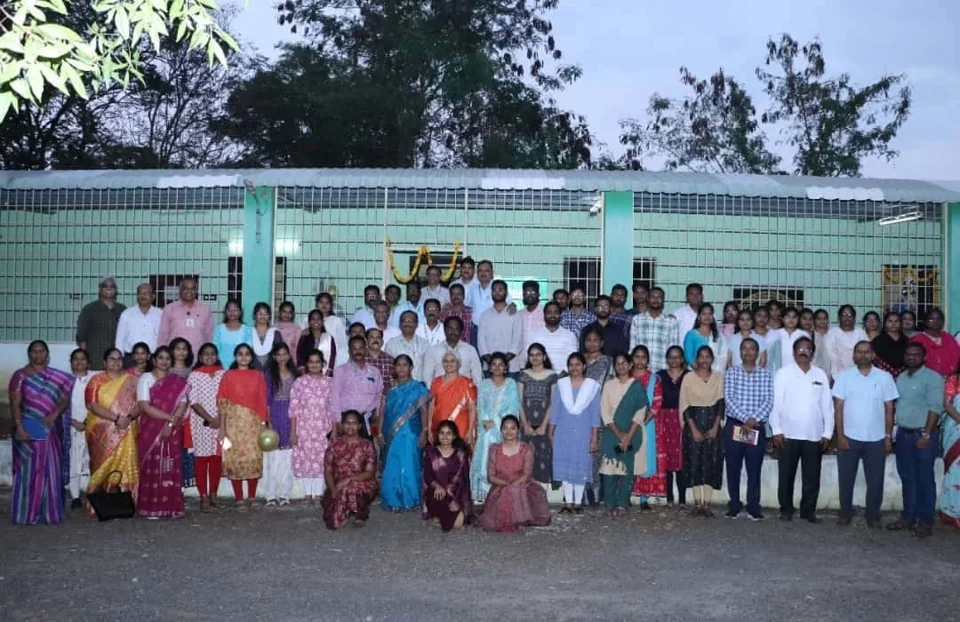
Education, research and agricultural extension
The university identifies three linked responsibilities: educating people for agricultural and allied sectors, generating useful technologies through research, and transferring knowledge through extension. Its mandate covers agriculture, agricultural engineering, community science and related fields, with a focus on Andhra Pradesh’s development.
The vision emphasises regular revision of undergraduate and postgraduate curricula in response to changes in agriculture. Research is intended to develop technologies suited to local conditions and to improve production, productivity and farm profitability. Extension connects those results with government departments and agricultural communities.
The university also highlights opportunities for rural young people and women to learn and adopt improved agricultural technologies. Its model brings scientific work and public engagement together: education develops people, research develops knowledge and technologies, and extension supports their communication and testing in practical settings. These responsibilities provide a common framework across its teaching and field activities.
Sources: Vision and mandate ↗
Postgraduate learning and research themes
The postgraduate studies portfolio combines advanced coursework with supervised research in agriculture, agricultural engineering and community science. The university describes laboratories, experimental farms, research stations and field units as settings for experimentation and the testing of scientific ideas under farming conditions. Seminars, workshops, conferences and supervision support the development and communication of research.
The published research priorities range from genetics, plant breeding, agronomy and soil science to entomology, plant pathology, microbiology, biotechnology and seed science. Other areas include agricultural economics, extension education, statistics and agribusiness management. Engineering themes encompass farm machinery, processing, food engineering, soil and water conservation, and related technologies.
Community science research includes food and nutrition, human development and family studies, resource management, consumer science, apparel and textiles, and communication management. Across these areas, the university identifies interests such as climate resilience, natural-resource management, food safety, rural development and technology adoption. Research findings are communicated through journals, conferences, technical reports, policy briefs and extension publications.
The postgraduate account also identifies links with industries, government agencies, start-ups and other research institutions through collaborative projects and practical exposure.
Sources: Postgraduate studies ↗
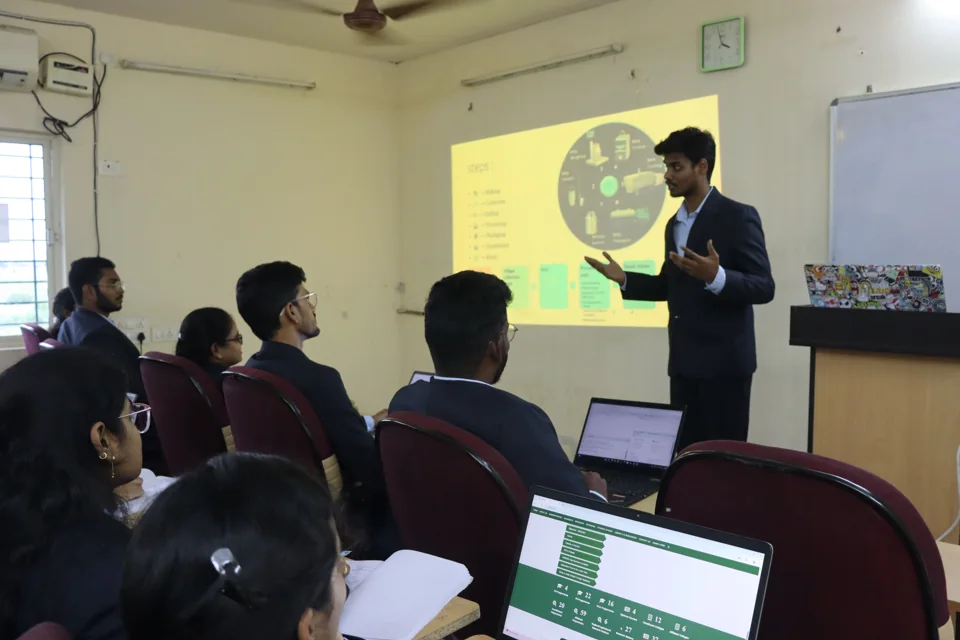
How academic decisions are organised
The Academic Council is the university’s principal body for implementing and monitoring academic programmes. It is chaired by the Vice-Chancellor and includes deans, the directors responsible for research and extension, university departmental heads, professors and nominated academic representatives. The published account describes meetings normally taking place every six months.
Faculty boards consider the academic matters associated with their respective areas before referring them to the Academic Council for a final decision. Their remit includes curricula, syllabuses, examinations and student evaluation procedures. This structure links discipline-level consideration with university-level oversight, providing a formal route through which teaching programmes and assessment arrangements are discussed. It also brings academic administration into contact with the university’s research and extension leadership.
Sources: Academic Council ↗
Communicating agricultural knowledge through media
ANGRAU established an Electronic Media Wing in 2001 to support agricultural extension through electronic communication. Its described production work includes developing content, writing scripts, preparing storyboards, identifying resource people, selecting recording locations and editing programmes.
The wing’s published record includes educational material on crops such as rice, cotton, pulses, groundnut, millets and sugarcane, as well as agricultural implements. It also documents television, radio and newspaper advisory work. Examples include the RythuMitra farm telecast launched in 2001, farmer phone-in programmes involving university scientists, radio talks and crop-related newspaper advisories.
These activities illustrate the university’s use of communication channels beyond face-to-face teaching. The media account discusses input use, post-harvest handling, market information and other agricultural subjects. Its historical programme descriptions show how researchers and extension specialists translate subject knowledge into formats intended for farming audiences.
Sources: Electronic Media Wing ↗
Connecting research priorities with communities
The Research and Extension Advisory Council is the principal decision-making body for the university’s research and extension activities. Chaired by the Vice-Chancellor, it receives guidance from zonal advisory councils associated with agro-climatic conditions.
The published description includes government line departments, farmers, industry representatives and university-nominated academics in these arrangements. Agriculture, horticulture, and women and child welfare are among the government areas identified. The advisory structure creates a formal connection between scientific priorities and the concerns of those using agricultural knowledge. It complements the academic governance system by focusing specifically on the relationship between research, extension and the wider communities the university serves.