Visa

About Acharya Narendra Deva University of Agriculture and Technology
Agricultural education at Kumarganj
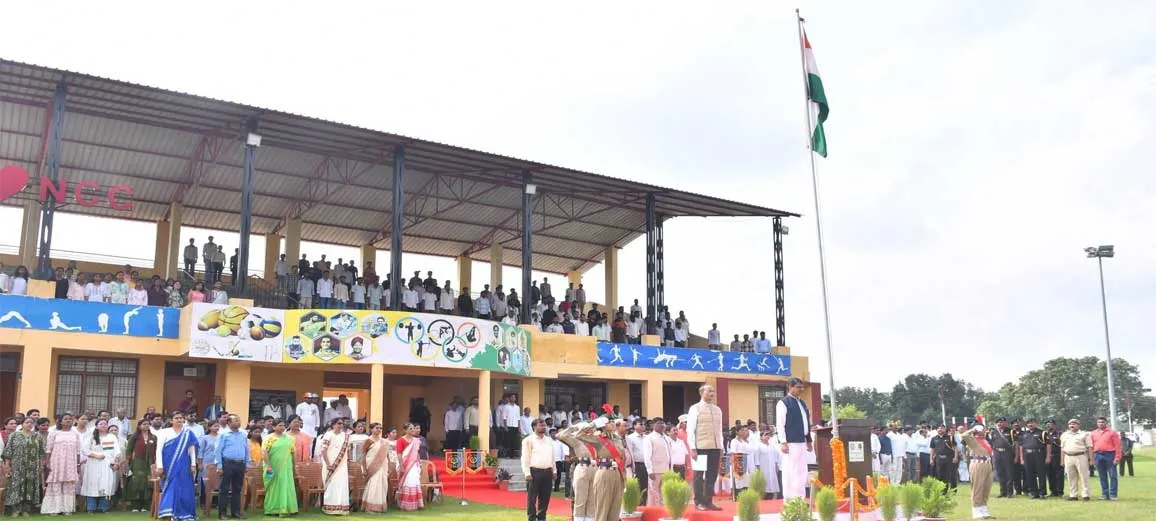
Acharya Narendra Deva University of Agriculture and Technology is based at Kumarganj in Ayodhya district, Uttar Pradesh. Its work connects higher education, agricultural research and extension, with particular attention to eastern Uttar Pradesh. The institution’s mission spans agriculture and related fields, including veterinary and animal sciences, horticulture, forestry, engineering, fisheries and community science.
Its development began with the laying of a foundation stone at Mashodha near Faizabad on 15 January 1974. The state government subsequently selected Kumarganj for the main campus. A. D. Pandey became the first vice-chancellor in October 1975, and the university initially worked from borrowed premises. Research stations and schemes transferred in 1976 helped form the basis of its research activity, while the agriculture faculty developed during the following year.
Sources: History ↗ · Vision and mission ↗
A regional mission linking knowledge and farming
The university’s vision concerns agricultural prosperity and nutritional security in eastern Uttar Pradesh. Research priorities are related to the needs of the region, while extension activities aim to carry knowledge to farming communities. Its mission therefore places education alongside the development and dissemination of practical understanding.
The published mandate includes education for rural people, investigation of agricultural and management problems, and coordination with other organisations on research and training. Field demonstrations and extension programmes are identified as ways to communicate newer technologies. Empowering rural women is another stated responsibility. Undergraduate, postgraduate and doctoral study are offered within this wider system, connecting the preparation of students with the challenges encountered by farmers, households and rural enterprises.
Sources: Vision and mission ↗
The College of Agriculture
The College of Agriculture at Kumarganj began in February 1977 under its first dean, Kirti Singh. Undergraduate teaching started in October 1978 with twenty-four students at an extension training centre in Dabhasemar. Students moved to the main campus in July 1980, and teaching later occupied part of the college’s newly constructed building.
Its disciplinary range includes agronomy, genetics and plant breeding, soil science and agricultural chemistry, entomology, plant pathology, crop physiology, economics, extension education, meteorology, biochemistry and statistics. Postgraduate work initially developed in agronomy, plant breeding, horticulture and vegetable science, with doctoral study following in the early 1980s. The college’s regional setting includes the northeastern plains, eastern plains and Vindhyan agroclimatic zones, giving its educational and research work several distinct farming environments to consider.
Sources: Agriculture college ↗
Horticulture, forestry and production systems
The College of Horticulture and Forestry was established in December 2009, building on horticultural teaching and research that had developed earlier within the university. Its profile traces horticulture activity to the Mashodha research station in 1977 and a subsequent move to Kumarganj in 1982. Forestry teaching also developed before the separate college was established.
Its fields encompass fruit science, vegetable science, floriculture and landscaping, postharvest management, silviculture and agroforestry, and medicinal and aromatic plants. The college’s objectives include practical exposure to production, value addition, management and marketing. Climate-resilient varieties and nursery development are among its stated priorities. Its historical account describes the establishment of fruit orchards on reclaimed alkaline or sodic soils, linking crop investigation with the particular soil conditions of the university’s setting.
Sources: Horticulture and Forestry college ↗
Fisheries education and aquatic environments
The College of Fisheries was established during the 2006–2007 academic year with support from the Uttar Pradesh government and the Indian Council of Agricultural Research. Located on the Kumarganj campus, it offers a four-year Bachelor of Fisheries Science and postgraduate fisheries study. Its educational structure follows a semester system.
The college identifies departments addressing aquaculture, fisheries resources, aquatic animal health, aquatic environments, processing technology, fisheries engineering, and extension, economics and statistics. Its objectives connect specialist education with sustainable fisheries development. Freshwater aquaculture technologies are considered in environmental, economic and social terms, with fish farmers’ livelihoods forming part of the stated purpose. This combination places aquatic production alongside questions of ecosystems, processing, technology and the conditions in which fishing and farming communities work.
Sources: Fisheries college ↗
Community science and everyday resources
Community Science originated as a Home Science department in the College of Agriculture in 1986 and became a separate college in 1993. Its own building opened in 2002. The published account dates the change to the Community Science name to February 2020, reflecting a broader emphasis on individuals, families and communities.
Teaching spans food and nutrition, human development and family studies, resource management and consumer science, apparel and textiles, and extension education and communication. The college’s objectives include family- and community-directed research, nutritional security and technologies intended to reduce difficult manual work. Skill training, exposure to industry and programmes supporting women are also included. These subjects connect scientific and practical knowledge with the use of household resources, wellbeing and the ways information reaches communities.
Sources: Community Science college ↗
Library and digital academic resources
The university-linked Nehru Library catalogue provides searches by title, author, subject and other bibliographic fields. Its online interface includes links to print resources, thesis repositories and electronic research services. College-specific electronic content is organised across the university’s principal fields, including agriculture, veterinary science, horticulture, fisheries, community science and engineering.
The catalogue also links readers with agricultural and general scholarly resources, including Krishikosh, Shodhganga and the National Digital Library. These services provide routes from taught subjects to documentary research and wider reading. The library’s online presence complements the institution’s combination of specialist colleges, research work and practical engagement with agricultural development.
Sources: Nehru Library catalogue ↗