Visa
About Acharya Jagadish Chandra Bose College
Origins and a lasting Kolkata identity
Acharya Jagadish Chandra Bose College is based on A.J.C. Bose Road in Kolkata and is affiliated to the University of Calcutta. Its origins lie in two institutions established in 1968: Birla College of Science and Birla College of Education. The university granted affiliation from the 1968–69 session. The institutions were subsequently brought together as Birla College of Science and Education, creating a shared setting for science and teacher education.
The college moved to its present premises in May 1978. Its history records a lengthy period of administrative change and disputes concerning the property, during which teaching continued. A governing body formed under the university’s statutes took charge in 1983. The present name was adopted from 1 July 1987 with the university’s approval. Possession of the premises was ultimately secured through government acquisition, with the process completed in 2004. Arts and commerce were added to the institution’s original academic fields in 2002–03.
Sources: College history ↗
Scientific study and practical facilities
Chemistry has been part of the college since its foundation in 1968. The department provides undergraduate teaching supported by laboratories and computer facilities. Its stated objectives combine subject knowledge with an awareness of developments in research, technology and professional practice. The department also emphasises responsibility towards society as part of scientific education. Its account notes faculty publications in international journals, connecting its undergraduate teaching environment with the scholarly interests and research activity of its staff.
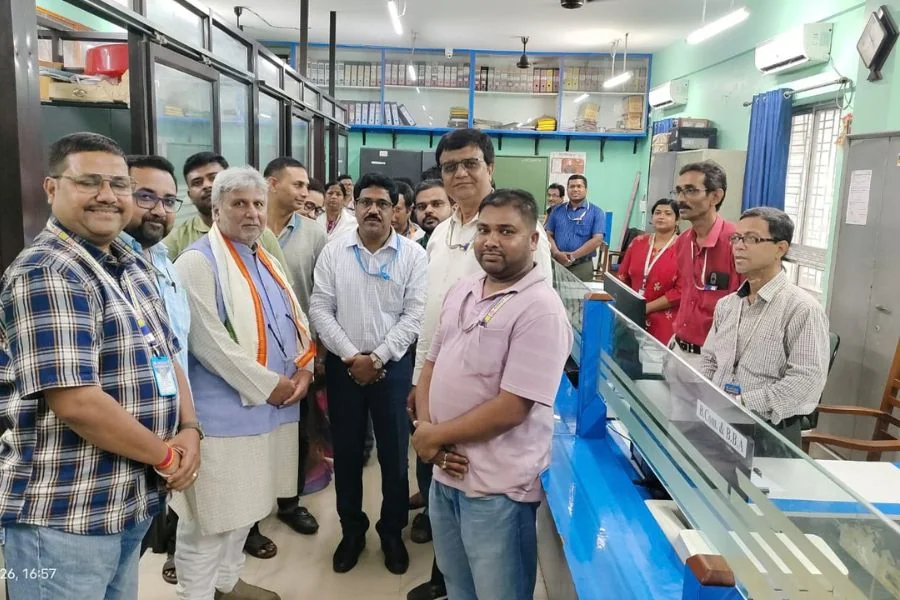
The Physics department similarly identifies laboratories equipped for undergraduate work. It describes a seminar library, computers with internet access and remedial classes. Students also participate in National Service Scheme and outreach activities. These resources connect taught scientific concepts with practical investigation, access to reference material and additional academic help. The college’s official photographic gallery includes scenes of visitors and staff within a laboratory, documenting one aspect of its teaching environment.
Sources: Chemistry department ↗ · Physics department ↗
English language, literature and critical enquiry
The English department began in 2003. Its teaching is intended to develop knowledge of literature alongside language and communication skills. Lectures, discussions, assignments, reviews and presentations provide different ways to engage with texts. Book discussions, film study and interdisciplinary activities extend literary work beyond a single type of written exercise.
Students encounter different forms of writing and representation, including poetry, drama, fiction, essays, translation and film. The department describes attention to descriptive, narrative, communicative and argumentative writing. It also provides tutorials and remedial teaching, including guidance on answering questions and using reference books. A language laboratory supports language learning, while seminars, extension talks, study tours and workshops offer further encounters with literature and cultural questions. Its approach combines close reading with the ability to formulate and communicate an interpretation.
Sources: English department ↗
Bengali and the development of humanities
The Bengali department dates its formal beginning to 2003, while recognising earlier discussions of Bengali language and literature within the college community. Its account describes a progression from earlier compulsory and honours or general teaching arrangements to semester-based education under the university’s curriculum framework. Student–teacher meetings and departmental events form part of its academic life.
Beyond the prescribed curriculum, the department discusses practical and organisational questions related to students’ future study and professional lives. Education provides another humanities pathway. Its departmental record identifies BA General teaching from 2003 and the introduction of BA Honours in 2024. The department offers honours and general study through a semester system following the University of Calcutta curriculum. These developments illustrate the growth of arts provision alongside the college’s longstanding science subjects.
Sources: Bengali department ↗ · Education department ↗
Geography and mathematics
The Geography department identifies July 2024 as its establishment date. Its teaching combines classroom work with practical study, using instruments, computers and GPS equipment. Field surveys allow students to apply geographical methods outside college and relate their academic work to the observation of places and environments. The department describes its provision within the university’s current curriculum framework.
Mathematics has a much longer history, extending back to the college’s inception in 1968. Its departmental history records teaching across algebra, calculus, analysis, mechanics, geometry, numerical methods and differential equations. It also describes a tradition of interaction between students and teachers, including discussion beyond formal classes. This long institutional account gives mathematics a place in the college’s original science identity while showing how successive teachers contributed to its academic development.
Sources: Geography department ↗ · Mathematics department history ↗
Community service and educational values
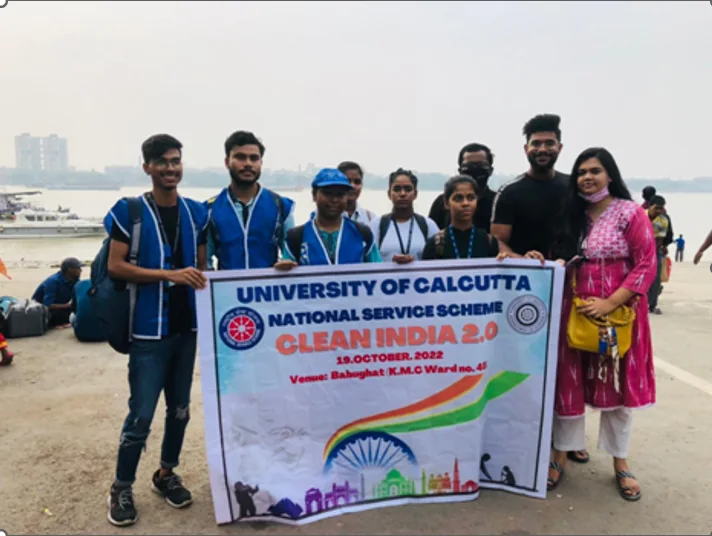
The college’s National Service Scheme connects higher education with community engagement. Its published objectives include understanding local needs, working with communities on problems, developing civic responsibility and sharing responsibilities within a group. Leadership, cooperation and social harmony are among the qualities the programme seeks to develop. The NSS gallery documents participation in the Clean India 2.0 campaign, including a photograph with a University of Calcutta banner dated 10 October 2022.
These activities sit alongside the college’s broader mission of accessible education, critical thinking and socially responsible citizenship. Its mission statement places emphasis on integrity, inclusiveness, creativity and respect for diversity. It also seeks to support students’ adaptability and the development of meaningful careers. Taken together, the departmental accounts and service programme show an institution combining subject teaching with communication, practical investigation and participation in the wider community.
Sources: National Service Scheme ↗ · Vision and mission ↗