Visa
About ABES Engineering College
An engineering college in Ghaziabad
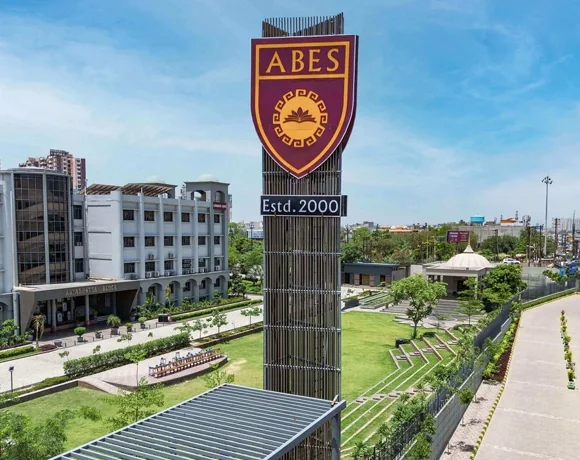
ABES Engineering College is an institution in Ghaziabad, Uttar Pradesh, within India’s Delhi National Capital Region. Established in 2000 under the Society for Educational Excellence, it brings engineering education together with computing, postgraduate study and activities beyond the classroom. Its official overview identifies integrity, excellence and innovation as central institutional values. The campus extends across 15.77 acres, combining teaching spaces with facilities for residential life, recreation and practical learning.
The college’s published academic offering includes B.Tech study in computer science and engineering, artificial intelligence and machine learning, data science, electronics and communication, electrical and computer engineering, and mechanical engineering. Its website also lists BCA and MCA programmes and M.Tech provision in computer science and engineering and electronics and communication engineering. This range makes computing prominent in the institution while retaining opportunities to study physical systems, manufacturing and electronics alongside software and information technology.
Sources: About ABES and academic overview ↗
Mechanical engineering through laboratory work
The Mechanical Engineering department describes a learning approach that joins engineering theory with hands-on investigation and project development. Its laboratory list covers manufacturing processes, engineering graphics, fluid mechanics, material testing, thermodynamics, heat transfer and machine design. These facilities give practical settings for studying the behaviour of materials, the movement of fluids and the conversion and transfer of energy. Computer aided drawing and machine design also connect physical engineering with digital tools.
The department identifies facilities for CNC machining, engine research, industrial measurement and automation. It describes SolidWorks and ANSYS resources for design, modelling and simulation, alongside programming and Internet of Things laboratory work. Student projects and participation in vehicle competitions provide further applications of engineering knowledge. The department’s account emphasises problem solving, experimentation and interdisciplinary research, with faculty guidance and industrial expertise supporting students as they move from a theoretical idea towards a working design or technical investigation.
Sources: Mechanical Engineering department ↗
Library resources for independent learning
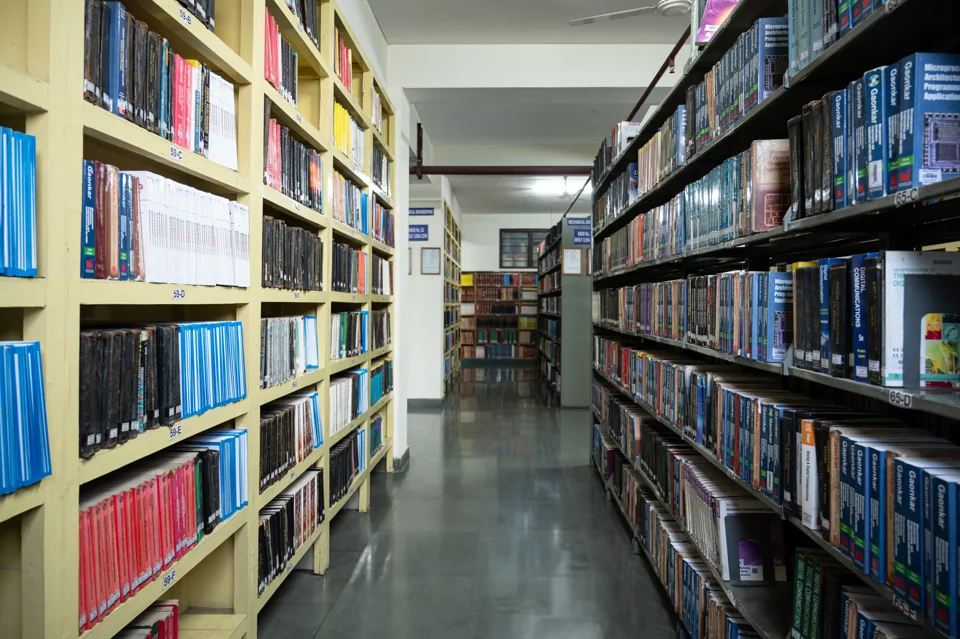
The college library supports both coursework and research with printed collections, electronic journals, electronic books and reference materials. Its official library page describes a 1,565 square metre facility with a reading area of 400 square metres and seating for 250 people. The collection includes technical textbooks as well as dictionaries, encyclopaedias, literature, competition resources and previous university examination papers. These different materials support subject study and wider independent reading.
Library administration uses the KOHA integrated management system, including an online catalogue and barcode based circulation. Students can search for materials and reserve books through the catalogue. The page also identifies electronic resources such as IEEE journals, DELNET and NPTEL video lectures, together with remote access arrangements for electronic material. An institutional repository holds college research publications and conference proceedings. Reprography, scanning, printing and multimedia computer facilities complement the collection, making the library a service centre as well as a place to read.
Sources: Library ↗
Innovation and early stage enterprise
The iNurture Incubation Foundation, described by the college as INIF, was founded on 16 January 2020. It supports innovation and entrepreneurship both on the ABES campus and in the surrounding region. Its stated services include mentoring, training, workshops, product development assistance and working space. The foundation also identifies laboratory support and seed support among the resources available through its incubation activities, without presenting funding as an automatic entitlement for every applicant.
Its published areas of interest include advanced manufacturing, robotics, artificial intelligence, enterprise technology, gaming and socially useful innovation. The startup portfolio spans fields such as agricultural technology, drones, health technology, electric vehicles and educational technology. A related Network Innovation and Incubation Center initiative describes a progression from identifying an idea through proof of concept, prototyping and a minimum viable product to business planning and growth. This gives the college’s innovation work an organisational pathway beyond individual student projects.
Sources: iNurture Incubation Foundation ↗
Consulting and applied engineering
Orbits is the college’s industrial consulting initiative. It works across product development, process consulting and technical and corporate training. Its description links engineering expertise with problems encountered by service and manufacturing organisations. The emphasis is on developing solutions for specific requirements rather than treating every industrial problem as identical. Its published methods draw on structured processes associated with Six Sigma, including approaches for improving existing systems and designing new ones.
The project portfolio documents the variety of that applied work. Examples include firmware for an induction heating system, fan blade design and simulation, roller thermal analysis and automated or mechanical handling devices. Other entries concern filtration, water flow control and assistive mechanical systems. These are documented examples of consulting activity rather than promises about particular student placements. They show how the institution’s technical work can extend into design, testing, electronics, manufacturing processes and collaboration around practical industrial questions.
Sources: Orbits industrial consulting ↗
Residential life, activities and service
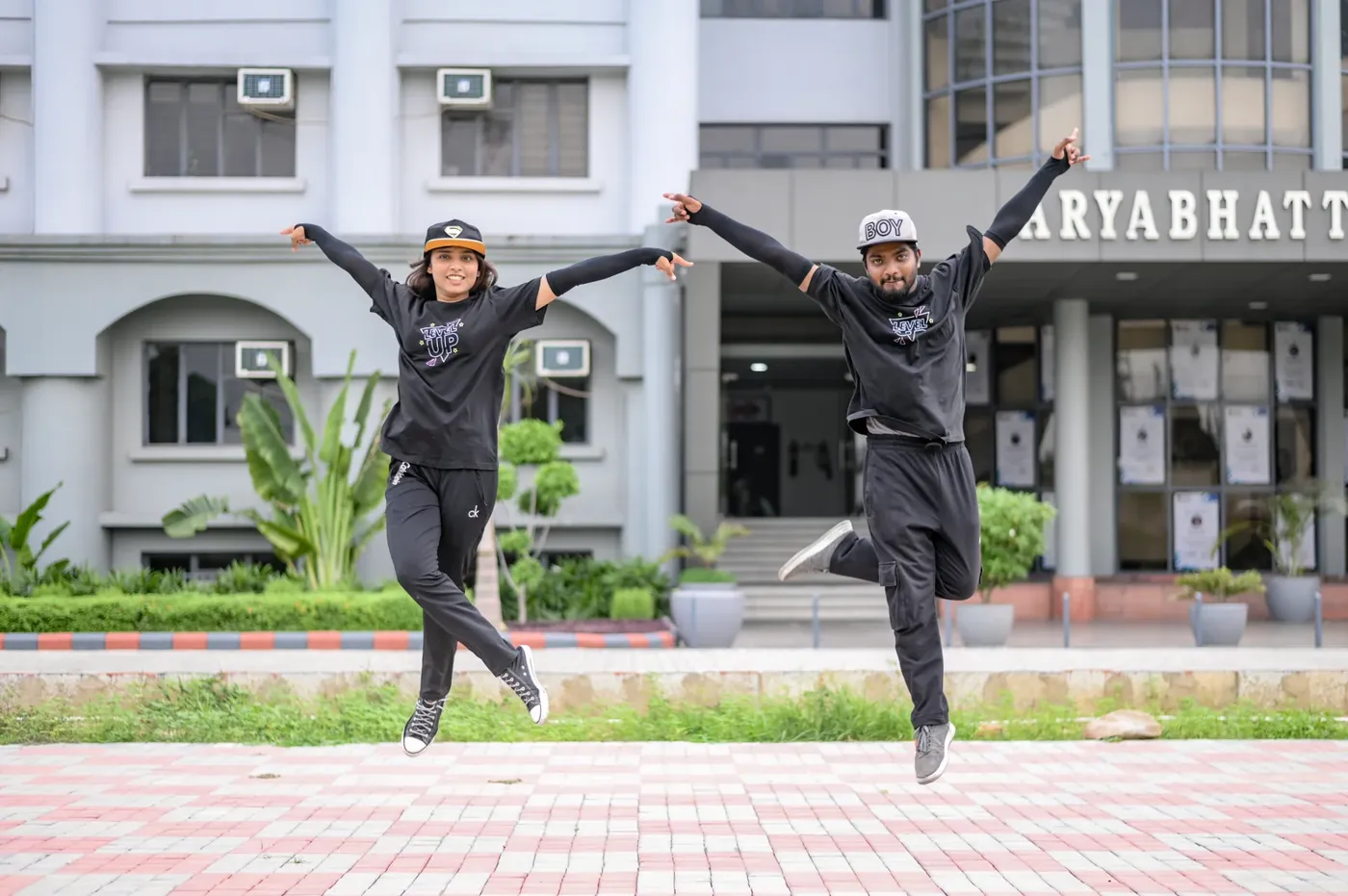
Campus life includes hostels, sports, cultural programmes and student clubs. The college describes accommodation for men and women, alongside dining facilities, recreation areas and a gym. Sports provision includes a swimming pool, a floodlit cricket stadium and courts for games such as basketball, badminton and tennis. Genero is identified as the annual cultural festival, with literary, photography, gaming and other events. Clubs provide further opportunities in areas including debate, creativity, the environment and social activity.
Student support includes a medical room, ambulance services and counselling provision described through the Your Dost service. Community engagement also appears in the college’s account of campus life. Help Us to Help the Child and Light De Literacy support educational work with disadvantaged children. The college’s Unnat Bharat Abhiyaan wing, established in October 2018, documents engagement with five adopted villages. These activities connect the wider student experience with welfare, volunteering, local education and responsibilities beyond formal academic assessment.
Sources: Life at ABES ↗