Visa
Choose between a beach holiday and a city base
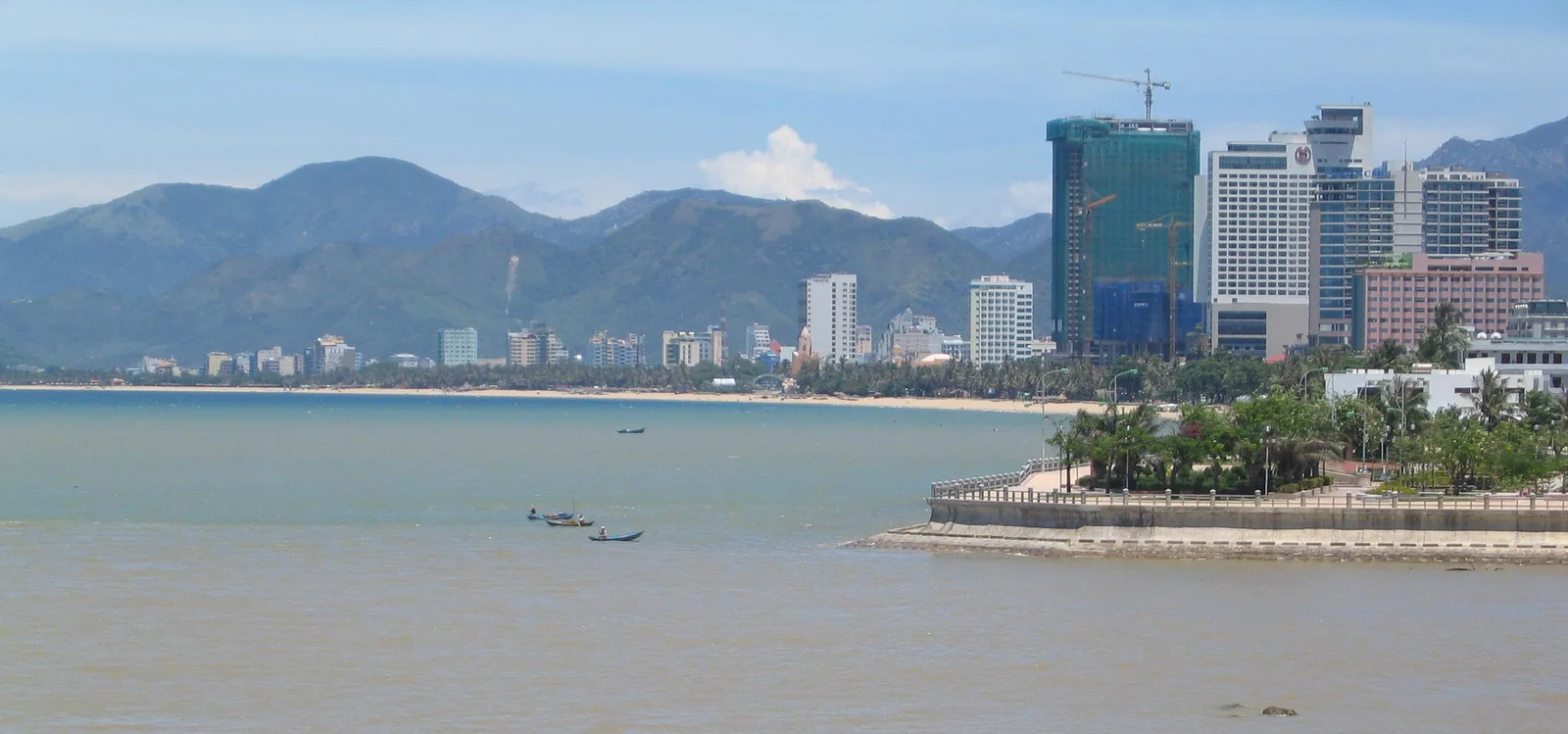
Nha Trang puts a long urban waterfront beside a working Vietnamese city, with offshore islands, religious landmarks and a substantial visitor economy competing for your time. It can support a relaxed beach holiday, a few active days between rail journeys or a longer stay with ordinary shops and services close at hand. Those are different trips, and the best accommodation for one may frustrate another.
Start by deciding how often you want to leave your hotel. A central room suits independent meals and cultural visits; an island resort introduces transfers and a stronger dependence on its own facilities. The national tourism destination overview provides an introduction, but current operating notices matter more than promotional promises when booking a particular beach, boat or attraction.
Read modern addresses alongside familiar neighbourhood names
This guide uses Nha Trang as the familiar coastal destination. Administrative addresses changed in 2025, and the newer Nha Trang ward should not be confused with the whole urban area visitors know by that name. The government’s Khánh Hòa reorganisation resolution established Nha Trang, Bắc Nha Trang, Tây Nha Trang and Nam Nha Trang wards, with the new administrations operating from 1 July 2025.
Older hotel listings and maps may still show names such as Lộc Thọ or Vĩnh Phước. Use the street, property name and map position together when arranging a pickup. For paperwork or a tenancy, obtain the current official address from the provider. Avoid comparing population figures for the former city and a newer ward as though they describe identical boundaries.
Tran Phu is the obvious first-stay reference
Tran Phu is a useful orientation line for the central seafront. Choose it when being near the promenade and urban amenities matters more than seclusion. The Sheraton’s own location information places its property at 26–28 Tran Phu, while the IHG hotel directory places the InterContinental at 32–34. These are concrete location examples, not personal hotel recommendations or evidence of the cheapest room.
Compare the road crossing, evening noise and balcony position before paying for a beachfront room. Check maintenance notices too: Sheraton currently announces its pool will close from 17 October to 20 November 2026, with access to nearby partner pools offered instead. Confirm those arrangements directly if swimming facilities influence your booking. Convenient meals and pickups may matter more than a panoramic room.
Northern coastal addresses and island stays change the rhythm
The coastal area around Pham Van Dong provides another accommodation reference north of the central strip. IHG’s directory, for example, places voco Scenia Bay there. Check the actual distance to the places you expect to visit; a sea view does not mean every central restaurant is an easy evening walk. Compare the cost of repeated return journeys before judging the room rate.
An island stay is a more substantial choice. The Marriott Hòn Tre property information describes access by boat or cable car through a mainland departure point. Confirm the complete transfer, baggage handling and arrangements during maintenance. Island accommodation can suit visitors content to spend time within a resort, but leaving for a casual town dinner becomes a planned journey rather than simply walking downstairs.
Po Nagar connects the city to Cham heritage
The provincial tourism account of Po Nagar describes a temple complex on Cu Lao hill near the mouth of the Cai River. Its surviving architecture connects Nha Trang with the Cham cultural landscape, while worship links the Mother of the Land, Po Nagar, with Vietnamese Thiên Y A Na traditions. The setting is important: river, hill, towers and city belong in the same view.
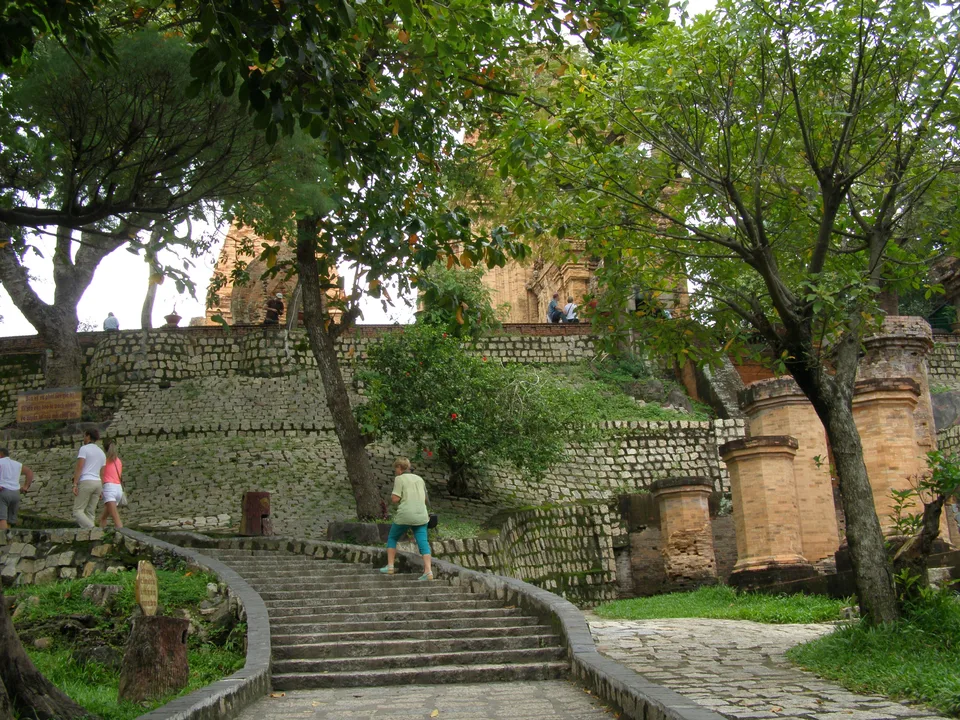
Allow time to look at the terraces and masonry rather than heading straight to the highest photograph point. This remains a sacred place, so follow instructions on clothing, shoes and photography. Steps and changing levels matter for anyone with limited mobility. Confirm the current entrance charge at the official counter; older online ticket figures should not dictate the budget or establish access to every part of the complex.
Long Son is a living place of worship
Long Son Pagoda offers another cultural visit, with temple grounds below the white Buddha on Trai Thuy hill. Decide whether you want the lower grounds, the climb or both. The view at the top is only part of the experience; an active religious setting deserves the same attention and restraint as the more familiar seaside sights.
Visit at a comfortable walking hour, carry water and leave space around ceremonies and worshippers. Do not assume every visitor can manage the steps simply because the temple is described as being in town. If a driver is waiting, agree where you will meet afterwards and allow enough time to descend without rushing. Keep this as a separate stop from Po Nagar rather than treating the two religious sites as interchangeable names.

Hòn Chồng makes a useful northern coastal outing
The provincial description of Hòn Chồng explains the promontory’s naturally arranged boulders and associated coastal scenery. It is a good change from the long central beach: rock shapes, sea views and the relationship between the shore and the hills become the main interest. Pair it with a northern-area meal or accommodation inspection rather than crossing town for a rushed photograph.
Follow barriers and the designated visitor route. Wet stone and uneven surfaces require care, and a sheltered-looking view is not evidence that any adjoining water is safe for swimming. Ask about current access if steps or slippery surfaces would affect the visit. The nearby assembly hall adds a cultural element, but check its programme rather than assuming a performance will occur whenever you arrive.
The oceanography museum adds substance to the bay
The Museum of Oceanography’s own visitor page currently lists general admission at 40,000 dong, students at 20,000 and pupils at 10,000, with children under six free. Its published hours are 6am to 6pm. These direct institutional figures take precedence over older tourism articles quoting lower charges. Confirm eligibility evidence for a concession before assuming it applies.
The museum combines aquaria with preserved specimens and marine displays at Cau Da. It can give an island outing more context, or provide a substantial alternative when conditions offshore are unsuitable. Read it as a museum and research setting, not a promise that you will encounter particular animals in the wild. Leave time for the journey south and check current access if your group has specific mobility needs.
Cam Ranh Airport requires a real road transfer
Flights serving Nha Trang use Cam Ranh International Airport, code CXR. Do not follow directions to the old airfield within the urban area. Your accommodation may be marketed under “Nha Trang” while lying much closer to Cam Ranh, so price the transfer to the exact address. A central hotel and a coastal resort south of town require different routes and expectations.
The airport’s transport page lists bus 18 at 50,000 dong per person per trip and gives an indicative journey of fifty to sixty minutes. Check its current departure and town stop against your flight. Add the final hotel journey, luggage and waiting time when comparing a taxi or pre-booked car. For a late arrival, secure a confirmed option rather than assuming the bus runs whenever flights land.
Rail arrivals put different demands on the first day
Nha Trang is on Vietnam’s north–south railway, and Vietnam Railways’ timetable and fare information is the appropriate starting point for a rail journey. Compare the actual train and accommodation type for your travel date. A sleeper berth, an ordinary seat and a flight are different ways of spending both travel time and the following morning.
The operator’s booking instructions require passenger identification details. Match the booking to your passport and retain the confirmation. Check the arrival date carefully when a service runs overnight, and arrange early luggage storage or check-in if necessary. Timetables can change, so avoid building a paid boat departure immediately after a train arrival. Leave room for a delayed journey and the transfer to the waterfront.
Getting around works best in geographical groups
For vehicle journeys, confirm the pickup point, destination and total fare or booking terms before starting. Check that the driver and vehicle match the arrangement. If considering a motorcycle rental, verify your licence entitlement and insurance for Vietnam and the vehicle category before paying. Availability at a rental counter does not establish legal permission. Keep an alternative for rain, heavy luggage or a return after dark, especially when staying beyond the central strip.
A bay outing requires more than an island name
Ask exactly where a boat excursion goes, where it departs and which activities are permitted at each stop. The province’s bay-restoration account records restrictions introduced in Hòn Mun waters to support damaged coral. A generic advertisement for “Hòn Mun diving” does not establish permission to enter a protected site, nor does a boat passing an island mean swimming there is allowed.
Request the current authorised route and cancellation conditions before purchasing. Ask about boat capacity, suitable lifejackets, transfers and the experience needed for any water activity. Sea conditions can change the programme. Do not stand on coral, collect marine life or enter restricted water for a photograph. Carry reusable drinking-water equipment and check the port’s current waste and plastic rules with the operator.
Some island advertisements should be left off the plan
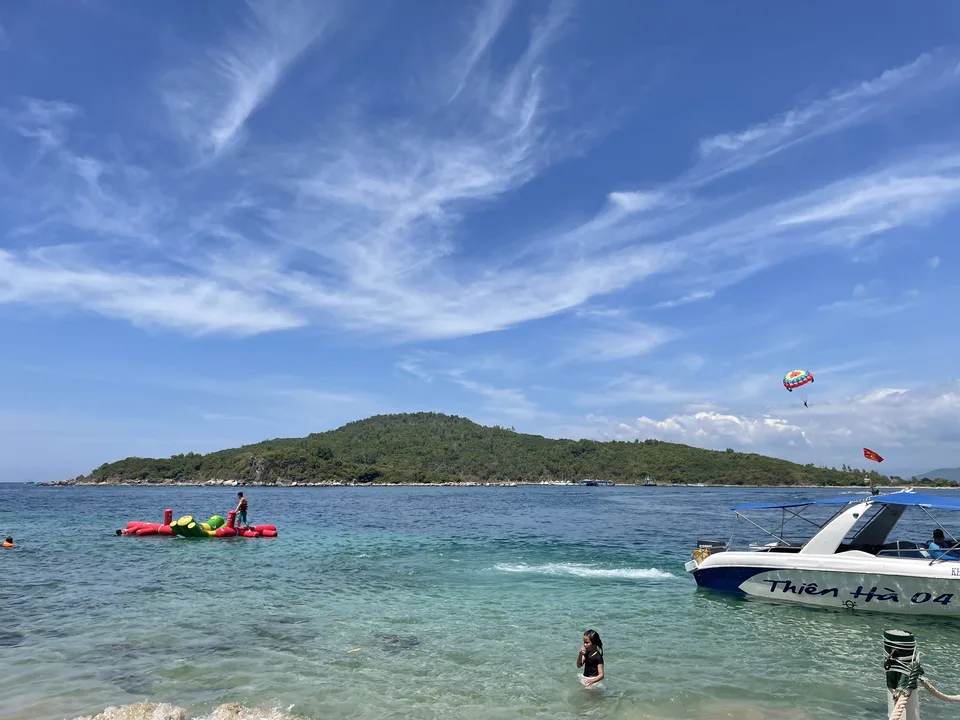
The Khánh Hòa tourism department’s June 2026 notice instructs businesses not to organise or promote tourism at Mũi Hời, Bình Ba and Hòn Chút, identified with Bình Hưng in the notice. These places should not be booked on the strength of an old blog or a continuing sales advertisement. Recheck the official position before considering a future visit.
That restriction should not be described as a blanket closure of Nha Trang Bay. It does mean that a regional “island-hopping” label is insufficient information. Ask the seller to name every destination and explain the current permission for the itinerary. If the answer is vague, choose another activity. There are enough mainland cultural visits and independently verifiable attractions to avoid making a prohibited excursion central to the holiday.
VinWonders is a separate full-day decision
VinWonders on Hòn Tre can be a major family outing rather than a brief stop added between temples. The operator’s price and regulations page lists a standard admission ticket with return cable-car travel at 1,050,000 dong for visitors at least 140 centimetres tall. The listed price is 800,000 dong for visitors from 100 to under 140 centimetres, and for eligible visitors aged sixty or over; age evidence is required.
Check the current operating notice before booking. At this review, it announces cable-car suspension from 26 October to 10 November 2026. Confirm the alternative transfer directly for your date. Individual rides have separate conditions, and a ticket does not guarantee that every activity suits every child. Budget for food and optional extras; the published rules identify the zipline as an additional charge.
Make mineral bathing a leisure choice
Mud baths and mineral-water facilities are established parts of Nha Trang’s visitor offering. I-Resort’s own website is one useful place to compare packages, including different bathing and private-facility arrangements. Read the inclusions carefully: a low entry price should not be assumed to include every bath, treatment, meal or private area shown in promotional photographs.
Choose the visit for relaxation rather than an unverified promise to cure a condition. Ask about temperature, supervision, changing facilities and any relevant restrictions directly. With children, check which pools and activities are suitable and how supervision works. Keep transport and time to shower and change within the plan. A mineral-bath afternoon can replace a second demanding outdoor excursion rather than becoming another commitment squeezed into an already crowded day.
Order beyond the seafood display
The national tourism board’s regional food guide gives useful starting points: fish-based noodle dishes, grilled nem and bánh căn. The latter are small rice-flour cakes cooked in individual clay pans, with toppings that can include quail eggs, shrimp or squid. Ask what comes with the portion and in the dipping sauce before ordering if dietary restrictions matter.
For seafood sold by weight, agree the species, weight, preparation and total basis of charging before it is cooked. A lively display is not a substitute for a clear price. Balance a planned restaurant meal with straightforward food near your accommodation, particularly before an early departure. Avoid treating old vendor addresses as guaranteed current recommendations. Check opening and reservations directly when a particular meal is important to the trip.
Compare purchases with the rest of the journey
For accommodation and tour payments, use independently verified contact details. The provincial police’s booking-fraud warning describes impersonation of hotels and travel businesses online. Contact the property through its established website or a booking channel you can verify before sending a deposit. Keep written terms and receipts. Visitors evaluating a move should also inspect ordinary supermarkets, pharmacies and household shops; the price of a souvenir offers little evidence about the cost of daily life.
Budget around the decisions that change the total
Hotel dates, room configuration and the choice between mainland and island accommodation will influence the budget more than a single inexpensive meal. Obtain final totals including breakfast, extra beds and applicable charges. Compare cancellation terms with the flexibility of your flights. A beachfront photograph does not show the cost of all the additional transfers a particular stay may require.
Some smaller components are easier to calculate. At the published figures reviewed here, two airport-bus journeys and general admission to the oceanography museum total 140,000 dong per adult, before local connections. A standard VinWonders ticket adds a much larger separate cost. These examples help compare choices; they are not a complete daily spending estimate. Reserve money for weather changes, a taxi or an unplanned night.
Plan for the wetter months without abandoning the trip
National tourism guidance describes the wetter period broadly as September to December. Treat that as a planning pattern rather than a forecast or a promise that rain will be brief. Visitors primarily interested in beaches and boat activities should allow flexibility; a cultural city stay is less dependent on perfect conditions offshore.
Check the national meteorological centre’s forecasts and marine warnings shortly before travel and again before a boat day. A sunny hotel balcony cannot establish safe conditions across the bay. Keep the museum, food and a suitably chosen indoor activity available as alternatives. Pack sun protection alongside a rain layer and footwear that handles wet paving. For a longer stay, inspect drainage and ask about past water entry before committing to ground-floor accommodation.
Day one: arrive and learn your stretch of waterfront
Use the first day to reach the correct hotel, eat and explore a modest section of the seafront. An airport transfer followed by check-in can consume more time than a map suggests. If you arrive early and rested, choose one cultural visit; otherwise leave the temples for the morning. Locate a convenient shop and a straightforward dinner option rather than travelling across town immediately.
Day two: heritage and a northern coastal afternoon
Visit Po Nagar with time for both the architecture and the setting above the river. Add Hòn Chồng if the weather, walking surfaces and your group’s energy make the combination sensible. Lunch in the same broad area avoids an unnecessary return to the hotel merely to travel north again. Keep an indoor or shorter alternative available if heat or heavy rain makes extended walking unattractive.
Long Son can be another cultural stop on a different route, or replace the afternoon coast if that better matches your interests. Do not feel obliged to complete all three on one day. Return with enough time to shower and have dinner without another transport deadline. The point is to understand a few places well, not to collect every landmark before sunset.
Day three: choose the water, the museum or an attraction
For a suitable forecast and a verified itinerary, give the day to a bay excursion. If conditions or permissions are unclear, choose the museum and a relaxed mainland afternoon instead. A mineral-bath visit offers another alternative. Families choosing VinWonders should make it the principal outing and verify the transfer rather than attempting it after a morning boat tour.
The tourism board’s weekend outline offers further ideas, but adapt any suggested water activity to current restrictions. On a departure day, reduce the programme and confirm the airport or station transfer before leaving the hotel. With another night available, there is room to postpone an outing. Without that buffer, a conservative local day is a better fit than a distant excursion with a narrow return window.
Moving here means testing an ordinary working week
Test the commute from temporary accommodation before choosing a residential neighbourhood.
Inspect a rental in person before paying a substantial deposit. Test air conditioning, ventilation, water pressure, mobile reception and internet from the room you will use. Ask which furniture and appliances remain, how repairs are handled and whether utilities are separately metered. Obtain a written inventory and terms covering the deposit, notice period, early termination and permitted use. Have unclear contract language explained independently before signing.
Household services and healthcare need local checks
Ask the landlord how electricity, water, internet and waste collection work at the specific property. KHAWASSCO’s customer website provides water-supply information, billing support and outage notices; confirm whether your home receives a direct utility bill or a landlord’s charge. Check the address’s current ward for administrative errands. A familiar old neighbourhood name may not identify the responsible office after reorganisation.
For healthcare, Vinmec Nha Trang’s emergency-department page is one primary provider resource to retain. Verify routine services, appointment arrangements, language support and insurance billing for your circumstances rather than inferring them from a hospital’s name. Families should confirm school or childcare places, language provision, transport and complete fees before settling on housing. Regular medication and ongoing care deserve preparation before the move.
Keep immigration, accommodation reporting and employment separate
The official Vietnamese e-visa portal currently states a maximum validity of ninety days, with single- or multiple-entry options and fees of US$25 and US$50 respectively. The application fee is non-refundable if a visa is refused. Check eligibility, the approved dates and permitted entry points; “up to ninety days” is not a guarantee of your particular grant.
Accommodation reporting is a separate obligation: provide the documents needed for your host’s temporary-residence declaration. Employment requires its own checks under the government’s foreign-worker rules, including any applicable work permit or exemption. Study and permanent relocation also need an appropriate basis; renting or buying a home does not settle immigration status. Use VisaWand’s Vietnam country guide and consultant listings for further planning while checking applications with the competent authorities.
Choose onward places by interest and travel time
For a broader journey, compare Hanoi’s city guide and Hạ Long’s city guide as distinct northern destinations, allowing realistic travel time. They are not casual additions to a Nha Trang afternoon. Closer coastal outings also need individual checks: a well-known beach name does not establish current road access, swimming conditions or an authorised boat route.
The Vietnam location directory and Vietnam destination page can help organise further research. Save the official airport, railway, attraction and immigration resources with your booking information. Check the operational notice again shortly before departure, especially for cable-car travel. A useful Nha Trang plan gives the sea a prominent place while leaving enough room for heritage, everyday food and the conditions you actually encounter.
Official planning resources
Reviewed 15 October 2026. Use the official resources linked throughout this guide for admission, transport, housing and immigration decisions. Prices, services and rules can change; confirm the details relevant to your dates. Photography illustrates the locations and is not a live view.
View all official resources
- Vietnam Tourism: Nha Trang destination overview
- Government: Khánh Hòa’s 2025 administrative reorganisation
- Khánh Hòa tourism: Po Nagar Cham Towers
- Khánh Hòa tourism: Long Son Pagoda
- Khánh Hòa tourism: Hòn Chồng promontory
- Museum of Oceanography: current visit information
- Cam Ranh Airport: transport options
- Vietnam Railways: timetables and fares
- Vietnam Railways: booking and passenger information
- Khánh Hòa: bay restoration and Hòn Mun restrictions
- Khánh Hòa tourism department: prohibited island-tour areas
- VinWonders Nha Trang: admission and restrictions
- VinWonders: cable-car suspension and operational notices
- I-Resort: mineral bathing and packages
- Vietnam Tourism: regional dishes
- Vietnam Tourism: coastal culture and itinerary ideas
- National meteorological centre: weather and marine warnings
- Sheraton Nha Trang: central Tran Phu location
- Marriott Hòn Tre: island-resort access
- IHG: central and northern hotel locations
- Vietnam Immigration Department: official e-visa portal
- Vietnam Government: foreign-worker permit rules
- KHAWASSCO: local water supply and customer services
- Vinmec Nha Trang: emergency department
- Khánh Hòa police: accommodation-booking fraud warning
Plan the next part of your journey
Explore the Vietnam guide, browse other cities or compare consultants for your travel and relocation questions.